• HOME
  • NEWS
  • EXPLORE
    • CAREER
      • Companies
      • Jobs
    • EVENTS
    • iGEM
      • News
      • Team
    • PHOTOS
    • VIDEO
    • WIKI
  • BLOG
  • COMMUNITY
    • FACEBOOK
    • INSTAGRAM
    • TWITTER
Saturday, August 22, 2026
BIOENGINEER.ORG
No Result
View All Result
  • Login
  • HOME
  • NEWS
  • EXPLORE
    • CAREER
      • Companies
      • Jobs
        • Lecturer
        • PhD Studentship
        • Postdoc
        • Research Assistant
    • EVENTS
    • iGEM
      • News
      • Team
    • PHOTOS
    • VIDEO
    • WIKI
  • BLOG
  • COMMUNITY
    • FACEBOOK
    • INSTAGRAM
    • TWITTER
  • HOME
  • NEWS
  • EXPLORE
    • CAREER
      • Companies
      • Jobs
        • Lecturer
        • PhD Studentship
        • Postdoc
        • Research Assistant
    • EVENTS
    • iGEM
      • News
      • Team
    • PHOTOS
    • VIDEO
    • WIKI
  • BLOG
  • COMMUNITY
    • FACEBOOK
    • INSTAGRAM
    • TWITTER
No Result
View All Result
Bioengineer.org
No Result
View All Result
Home NEWS Science News

As the American hemp industry grows, so does our understanding of hemp diseases

Bioengineer by Bioengineer
January 19, 2021
in Science News
Reading Time: 2 mins read
0
IMAGE
Share on FacebookShare on TwitterShare on LinkedinShare on RedditShare on Telegram

IMAGE

Credit: Lindsey D. Thiessen

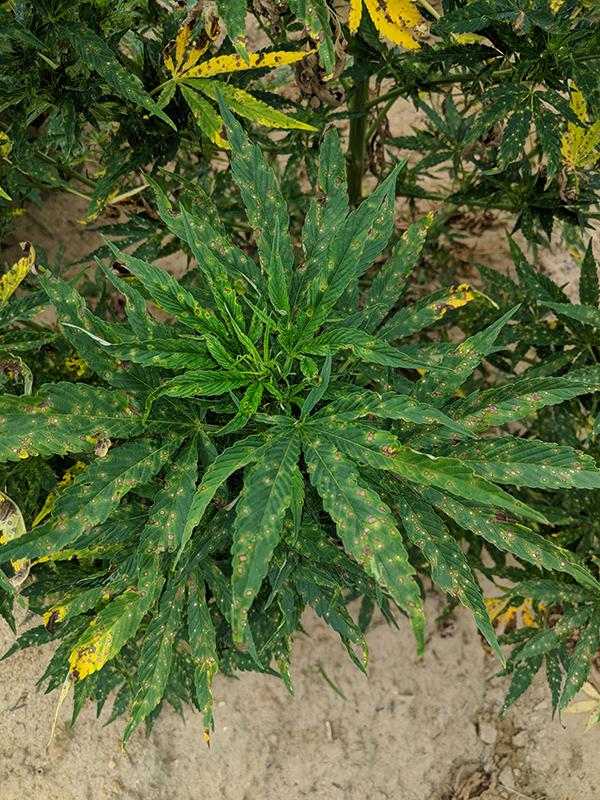
As hemp begins to reemerge as an important crop in the United States, scientists are beginning research into the diseases that might prevent the crop from flourishing. A study published in the December issue of Plant Health Progress is one of the first to study the potential disease and disorder limitations for hemp production in the southeastern United States.

Lindsey Thiessen, a plant pathologist at North Carolina State University, worked with colleagues to evaluate hemp samples from North Carolina and observed 16 different diseases. They found Fusarium flower blight most consistently followed by Helminthosporium leaf spot. They also surveyed hemp producers who self-identified Fusarium species as the most common issue in their fields.

“Interestingly, diseases that are frequently reported in other hemp-producing regions in the western U.S. or worldwide, such as gray mold or powdery mildew, were not prominent diseases in our study,” said Thiessen.

The study also found nutritional deficiencies and toxicities in more than 58 percent of samples evaluated and identified issues with excess water, root binding, and herbicide injuries. All these issues may complicate production for growers in the southeastern United States and similar regions. This study also underscores regional variability of important diseases and disorders, showing that best production practices will vary by region.

“Little research on hemp has been recently conducted in the U.S., and this study identifies pathogens with molecular tools and morphology using more recent taxonomic classifications,” Thiessen said when asked what made this research unique. “This work also identifies the ranges of nutritional content in soil and foliar tissues of currently available hemp strains.”

Thiessen points out that while hemp used to be grown in the United States, many of the diseases have been understudied. This research, summarized in “Surveying for Potential Diseases and Abiotic Disorders of Industrial Hemp (Cannabis sativa) Production,” begins to build a new and important body of knowledge for this growing industry.

###

Media Contact
Ashley Bergman Carlin
[email protected]

Related Journal Article

http://dx.doi.org/10.1094/PHP-03-20-0017-RS

Tags: Agricultural Production/EconomicsAgricultureBiologyCell BiologyEcology/EnvironmentMolecular BiologyPlant Sciences
Share12Tweet8Share2ShareShareShare2

Related Posts

Real-world study examines psychotic complications of subcutaneous foslevodopa/foscarbidopa infusions in 198 patients

Real-world study examines psychotic complications of subcutaneous foslevodopa/foscarbidopa infusions in 198 patients

August 22, 2026

Blood-flow signals from liver vessels direct region-specific liver function through Wnt pathways

August 22, 2026

Ge/SiGe Quantum-Well Photodetectors Integrated with SiN Waveguides on 200-mm Silicon Wafers

August 22, 2026

Consensus Roadmap Guides Clinical Trials for Rare Childhood CNS Tumors

August 22, 2026
Please login to join discussion

POPULAR NEWS

  • Real-world study examines psychotic complications of subcutaneous foslevodopa/foscarbidopa infusions in 198 patients

    29 shares
    Share 12 Tweet 7
  • Blood-flow signals from liver vessels direct region-specific liver function through Wnt pathways

    29 shares
    Share 12 Tweet 7
  • Ge/SiGe Quantum-Well Photodetectors Integrated with SiN Waveguides on 200-mm Silicon Wafers

    29 shares
    Share 12 Tweet 7
  • Consensus Roadmap Guides Clinical Trials for Rare Childhood CNS Tumors

    29 shares
    Share 12 Tweet 7

About

We bring you the latest biotechnology news from best research centers and universities around the world. Check our website.

Follow us

Recent News

Real-world study examines psychotic complications of subcutaneous foslevodopa/foscarbidopa infusions in 198 patients

Blood-flow signals from liver vessels direct region-specific liver function through Wnt pathways

Ge/SiGe Quantum-Well Photodetectors Integrated with SiN Waveguides on 200-mm Silicon Wafers

Subscribe to Blog via Email

Success! An email was just sent to confirm your subscription. Please find the email now and click 'Confirm' to start subscribing.

Join 85 other subscribers
  • Contact Us

Bioengineer.org © Copyright 2023 All Rights Reserved.

Welcome Back!

Login to your account below

Forgotten Password?

Retrieve your password

Please enter your username or email address to reset your password.

Log In
No Result
View All Result
  • Homepages
    • Home Page 1
    • Home Page 2
  • News
  • National
  • Business
  • Health
  • Lifestyle
  • Science

Bioengineer.org © Copyright 2023 All Rights Reserved.