Memory, or the ability to store information in a readily accessible way, is an essential operation in computers and human brains. A key difference is that while brain information processing involves performing computations directly on stored data, computers shuttle data back and forth between a memory unit and a central processing unit (CPU). This inefficient separation (the von Neumann bottleneck) contributes to the rising energy cost of computers.
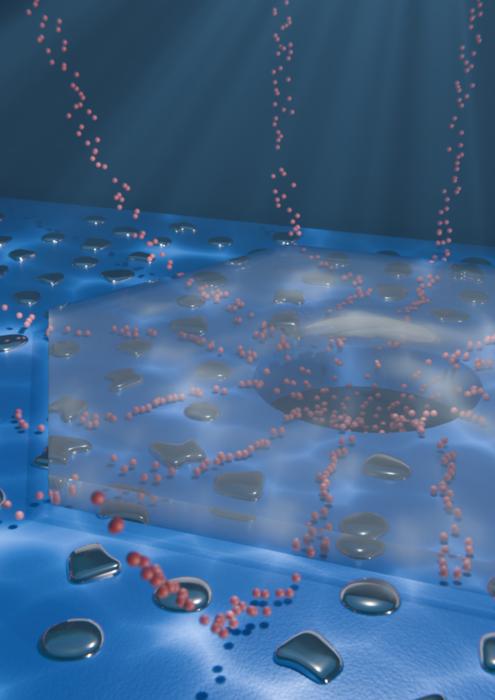
Credit: ©EPFL 2024 / Andras Kis
Memory, or the ability to store information in a readily accessible way, is an essential operation in computers and human brains. A key difference is that while brain information processing involves performing computations directly on stored data, computers shuttle data back and forth between a memory unit and a central processing unit (CPU). This inefficient separation (the von Neumann bottleneck) contributes to the rising energy cost of computers.
Since the 1970s, researchers have been working on the concept of a memristor (memory resistor); an electronic component that can, like a synapse, both compute and store data. But Aleksandra Radenovic in the Laboratory of Nanoscale Biology (LBEN) in EPFL’s School of Engineering set her sight on something even more ambitious: a functional nanofluidic memristive device that relies on ions, rather than electrons and their oppositely charged counterparts (holes). Such an approach would more closely mimic the brain’s own – much more energy efficient – way of processing information.
“Memristors have already been used to build electronic neural networks, but our goal is to build a nanofluidic neural network that takes advantage of changes in ion concentrations, similar to living organisms,” Radenovic says.
“We have fabricated a new nanofluidic device for memory applications that is significantly more scalable and much more performant than previous attempts,” says LBEN postdoctoral researcher Théo Emmerich. “This has enabled us, for the very first time, to connect two such ‘artificial synapses’, paving the way for the design of brain-inspired liquid hardware.”
The research has recently been published in Nature Electronics.
Just add water
Memristors can switch between two conductance states – on and off – through manipulation of an applied voltage. While electronic memristors rely on electrons and holes to process digital information, LBEN’s memristor can take advantage of a range of different ions. For their study, the researchers immersed their device in an electrolyte water solution containing potassium ions, but others could be used, including sodium and calcium.
“We can tune the memory of our device by changing the ions we use, which affects how it switches from on to off, or how much memory it stores,” Emmerich explains.
The device was fabricated on a chip at EPFL’s Center of MicroNanoTechnology by creating a nanopore at the center of a silicon nitride membrane. The researchers added palladium and graphite layers to create nano-channels for ions. As a current flows through the chip, the ions percolate through the channels and converge at the pore, where their pressure creates a blister between the chip surface and the graphite. As the graphite layer is forced up by the blister, the device becomes more conductive, switching its memory state to ‘on’. Since the graphite layer stays lifted, even without a current, the device ‘remembers’ its previous state. A negative voltage puts the layers back into contact, resetting the memory to the ‘off’ state.
“Ion channels in the brain undergo structural changes inside a synapse, so this also mimics biology,” says LBEN PhD student Yunfei Teng, who worked on fabricating the devices – dubbed highly asymmetric channels (HACs) in reference to the shape of the ion flow toward the central pores.
LBEN PhD student Nathan Ronceray adds that the team’s observation of the HAC’s memory action in real time is also a novel achievement in the field. “Because we were dealing with a completely new memory phenomenon, we built a microscope to watch it in action.”
By collaborating with Riccardo Chiesa and Edoardo Lopriore of the Laboratory of Nanoscale Electronics and Structures, led by Andras Kis, the researchers succeeded in connecting two HACs with an electrode to form a logic circuit based on ion flow. This achievement represents the first demonstration of digital logic operations based on synapse-like ionic devices. But the researchers aren’t stopping there: their next goal is to connect a network of HACs with water channels to create fully liquid circuits. In addition to providing an in-built cooling mechanism, the use of water would facilitate the development of bio-compatible devices with potential applications in brain-computer interfaces or neuromedicine.
Journal
Nature Electronics
DOI
10.1038/s41928-024-01137-9
Method of Research
Experimental study
Subject of Research
Not applicable
Article Title
Nanofluidic logic with mechano-ionic memristive switches
Article Publication Date
19-Mar-2024