The convergence of artificial intelligence and healthcare offers opportunities to address global disparities in specialized epilepsy diagnosis and treatment, particularly across resource-limited settings, according to a review published in Nature Reviews Neurology. Researchers examined how machine learning applications might bridge substantial worldwide gaps in access to neurological care while maintaining clinical standards and confronting structural hurdles. Most individuals diagnosed with epilepsy live in low-income and middle-income countries, where severe shortages of trained neurologists, electroencephalography systems, and magnetic resonance imaging facilities contribute to marked diagnostic delays and treatment gaps.
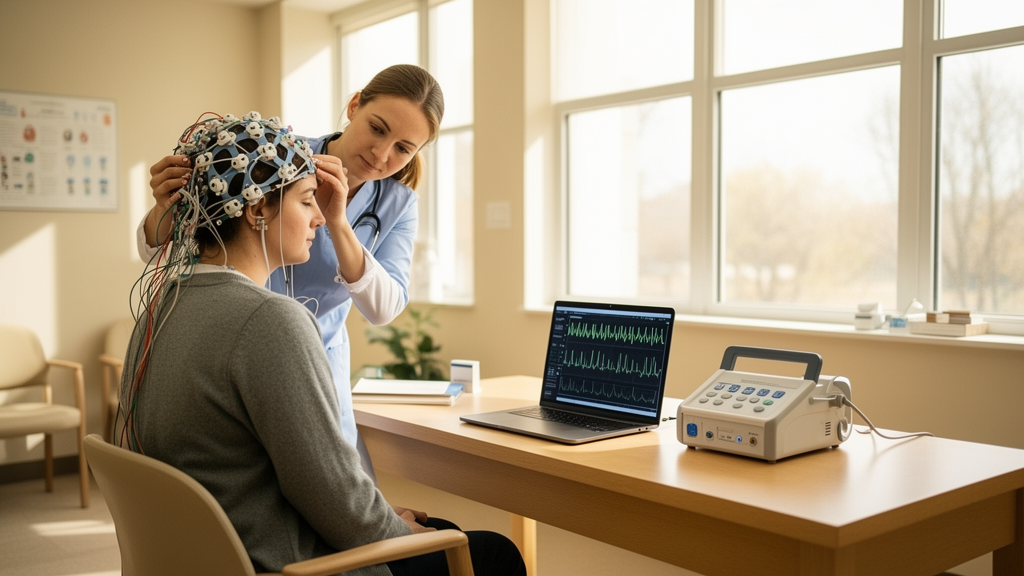
Recent advances in computational models, combined with expanding internet connectivity and widespread smartphone usage across lower-income regions, offer potential routes for expanding epilepsy evaluation and monitoring. The review authors highlight that combining low-cost, open-source electroencephalography systems with deep learning architectures could enable minimally trained local healthcare workers to conduct initial screenings. Notably, certain deep learning algorithms have achieved performance levels matching human clinical experts on specific, narrowly defined electroencephalography interpretation tasks, creating practical opportunities for preliminary assessment where neurophysiologists are unavailable.
Smartphone-based evaluation strategies present additional candidate mechanisms for patient monitoring and community screening, although they do not currently constitute established diagnostic tests. These experimental methods encompass video recordings of suspected seizure episodes alongside passive software analysis capturing touchscreen interaction dynamics. In parallel, multimodal large language models capable of reasoning could integrate patient clinical histories documented in indigenous or local languages with electroencephalography signals while explaining the clinical logic behind their outputs.
Despite these technological possibilities, the authors emphasize major scientific and structural challenges surrounding algorithmic generalizability, transparency, healthcare equity, and the preservation of clinical expertise. Diagnostic models developed and trained predominantly on cohorts from high-income countries frequently generalize poorly when deployed in demographically and clinically distinct populations. Consequently, robust local data acquisition, rigorous external validation, systematic bias mitigation, cultural applicability assessments, and stringent data protection frameworks remain essential prerequisites prior to real-world deployment.
To prevent systemic harms and ensure long-term clinical utility, the authors outline a phased translational framework for responsible implementation. This structured approach begins with rigorous physical hardware validation, proceeds to local algorithmic adaptation, advances through prospective clinical trials, and culminates in sustainable scaling pathways designed to reinforce community-based healthcare systems rather than displace essential clinical training.
Subject of Research: Artificial intelligence applications and challenges in addressing global disparities in epilepsy diagnosis and management
Article Title: Potential and pitfalls of artificial intelligence to address disparities in epilepsy
Article References: Otte, W. M., Valente, K. D., van der Maas, F. I., Braun, K. P. J., & Singh, G. (2026). Potential and pitfalls of artificial intelligence to address disparities in epilepsy. Nature Reviews Neurology. https://doi.org/10.1038/s41582-026-01287-8
Image Credits: AI Generated
DOI: 10.1038/s41582-026-01287-8
Keywords: artificial intelligence, epilepsy, electroencephalography, global health, health disparities, neurology, deep learning, low- and middle-income countries, open-source hardware, smartphones, clinical diagnosis, seizure monitoring, large language models, external validation, algorithmic bias, healthcare equity, medical imaging
News Source: Ophelia Keating. (November 20, 2026). Artificial Intelligence Evaluated for Reducing Global Disparities in Epilepsy Diagnosis. Scienmag.