• HOME
  • NEWS
  • EXPLORE
    • CAREER
      • Companies
      • Jobs
    • EVENTS
    • iGEM
      • News
      • Team
    • PHOTOS
    • VIDEO
    • WIKI
  • BLOG
  • COMMUNITY
    • FACEBOOK
    • INSTAGRAM
    • TWITTER
Saturday, June 6, 2026
BIOENGINEER.ORG
No Result
View All Result
  • Login
  • HOME
  • NEWS
  • EXPLORE
    • CAREER
      • Companies
      • Jobs
        • Lecturer
        • PhD Studentship
        • Postdoc
        • Research Assistant
    • EVENTS
    • iGEM
      • News
      • Team
    • PHOTOS
    • VIDEO
    • WIKI
  • BLOG
  • COMMUNITY
    • FACEBOOK
    • INSTAGRAM
    • TWITTER
  • HOME
  • NEWS
  • EXPLORE
    • CAREER
      • Companies
      • Jobs
        • Lecturer
        • PhD Studentship
        • Postdoc
        • Research Assistant
    • EVENTS
    • iGEM
      • News
      • Team
    • PHOTOS
    • VIDEO
    • WIKI
  • BLOG
  • COMMUNITY
    • FACEBOOK
    • INSTAGRAM
    • TWITTER
No Result
View All Result
Bioengineer.org
No Result
View All Result
Home NEWS Science News Biology

Arterial connections improve treatment outcomes following stroke

Bioengineer by Bioengineer
February 26, 2024
in Biology
Reading Time: 2 mins read
0
Blood vessels in the brain
Share on FacebookShare on TwitterShare on LinkedinShare on RedditShare on Telegram

Ischemic strokes are a major health burden. They occur when a blood vessel that supplies the brain becomes blocked, impairing blood flow to the brain. As a result, brain tissue suffers from a lack of oxygen and nutrients, which causes symptoms such as paralysis, confusion, dizziness, headache, trouble speaking or even death.
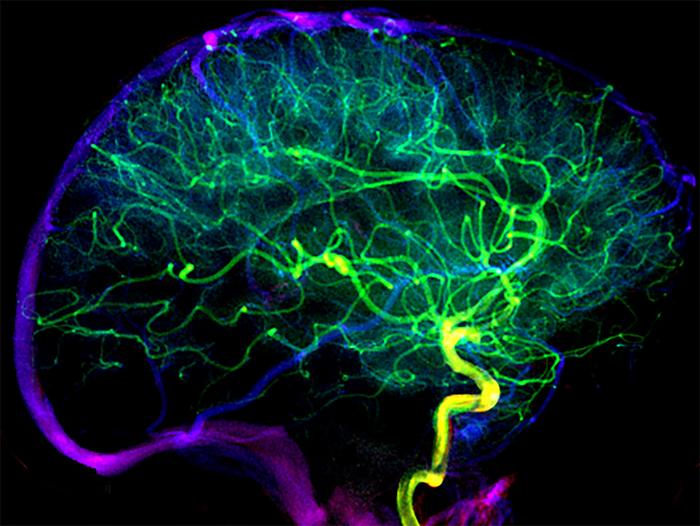
Blood vessels in the brain

Credit: P. Thurner und Z. Kulcsar, University Hospital Zurich

Ischemic strokes are a major health burden. They occur when a blood vessel that supplies the brain becomes blocked, impairing blood flow to the brain. As a result, brain tissue suffers from a lack of oxygen and nutrients, which causes symptoms such as paralysis, confusion, dizziness, headache, trouble speaking or even death.

Many stroke patients recover poorly despite timely treatment

To treat these symptoms and restore blood flow to the brain, the obstructed vessel needs to be “declogged”, or recanalized. Contemporary treatments to remove the clot include intravenous thrombolysis or mechanical thrombectomy using a catheter. However, even with timely clot removal, many stroke patients only recover poorly.

The research group of Susanne Wegener, professor at the University of Zurich (UZH) and senior leading physician at the Department of Neurology of the University Hospital Zurich (USZ), has now demonstrated that the outcome of stroke treatments depends on the collateral network. Collaterals are blood vessels that cross-connect adjacent arterial trees, providing potential detour networks in case of a vascular blockage. “These vascular bridges maintain cerebral autoregulation and allow for a slower, gradual reperfusion, which results in smaller infarcts,” says Wegener.

Rapid reperfusion increases mortality

For their study, the research team with the two co-first authors Nadine Binder and Mohamad El Amki used a mouse model of stroke as well as advanced in vivo imaging methods to investigate changes in the arterial blood supply. In mice with poor collaterals, the arterial segments were dysfunctional and rigid after clot removal. “The rapid reperfusion that followed caused brain hemorrhage and increased mortality,” says Wegener.

The researchers were then able to confirm the results obtained in the mouse model in stroke patients. Stroke patients who had poor collaterals showed a similar rapid reperfusion following treatment to remove blood clots, also resulting in small cerebral hemorrhages and unfavorable recovery. 

The better the arterial connections, the better the recovery

So far, the focus has been on quick removal of blood clots in stroke patients, while problems associated with rapid post-treatment reperfusion and its potential harmful effects had received little attention. The study now implies that it is possible to identify stroke patients with a higher risk of poor recovery by the speed of reperfusion during treatment. “Future therapeutic interventions for stroke should aim to enhance collateral function, allowing for beneficial reperfusion after stroke,” concludes Susanne Wegener.


DOI

10.1016/j.neuron.2024.01.031

Method of Research

Imaging analysis

Subject of Research

People

Article Title

Leptomeningeal Collaterals Regulate Reperfusion in Ischemic Stroke and Rescue the Brain from Futile Recanalization

Article Publication Date

26-Feb-2024

Share12Tweet8Share2ShareShareShare2

Related Posts

New Study Reveals the Role of Insects in Our Ancestors’ Diet — Biology

New Study Reveals the Role of Insects in Our Ancestors’ Diet

June 5, 2026
RNA-Protein Self-Replication Systems Show Path Toward Evolutionary Extinction — Biology

RNA-Protein Self-Replication Systems Show Path Toward Evolutionary Extinction

June 5, 2026

Active Helitron Transposon Family Discovered in Wheat

June 5, 2026

How the Body Produces Reliable Antibodies Amidst Biological Chaos

June 5, 2026

POPULAR NEWS

  • ESMO 2025: mRNA COVID Vaccines Enhance Efficacy of Cancer Immunotherapy

    322 shares
    Share 129 Tweet 81
  • Multi-Hospital Study Reveals Long Covid Burden Is Twice as High as Current Estimates

    89 shares
    Share 35 Tweet 22
  • Saying Goodbye to PGY-6: Pediatric Fellowship Realities

    80 shares
    Share 32 Tweet 20
  • Common Food Preservatives Associated with Elevated Blood Pressure and Increased Heart Disease Risk

    57 shares
    Share 23 Tweet 14

About

We bring you the latest biotechnology news from best research centers and universities around the world. Check our website.

Follow us

Recent News

Work-Related Factors Linked to PFAS Levels in Canadians

Complete Genomes Unveil Mycobacterium Tuberculosis Diversity

Ultradense Aligned Nanowires Boost Flexible Electronics

Subscribe to Blog via Email

Enter your email address to subscribe to this blog and receive notifications of new posts by email.

Join 82 other subscribers
  • Contact Us

Bioengineer.org © Copyright 2023 All Rights Reserved.

Welcome Back!

Login to your account below

Forgotten Password?

Retrieve your password

Please enter your username or email address to reset your password.

Log In
No Result
View All Result
  • Homepages
    • Home Page 1
    • Home Page 2
  • News
  • National
  • Business
  • Health
  • Lifestyle
  • Science

Bioengineer.org © Copyright 2023 All Rights Reserved.