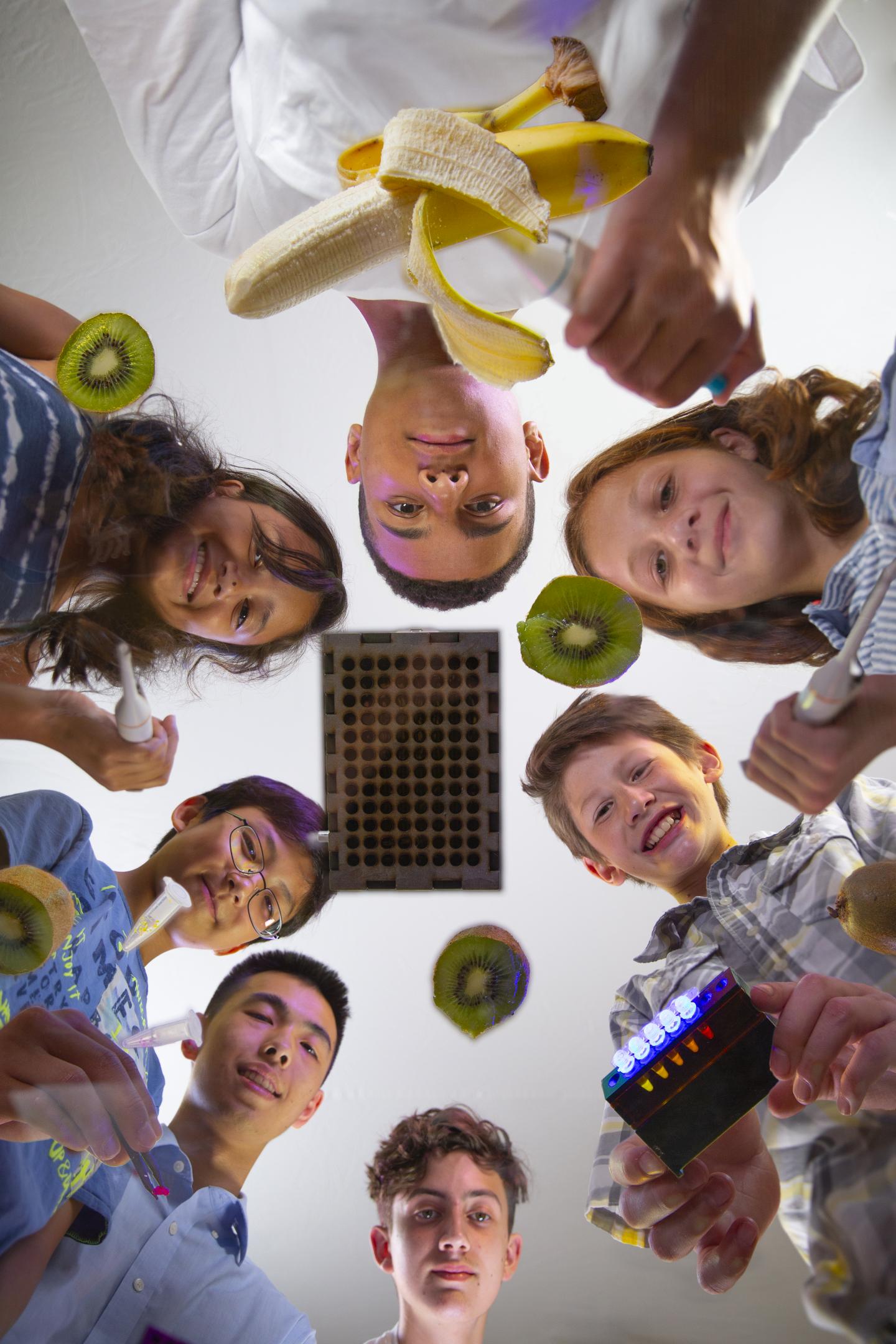
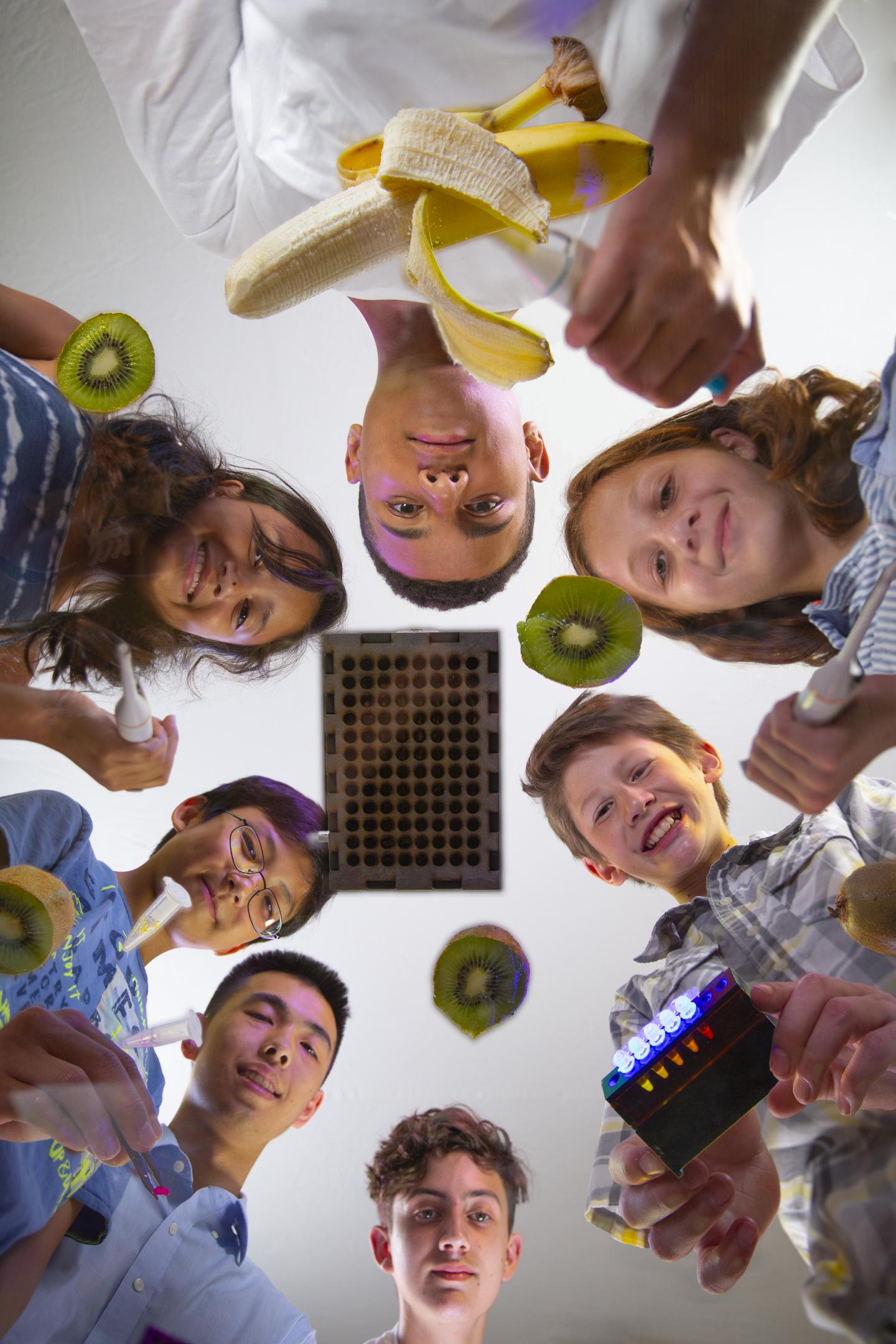
Credit: (Courtesy photo by Wyss Institute at Harvard University)
ABERDEEN PROVING GROUND, Md. (Oct. 11, 2018) — An affordable children's educational kit is the latest commercial spinoff of research pursued by the U.S. Army to create advanced materials for Soldier systems.
A team of researchers funded by the Army created and designed a new resource for science teachers. BioBitTM is an educational platform for teaching synthetic biology to kindergartners through high school.
The team from the Massachusetts Institute of Technology, Harvard University and Northwestern University recently tested the platform in the Chicago Public Schools where students and teachers helped.
The test findings showed that students and teachers performed experiments successfully. The program fills a gap in current science, technology, math and engineering education, said Dr. Dawanne Poree, the Army's lead program manager on this project.
"The BioBitTM Explorer kit enables hands-on demonstrations of cutting-edge science that is inexpensive and easy to use, circumventing many current barriers for implementing exploratory biology experiments in classrooms," Poree said.
Chicago-area teachers partnered to develop curricula for high school math and middle school science classes, emphasizing the cross-cutting nature and the value of this activity at various educational levels, officials said.
The high cost and specialized equipment required for even the simplest demonstration of synthetic biology tools prevent many K-12 and some undergraduate schools from effectively teaching these methods, Poree said.
"If the United States is to continue leading research in synthetic biology in the coming decades, then current students must be encouraged to pursue long term study in this field," Poree said.
The kits are commercially available for an $100 to $200 for materials for a classroom of about 30 students.
BioBits is based on the latest methods in synthetic biology. They incorporates methods for freeze-drying harmless cellular extracts into pellets that can be packaged and distributed to classrooms.
These pellets provide individual experiments that can be activated in the classroom to reveal the power of synthetic biology through pre-designed reactions, said Dr. Michael Jewett, of Northwestern University. These pellets provide individual experiments that can be activated in the classroom to reveal the power of synthetic biology through pre-designed reactions.
This platform grew out of prior and ongoing research funded by the Army Research Laboratory's Army Research Office to develop new tools in synthetic biology with the goal of adapting cellular machinery to produce non-biological materials.
Specifically, researchers were initially exploring the mechanisms of protein synthesis inside cells with the long term goal of harnessing and adapting cellular machinery to produce non-biological materials. This research involves the development of new methods in synthetic biology that will be required to utilize powerful biological enzymes to create polymers of interest for the Army.
Research in synthetic biology will be essential for realizing scientific discoveries in the 21st century such as responsive materials, game-changing chemical, material, and drug manufacturing methods, the detection and elimination of toxic chemicals, and medical applications ranging from the detection and treatment of traumatic brain injury to the development of integrated prosthetics.
###
This research was published in the August 2018 edition of Science Advances.
The U.S. Army Research Laboratory is part of the U.S. Army Research, Development and Engineering Command, which has the mission to ensure decisive overmatch for unified land operations to empower the Army, the joint warfighter and our nation. RDECOM is a major subordinate command of the U.S. Army Materiel Command.
Media Contact
T'Jae Ellis
[email protected]
410-467-3802
@ArmyResearchLab
http://www.arl.army.mil
Original Source
https://www.arl.army.mil/www/default.cfm?article=3306 http://dx.doi.org/10.1126/sciadv.aat5105