Led by Jizhong Zhou, Ph.D., the director of the Institute for Environmental Genomics at the University of Oklahoma, an international research team conducted a long term experiment that found that climate warming reduced the diversity of and significantly altered the community structure of soil archaea. Their findings are published in the journal Nature Climate Change.
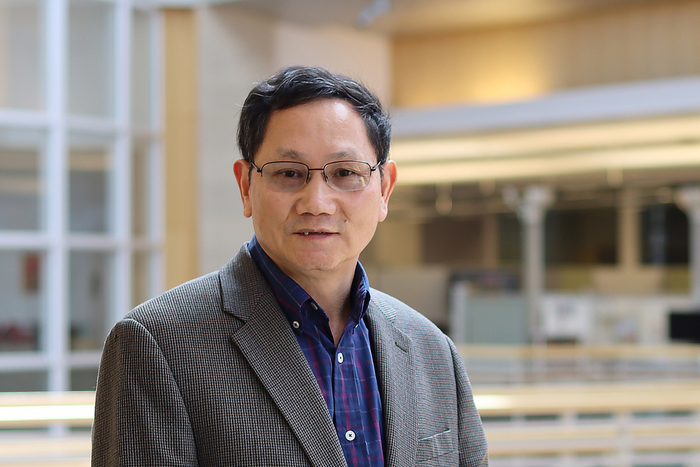
Credit: Provided by the University of Oklahoma
Led by Jizhong Zhou, Ph.D., the director of the Institute for Environmental Genomics at the University of Oklahoma, an international research team conducted a long term experiment that found that climate warming reduced the diversity of and significantly altered the community structure of soil archaea. Their findings are published in the journal Nature Climate Change.
At the microbiological level, life can be described as belonging to one of three kingdoms – how species are described in relation to one another. Eukarya contains complex organisms like animals and plants and microorganisms such as fungi. The other two categories, bacteria and archaea, are comprised only of microorganisms. Archaea are prevalent in a range of environments, from some of the most hostile like volcanoes and permafrost. However, archaea are also common in the human microbiome and as an important part of soil ecology.
“As temperature is a major driver of biological processes, climate warming will impact various ecological communities,” Zhou said. “Based on long-term time-series data, our previous studies revealed that experimental warming leads to the divergent succession of soil bacterial and fungal communities, accelerates microbial temporal scaling, reduces the biodiversity of soil bacteria, fungi and protists, but increases bacterial network complexity and stability. However, how climate warming affects the temporal succession of the archaeal community remains elusive. Archaea are ubiquitously present in soil and are vital to soil functions, e.g., nitrification and methanogenesis.”
Using a long-term multifactor experimental field site at OU’s Kessler Atmospheric and Ecological Field Station, the researchers showed that experimental warming of a tallgrass prairie ecosystem significantly altered the community structure of soil archaea and reduced their taxonomic and phylogenetic diversity. In contrast to the researchers’ previous observations in bacteria and fungi, their finds show that climate warming leads to convergent succession of the soil archaeal community, suggesting archaeal community structures would become more predictable in a warmer world.
###
About the Project
The article, “Experimental Warming Leads to Convergent Succession of Grassland Archaeal Community” published May 3, 2023 in Nature Climate Change. DOI no. 10.1038/s41558-023-01664-x. Zhou, who is also a George Lynn Cross Research Professor of Microbiology in the Dodge Family College of Arts and Sciences, is the corresponding author. The first author is Ya Zhang, Institute for Environmental Genomics and Department of Microbiology and Plant Biology at OU.
About the University of Oklahoma Office of the Vice President for Research and Partnerships
The University of Oklahoma is a leading research university classified by the Carnegie Foundation in the highest tier of research universities in the nation. Faculty, staff and students at OU are tackling global challenges and accelerating the delivery of practical solutions that impact society in direct and tangible ways through research and creative activities. OU researchers expand foundational knowledge while moving beyond traditional academic boundaries, collaborating across disciplines and globally with other research institutions as well as decision makers and practitioners from industry, government and civil society to create and apply solutions for a better world. Find out more at ou.edu/research.
Journal
Nature Climate Change
DOI
10.1038/s41558-023-01664-x
Article Title
Experimental warming leads to convergent succession of grassland archaeal community
Article Publication Date
4-May-2023