• HOME
  • NEWS
  • EXPLORE
    • CAREER
      • Companies
      • Jobs
    • EVENTS
    • iGEM
      • News
      • Team
    • PHOTOS
    • VIDEO
    • WIKI
  • BLOG
  • COMMUNITY
    • FACEBOOK
    • INSTAGRAM
    • TWITTER
Sunday, October 4, 2026
BIOENGINEER.ORG
No Result
View All Result
  • Login
  • HOME
  • NEWS
  • EXPLORE
    • CAREER
      • Companies
      • Jobs
        • Lecturer
        • PhD Studentship
        • Postdoc
        • Research Assistant
    • EVENTS
    • iGEM
      • News
      • Team
    • PHOTOS
    • VIDEO
    • WIKI
  • BLOG
  • COMMUNITY
    • FACEBOOK
    • INSTAGRAM
    • TWITTER
  • HOME
  • NEWS
  • EXPLORE
    • CAREER
      • Companies
      • Jobs
        • Lecturer
        • PhD Studentship
        • Postdoc
        • Research Assistant
    • EVENTS
    • iGEM
      • News
      • Team
    • PHOTOS
    • VIDEO
    • WIKI
  • BLOG
  • COMMUNITY
    • FACEBOOK
    • INSTAGRAM
    • TWITTER
No Result
View All Result
Bioengineer.org
No Result
View All Result
Home NEWS Science News Chemistry

APS tip sheet: modeling the matter after big bang expansion

Bioengineer by Bioengineer
February 3, 2020
in Chemistry
Reading Time: 1 min read
0
IMAGE
Share on FacebookShare on TwitterShare on LinkedinShare on RedditShare on Telegram

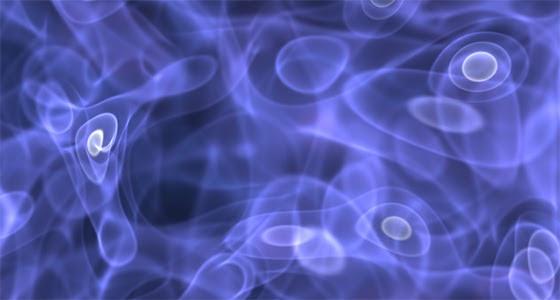
Matter’s fragmentation after the big bang
IMAGE

Credit: Musoke et al. Physical Review Letters (2020)


After the Big Bang, there likely came a period of inflation where the universe rapidly expanded. As this rapid expansion ends, incredibly dense quantum matter–called a condensate–is expected to form. However, even if this condensate is long-lived, interactions between it and its own gravitational field ultimately cause it to fragment. Now, scientists have created the first simulation of the condensate during this process. Musoke et al. modeled the matter’s fragmentation to provide the first quantitative examination of the gravitational disintegration of the condensate. They found that fragmentation can be described by the Schrodinger-Poisson equation, which describes how large numbers of quantum particles interact with their gravitational fields. Knowing how this quantum condensate might have behaved right after the Big Bang could also potentially help scientists understand the formation of dark matter and to make precise predictions for key cosmological observables.

###

Lighting the Dark: The Evolution of the Post-Inflationary Universe
Nathan Musoke, Shaun Hotchkiss, and Richard Easther

Media Contact
APS Press Office
[email protected]
301-209-3090

Tags: Chemistry/Physics/Materials Sciences
Share12Tweet8Share2ShareShareShare2

Related Posts

Frog Egg Byproduct Inspires Smart Food Wrap That Changes Color as Food Spoils

Frog Egg Byproduct Inspires Smart Food Wrap That Changes Color as Food Spoils

October 4, 2026
Solvent Polarity Steers Double Proton Transfer in a Promising OLED Fluorophore

Solvent Polarity Steers Double Proton Transfer in a Promising OLED Fluorophore

October 4, 2026

AI Digital Twins Could Transform Intensive Care in Landmark $38 Million Federal Project

October 4, 2026

Ancient Chinese Medicine Compounds Turned Into Next-Generation Antibiotic Candidates by AI

October 4, 2026
Please login to join discussion

POPULAR NEWS

  • Alloys That Shrink Their Own Grains: New PIX Mechanism Refines Metals With Heat Alone

    Alloys That Shrink Their Own Grains: New PIX Mechanism Refines Metals With Heat Alone

    29 shares
    Share 12 Tweet 7
  • Endurance Exercise Reshapes the Liver in Males and Females Through Distinct Molecular Routes

    29 shares
    Share 12 Tweet 7
  • Single Transcription Factor PU.1 Rapidly Converts Fibroblasts into Macrophage-Lineage Cells

    29 shares
    Share 12 Tweet 7
  • New Scale Measures How Ready Nurse Educators Really Are for the AI Era

    29 shares
    Share 12 Tweet 7

About

We bring you the latest biotechnology news from best research centers and universities around the world. Check our website.

Follow us

Recent News

Alloys That Shrink Their Own Grains: New PIX Mechanism Refines Metals With Heat Alone

Endurance Exercise Reshapes the Liver in Males and Females Through Distinct Molecular Routes

Single Transcription Factor PU.1 Rapidly Converts Fibroblasts into Macrophage-Lineage Cells

Subscribe to Blog via Email

Success! An email was just sent to confirm your subscription. Please find the email now and click 'Confirm' to start subscribing.

Join 85 other subscribers
  • Contact Us

Bioengineer.org © Copyright 2023 All Rights Reserved.

Welcome Back!

Login to your account below

Forgotten Password?

Retrieve your password

Please enter your username or email address to reset your password.

Log In
No Result
View All Result
  • Homepages
    • Home Page 1
    • Home Page 2
  • News
  • National
  • Business
  • Health
  • Lifestyle
  • Science

Bioengineer.org © Copyright 2023 All Rights Reserved.