• HOME
  • NEWS
  • EXPLORE
    • CAREER
      • Companies
      • Jobs
    • EVENTS
    • iGEM
      • News
      • Team
    • PHOTOS
    • VIDEO
    • WIKI
  • BLOG
  • COMMUNITY
    • FACEBOOK
    • INSTAGRAM
    • TWITTER
Tuesday, October 20, 2026
BIOENGINEER.ORG
No Result
View All Result
  • Login
  • HOME
  • NEWS
  • EXPLORE
    • CAREER
      • Companies
      • Jobs
        • Lecturer
        • PhD Studentship
        • Postdoc
        • Research Assistant
    • EVENTS
    • iGEM
      • News
      • Team
    • PHOTOS
    • VIDEO
    • WIKI
  • BLOG
  • COMMUNITY
    • FACEBOOK
    • INSTAGRAM
    • TWITTER
No Result
View All Result
Bioengineer.org
No Result
View All Result
Home NEWS Science News Technology

Application of scanning river surface flow field monitoring system in monitoring complex flow regimes of waterways

by
October 20, 2026
in Technology
Reading Time: 2 mins read
0
Application of scanning river surface flow field monitoring system in monitoring complex flow regimes of waterways

Application of scanning river surface flow field monitoring system in monitoring complex flow regimes of waterways

Share on FacebookShare on TwitterShare on LinkedinShare on RedditShare on Telegram

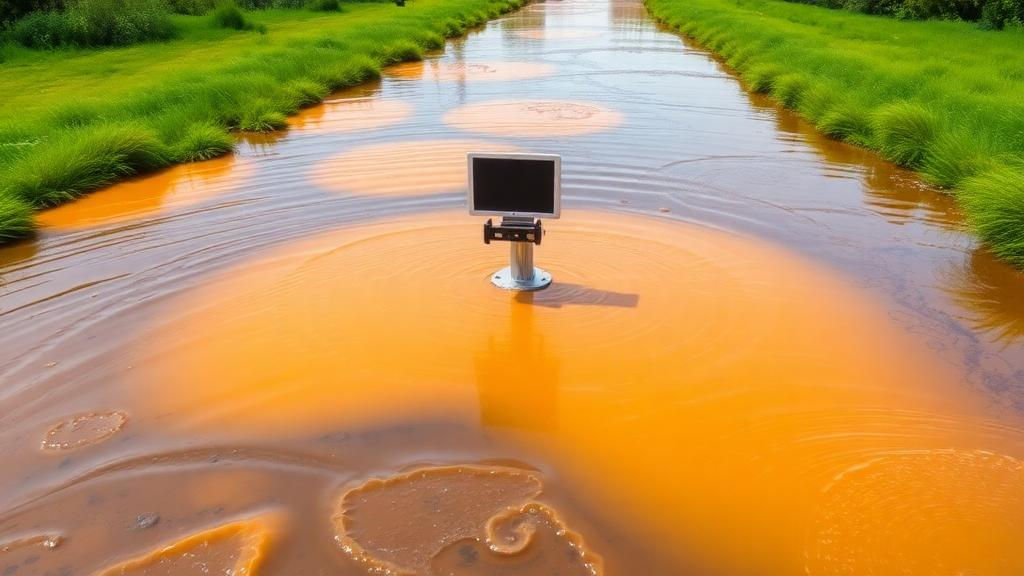
A non-contact scanning flow-monitoring system developed for complex waterways successfully captured high-resolution river surface-flow fields and cross-sectional profile velocities during a field application at a hydrological station on the Yangtze River waterway. The study in Scientific Reports reports that the system maintained operation despite installation deviations and environmental interference while operating automatically. The system combines a pulse-Doppler radar configuration with slot antennas and scanning turntables.

The antennas and turntables provide wide-angle detection, with the reported viewing coverage extending across 120 degrees. Compared with traditional current-measuring radars, the researchers report a larger speed-measurement range, higher resolution and finer azimuth resolution. The field deployment was not presented as a replacement for contact instruments; rather, it demonstrated a way to monitor surface-flow patterns and cross-sectional velocity profiles at one Yangtze River waterway station.

Processing complex radar echoes is a central technical problem addressed by the platform. Its software includes pulse coding matching to align received signals with transmitted pulses, followed by distance-Doppler processing. The system also uses WSO optimization clustering and an extreme learning network.

These algorithms are designed to invert surface-flow velocity and profile-flow velocity from the complex echo patterns. In the reported application, the system generated synchronized measurements of the high-resolution surface field and velocities across the observed cross-section. The authors state that the new configuration offers a wider speed range, greater resolution and improved azimuth resolution than traditional current-measuring radars, together with a 120-degree detection sector.

They also report strong anti-interference performance and fully automatic operation. The evidence comes from the development of one instrument platform and its field application at a single hydrological station. The supplied study abstract does not quantify uncertainty in the velocity estimates, report repeated observations across seasons, or compare results with multiple contact instruments at the same site.

It also does not establish performance across other rivers, discharge conditions or waterway configurations. Accordingly, the strongest supported conclusion is that the scanning pulse-Doppler system can provide automated, non-contact measurements of surface-flow fields and cross-sectional profile velocities under the conditions of the reported Yangtze River field application, offering a technical approach for monitoring flow patterns in complex waterways.

Subject of Research: Non-contact scanning radar monitoring of river surface flow fields and cross-sectional velocity profiles in one Yangtze River field application.

Article Title: Application of scanning river surface flow field monitoring system in monitoring complex flow regimes of waterways

Article References: Zhou, W., Yin, G., Feng, G., & Gu, D. (2026). Application of scanning river surface flow field monitoring system in monitoring complex flow regimes of waterways. Scientific Reports. https://doi.org/10.1038/s41598-026-76881-3

Image Credits: AI Generated

DOI: 10.1038/s41598-026-76881-3

Keywords: river flow monitoring, pulse-Doppler radar, surface velocity, flow-field mapping, velocity profiles, extreme learning network, Yangtze River, hydrology, non-contact sensing, Application, scanning, river

News Source: Denise Maddox. (October 20, 2026). Application of scanning river surface flow field monitoring system in monitoring complex flow regimes of waterways. Scienmag.

Tags: applicationextreme learning networkflow-field mappinghydrologynon-contact sensingpulse-Doppler radarriverriver flow monitoringscanningsurface velocityvelocity profilesYangtze River
Share12Tweet7Share2ShareShareShare1

Related Posts

Engineered exosomes preserve trabecular bone in mouse osteoporosis model

Engineered exosomes preserve trabecular bone in mouse osteoporosis model

October 20, 2026
Aging tunes cryogenic strength in Fe-based medium-entropy alloy

Aging tunes cryogenic strength in Fe-based medium-entropy alloy

October 20, 2026

Facial AI estimates biological age and predicts cancer survival

October 20, 2026

AI adoption linked to risk performance across North African institutions

October 20, 2026

POPULAR NEWS

  • Engineered exosomes preserve trabecular bone in mouse osteoporosis model

    Engineered exosomes preserve trabecular bone in mouse osteoporosis model

    29 shares
    Share 12 Tweet 7
  • Research report: Karyotype characteristics and gene COI sequences of Chironomus bonus Shilova et Dzhvarsheishvili, 1974 ( Diptera , Chironomidae ) from the South Caucasus (Republic of Georgia, Paravani river)

    29 shares
    Share 12 Tweet 7
  • Time to change after six issues of Alpine Entomology

    29 shares
    Share 12 Tweet 7
  • New records of three vent scale worms fill Central Indian Ridge gaps

    29 shares
    Share 12 Tweet 7

About

We bring you the latest biotechnology news from best research centers and universities around the world. Check our website.

Follow us

Recent News

Engineered exosomes preserve trabecular bone in mouse osteoporosis model

Research report: Karyotype characteristics and gene COI sequences of Chironomus bonus Shilova et Dzhvarsheishvili, 1974 ( Diptera , Chironomidae ) from the South Caucasus (Republic of Georgia, Paravani river)

Time to change after six issues of Alpine Entomology

Subscribe to Blog via Email

Enter your email address to subscribe to this blog and receive notifications of new posts by email.

Join 85 other subscribers
  • Contact Us

Bioengineer.org © Copyright 2023 All Rights Reserved.

Welcome Back!

Login to your account below

Forgotten Password?

Retrieve your password

Please enter your username or email address to reset your password.

Log In
No Result
View All Result
  • Homepages
    • Home Page 1
    • Home Page 2
  • News
  • National
  • Business
  • Health
  • Lifestyle
  • Science

Bioengineer.org © Copyright 2023 All Rights Reserved.