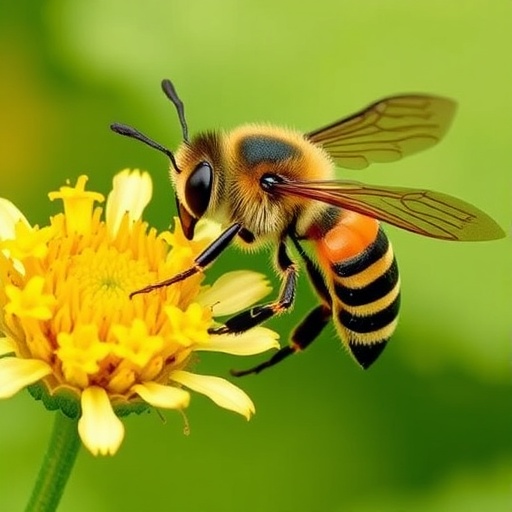
In an exciting advancement in the field of entomological genomics, a recent study led by Guo et al. has unveiled intricate details of the antennal transcriptome and gustatory receptor genes in Apis cerana cerana, a vital pollinator species. As the world faces an alarming decline in bee populations, understanding how these insects interact with their environment becomes crucial. This research ultimately highlights the evolutionary adaptations and behaviors of this bee species when foraging for pollen from a variety of nectar source plants.
Apis cerana cerana, commonly known as the Asian honey bee, plays a critical role in global agriculture by facilitating the pollination of numerous flowering plants. Notably, this species has evolved distinct traits that enable it to thrive in diverse habitats. With the increase in monoculture farming and the associated decline in plant biodiversity, understanding the foraging behavior—particularly in terms of preference for certain plant species—might shed light on sustaining both bee populations and the ecosystems they support.
The core of the study revolves around the analysis of gene expression in the antennae of these bees. The antennae, being a primary sensory organ, are equipped to detect subtle changes in environmental stimuli, including odorants that signal the presence of valuable nectar sources. By employing RNA sequencing techniques, the researchers were able to capture a snapshot of the diverse RNA molecules present in the antennae, offering insights into how bees discern various floral cues.
In particular, the research shines a spotlight on the gustatory receptor gene family, which plays an essential role in chemical sensing. Gustatory receptors are pivotal in determining which nectar sources the bees will exploit. These receptors allow the bees to evaluate the chemical composition of the nectar, a function that is essential for their survival and efficiency in foraging. The amplified understanding of these genes assists scientists in grasping how environmental factors may influence bee behavior and floral preferences.
The study identified a substantial number of differentially expressed genes associated with the gustatory receptors. These genes enabled the researchers to draw parallels between the genetic predispositions of Apis cerana cerana and its ability to select nourishing nectar sources over potentially detrimental ones. Such insights are not only vital for bees themselves but also for agricultural practices, as knowing which plants are favored by pollinators can guide farmers in optimizing crop yields.
Moreover, the differentiation in gene expression associated with various nectar sources indicates an adaptive mechanism that can fine-tune how these bees respond to environmental changes. With climate change posing new challenges, understanding these genetic adaptations could be key to ensuring the resilience of bee populations in the face of rising temperatures and shifting floral compositions.
Many previous studies on bee genetics have primarily focused on the Western honey bee, Apis mellifera. Guo et al.’s research fills an essential gap by directing attention toward Apis cerana cerana, which is notably adapted to tropical and subtropical climates. This geographical and biological focus allows for a more comprehensive understanding of how different species within the same genus may exhibit unique adaptations to their environments, thus broadening the field of pollination biology substantially.
The implications of this research are extensive. As the global community increasingly recognizes the importance of biodiversity for ecosystem stability, findings from studies like these contribute significantly to conservation strategies. By understanding the genetic basis for foraging preferences, conservationists can design interventions aimed at preserving both bee populations and the myriad of plant species that depend on them for reproduction.
Additionally, these insights can lead to the development of new agricultural practices that align more closely with the natural behaviors of pollinators. Researchers are already exploring the possibility of breeding programs aimed at enhancing beneficial traits in bee populations, and the genetic information gained from studies such as this could be integral in guiding these programs.
Given the widespread use of pesticides in agricultural practices, understanding how Apis cerana cerana processes the chemical signals from various plants—both beneficial and harmful—is more pertinent than ever. The need for sustainable farming practices that do not adversely affect pollinator populations is pressing, and the genetic insights gathered from this study could lead to improved strategies to encourage pollinator-friendly habitats within agricultural landscapes.
As this research gains visibility within the scientific community and beyond, the hope is that it will spark further studies that delve deeper into the sensory biology of bees. The interconnected nature of ecosystems makes it vital to understand how these organisms interact with their environments. Collaborations across disciplines, including genetics, ecology, and agriculture, could amplify the value of this study and its findings.
In conclusion, Guo et al.’s study serves as a testament to the burgeoning field of bee genomics and its implications for future research and conservation efforts. By elucidating the complexities of the antennal transcriptome and gustatory receptors in Apis cerana cerana, this work not only enhances our understanding of bee foraging ecology but also reinforces the broader narrative of sustaining biodiversity in an ever-changing world. Efforts to further this knowledge could ultimately lead to innovative solutions that support the vital role of pollinators in our ecosystems and agriculture.
With the urgency of protecting our planet’s pollinators growing daily, studies like these illuminate the path forward, offering hope and a framework for tomorrow’s conservation and agricultural strategies.
Subject of Research: Analysis of antennal transcriptome and gustatory receptor genes in Apis cerana cerana.
Article Title: Guo, L., Song, C., Zhang, Y. et al. Analysis of antennal transcriptome and gustatory receptor genes in Apis cerana cerana collecting pollens from different nectar source plants.
Article References: Guo, L., Song, C., Zhang, Y. et al. Analysis of antennal transcriptome and gustatory receptor genes in Apis cerana cerana collecting pollens from different nectar source plants. BMC Genomics 26, 1015 (2025). https://doi.org/10.1186/s12864-025-12179-4
Image Credits: AI Generated
DOI: https://doi.org/10.1186/s12864-025-12179-4
Keywords: Apis cerana cerana, antennal transcriptome, gustatory receptors, pollination, biodiversity, genetic adaptations, RNA sequencing, foraging behavior, conservation strategies.
Tags: antennal transcriptome analysisApis cerana ceranabee pollination behaviorenvironmental interactions of pollinatorsevolutionary adaptations in beesforaging behavior of honey beesgenomics in entomologygustatory receptor genesimpact of monoculture farming on beesnectar source preferences in beesplant biodiversity and bee healthsustaining bee populations