• HOME
  • NEWS
  • EXPLORE
    • CAREER
      • Companies
      • Jobs
    • EVENTS
    • iGEM
      • News
      • Team
    • PHOTOS
    • VIDEO
    • WIKI
  • BLOG
  • COMMUNITY
    • FACEBOOK
    • INSTAGRAM
    • TWITTER
Sunday, October 4, 2026
BIOENGINEER.ORG
No Result
View All Result
  • Login
  • HOME
  • NEWS
  • EXPLORE
    • CAREER
      • Companies
      • Jobs
        • Lecturer
        • PhD Studentship
        • Postdoc
        • Research Assistant
    • EVENTS
    • iGEM
      • News
      • Team
    • PHOTOS
    • VIDEO
    • WIKI
  • BLOG
  • COMMUNITY
    • FACEBOOK
    • INSTAGRAM
    • TWITTER
  • HOME
  • NEWS
  • EXPLORE
    • CAREER
      • Companies
      • Jobs
        • Lecturer
        • PhD Studentship
        • Postdoc
        • Research Assistant
    • EVENTS
    • iGEM
      • News
      • Team
    • PHOTOS
    • VIDEO
    • WIKI
  • BLOG
  • COMMUNITY
    • FACEBOOK
    • INSTAGRAM
    • TWITTER
No Result
View All Result
Bioengineer.org
No Result
View All Result
Home NEWS Science News Biology

Antimicrobial paints have a blind spot

Bioengineer by Bioengineer
April 18, 2019
in Biology
Reading Time: 2 mins read
0
IMAGE
Share on FacebookShare on TwitterShare on LinkedinShare on RedditShare on Telegram

Spore-forming bacteria survive on surfaces coated with antimicrobial, latex paints
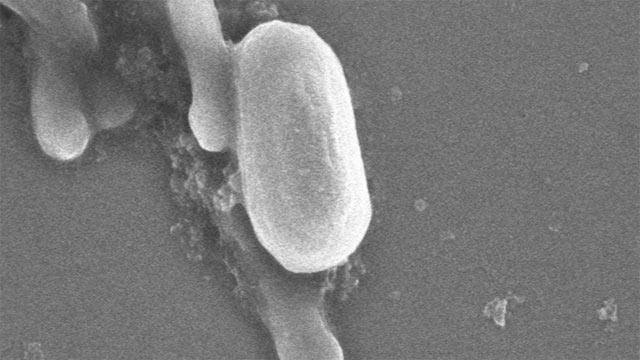
IMAGE

Credit: Jinglin Hu/Northwestern University

EVANSTON, Ill. — Antimicrobial paints offer the promise of extra protection against bacteria. But Northwestern University researchers caution that these paints might be doing more harm than good.

In a new study, the researchers tested bacteria commonly found inside homes on samples of drywall coated with antimicrobial, synthetic latex paints. Within 24 hours, all bacteria died except for Bacillus timonensis, a spore-forming bacterium. Most bacilli are commonly inhabit soil, but many are found in indoor environments.

“If you attack bacteria with antimicrobial chemicals, then they will mount a defense,” said Northwestern’s Erica Hartmann, who led the study. “Bacillus is typically innocuous, but by attacking it, you might prompt it to develop more antibiotic resistance.”

Bacteria thrive in warm, moist environments, so most die on indoor surfaces, which are dry and cold, anyway. This makes Hartmann question the need to use antimicrobial paints, which may only be causing bacteria to become stronger.

Spore-forming bacteria, such as Bacillus, protect themselves by falling dormant for a period of time. While dormant, they are highly resistant to even the harshest conditions. After those conditions improve, they reactivate.

“When it’s in spore form, you can hit it with everything you’ve got, and it’s still going to survive,” said Hartmann, assistant professor of civil and environmental engineering in Northwestern’s McCormick School of Engineering. “We should be judicious in our use of antimicrobial products to make sure that we’re not exposing the more harmless bacteria to something that could make them harmful.”

The study was published online on April 13 in the journal Indoor Air.

One problem with antimicrobial products — such as these paints — is that they are not tested against more common bacteria. Manufacturers test how well more pathogenic bacteria, such as E. coli or Staphylococcus, survive but largely ignore the bacteria that people (and the products they use) would more plausibly encounter.

“E. coli is like the ‘lab rat’ of the microbial world,” Hartmann said. “It is way less abundant in the environment than people think. We wanted to see how the authentic indoor bacteria would respond to antimicrobial surfaces because they don’t behave the same way as E. coli.”

###

The study, “Impacts of indoor surface finishes on bacterial viability,” was supported by the Alfred P. Sloan Foundation (award number G-2016-7291) and the Searle Leadership Fund.

Media Contact
Amanda Morris
[email protected]

Original Source

https://news.northwestern.edu/stories/2019/04/antimicrobial-paints-have-a-blind-spot/

Tags: BacteriologyBiologyBiomedical/Environmental/Chemical EngineeringMicrobiology
Share12Tweet8Share2ShareShareShare2

Related Posts

Stressed Cells Hold On to Their Color: ER Stress Links Senescence to Stubborn Age Spots

Stressed Cells Hold On to Their Color: ER Stress Links Senescence to Stubborn Age Spots

October 4, 2026
Fungal Ally Reshapes Tobacco Root Microbes to Boost Growth in Poor Soil

Fungal Ally Reshapes Tobacco Root Microbes to Boost Growth in Poor Soil

October 4, 2026

Hidden Genome: Tiny Proteins Mapped Across the Parasite Behind Trichomoniasis

October 4, 2026

Mint Compound L-Carvone Shows Promise Against Uremia-Driven Blood Vessel Damage in Kidney Disease

October 4, 2026
Please login to join discussion

POPULAR NEWS

  • Alloys That Shrink Their Own Grains: New PIX Mechanism Refines Metals With Heat Alone

    Alloys That Shrink Their Own Grains: New PIX Mechanism Refines Metals With Heat Alone

    29 shares
    Share 12 Tweet 7
  • Endurance Exercise Reshapes the Liver in Males and Females Through Distinct Molecular Routes

    29 shares
    Share 12 Tweet 7
  • Single Transcription Factor PU.1 Rapidly Converts Fibroblasts into Macrophage-Lineage Cells

    29 shares
    Share 12 Tweet 7
  • New Scale Measures How Ready Nurse Educators Really Are for the AI Era

    29 shares
    Share 12 Tweet 7

About

We bring you the latest biotechnology news from best research centers and universities around the world. Check our website.

Follow us

Recent News

Alloys That Shrink Their Own Grains: New PIX Mechanism Refines Metals With Heat Alone

Endurance Exercise Reshapes the Liver in Males and Females Through Distinct Molecular Routes

Single Transcription Factor PU.1 Rapidly Converts Fibroblasts into Macrophage-Lineage Cells

Subscribe to Blog via Email

Enter your email address to subscribe to this blog and receive notifications of new posts by email.

Join 85 other subscribers
  • Contact Us

Bioengineer.org © Copyright 2023 All Rights Reserved.

Welcome Back!

Login to your account below

Forgotten Password?

Retrieve your password

Please enter your username or email address to reset your password.

Log In
No Result
View All Result
  • Homepages
    • Home Page 1
    • Home Page 2
  • News
  • National
  • Business
  • Health
  • Lifestyle
  • Science

Bioengineer.org © Copyright 2023 All Rights Reserved.