• HOME
  • NEWS
  • EXPLORE
    • CAREER
      • Companies
      • Jobs
    • EVENTS
    • iGEM
      • News
      • Team
    • PHOTOS
    • VIDEO
    • WIKI
  • BLOG
  • COMMUNITY
    • FACEBOOK
    • INSTAGRAM
    • TWITTER
Saturday, July 4, 2026
BIOENGINEER.ORG
No Result
View All Result
  • Login
  • HOME
  • NEWS
  • EXPLORE
    • CAREER
      • Companies
      • Jobs
        • Lecturer
        • PhD Studentship
        • Postdoc
        • Research Assistant
    • EVENTS
    • iGEM
      • News
      • Team
    • PHOTOS
    • VIDEO
    • WIKI
  • BLOG
  • COMMUNITY
    • FACEBOOK
    • INSTAGRAM
    • TWITTER
  • HOME
  • NEWS
  • EXPLORE
    • CAREER
      • Companies
      • Jobs
        • Lecturer
        • PhD Studentship
        • Postdoc
        • Research Assistant
    • EVENTS
    • iGEM
      • News
      • Team
    • PHOTOS
    • VIDEO
    • WIKI
  • BLOG
  • COMMUNITY
    • FACEBOOK
    • INSTAGRAM
    • TWITTER
No Result
View All Result
Bioengineer.org
No Result
View All Result
Home NEWS Science News

Anticancer properties of mono/di-halogenated coumarins

Bioengineer by Bioengineer
January 30, 2017
in Science News
Reading Time: 2 mins read
0
Share on FacebookShare on TwitterShare on LinkedinShare on RedditShare on Telegram
IMAGE

Credit: Dr. Kabange Kasumbwe et al., Bentham Science Publishers

Throughout the world, many medicinal compounds are being discovered. Scientists have learnt to modify the chemical structures of active compounds so that they can improved therapeutic activity and reduced the toxicity. In view of the established low toxicity, relative cheapness, presence in the diet, and occurrence in various herbal remedies of coumarins, it appears prudent to evaluate their properties and applications further.

Coumarins were first isolated from the plant species Dipteryx odorata Willd (Family: Fabaceae) in 1820. The name coumarin is derived from 'Coumarou'. The French commonly called them Tonka beans (Dipteryx odorata Willd, Fabaceae), from which coumarins were derived.

Coumarins are naturally occurring plant metabolites known for their various pharmacological properties such as anticoagulant, antimicrobial, anticancer, antioxidant, anti-inflammatory and antiviral properties.

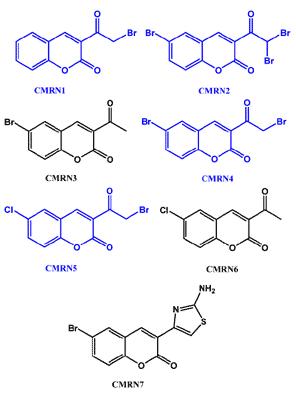
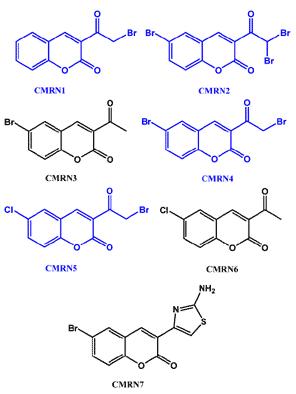
In the present investigation, mono/di-halogenated coumarins CMRN1-CMRN7 have been synthesized and evaluated for their anticancer activity. The cytotoxic potential of the test compounds was evaluated against UACC-62, MCF-7 and PBM (Peripheral Blood Mononuclear) cell lines using MTT assay. The apoptotic potential of the coumarin compounds was evaluated against UACC-62 cells by assessing membrane change, mitochondria membrane potential, pro-apoptotic changes were investigated using the Annexin V-PI staining, JC-1, caspase-3 enzyme kits respectively on a flow cytometer. The test compounds CMRN1, CMRN2, CMRN4 and CMRN5 have strongly suppressed the cell proliferation of UACC-62 and MCF-7 cancer cell lines. Furthermore the test compounds CMRN1, CMRN2, CMRN4 and CMRN5 exerted antiproliferative effects through apoptosis induction against UACC-62.

###

For more information about the article, please visit: http://benthamscience.com/journals/anti-cancer-agents-in-medicinal-chemistry/article/145789/

Reference: Kasumbwe, K.; (2017). Synthetic Mono/di-halogenated Coumarin Derivatives and Their Anticancer Properties. Anticancer Agents Med Chem, DOI: 10.2174/1871520616666160926112508

Kabange Kasumbwe, Katharigatta N. Venugopala, Viresh Mohanlall and Bharti Odhav

Department of Biotechnology and Food Technology, Durban University of Technology, Steve Biko Campus, Durban 4001, South Africa

Media Contact

Faizan ul Haq
[email protected]
@BenthamScienceP

http://benthamscience.com/

############

Story Source: Materials provided by Scienmag

Share12Tweet8Share2ShareShareShare2

Related Posts

Quasi-Bound States Boost Quantum Well Photoresponse — Technology and Engineering

Quasi-Bound States Boost Quantum Well Photoresponse

July 4, 2026

Lysine Pyruvylation Links Glycolysis to Epigenetics

July 4, 2026

Multiphysics Coupling: Single vs. Multiple DeepONet Branches

July 4, 2026

Personalized Neoantigen Dendritic Cell Vaccine in Glioblastoma

July 4, 2026
Please login to join discussion

POPULAR NEWS

  • Detection of EDCs in Breast Milk and Infant Urine Up to Six Months Highlights Early Exposure Risks

    77 shares
    Share 31 Tweet 19
  • Saying Goodbye to PGY-6: Pediatric Fellowship Realities

    103 shares
    Share 41 Tweet 26
  • New Drug Candidate Developed at McMaster Shows Potential for Treating Brain Cancer

    58 shares
    Share 23 Tweet 15
  • KTU Researchers Explore Ultrasound’s Role in Enhancing Blood Flow Beyond Diagnostics

    53 shares
    Share 21 Tweet 13

About

We bring you the latest biotechnology news from best research centers and universities around the world. Check our website.

Follow us

Recent News

Quasi-Bound States Boost Quantum Well Photoresponse

Lysine Pyruvylation Links Glycolysis to Epigenetics

Multiphysics Coupling: Single vs. Multiple DeepONet Branches

Subscribe to Blog via Email

Success! An email was just sent to confirm your subscription. Please find the email now and click 'Confirm' to start subscribing.

Join 83 other subscribers
  • Contact Us

Bioengineer.org © Copyright 2023 All Rights Reserved.

Welcome Back!

Login to your account below

Forgotten Password?

Retrieve your password

Please enter your username or email address to reset your password.

Log In
No Result
View All Result
  • Homepages
    • Home Page 1
    • Home Page 2
  • News
  • National
  • Business
  • Health
  • Lifestyle
  • Science

Bioengineer.org © Copyright 2023 All Rights Reserved.