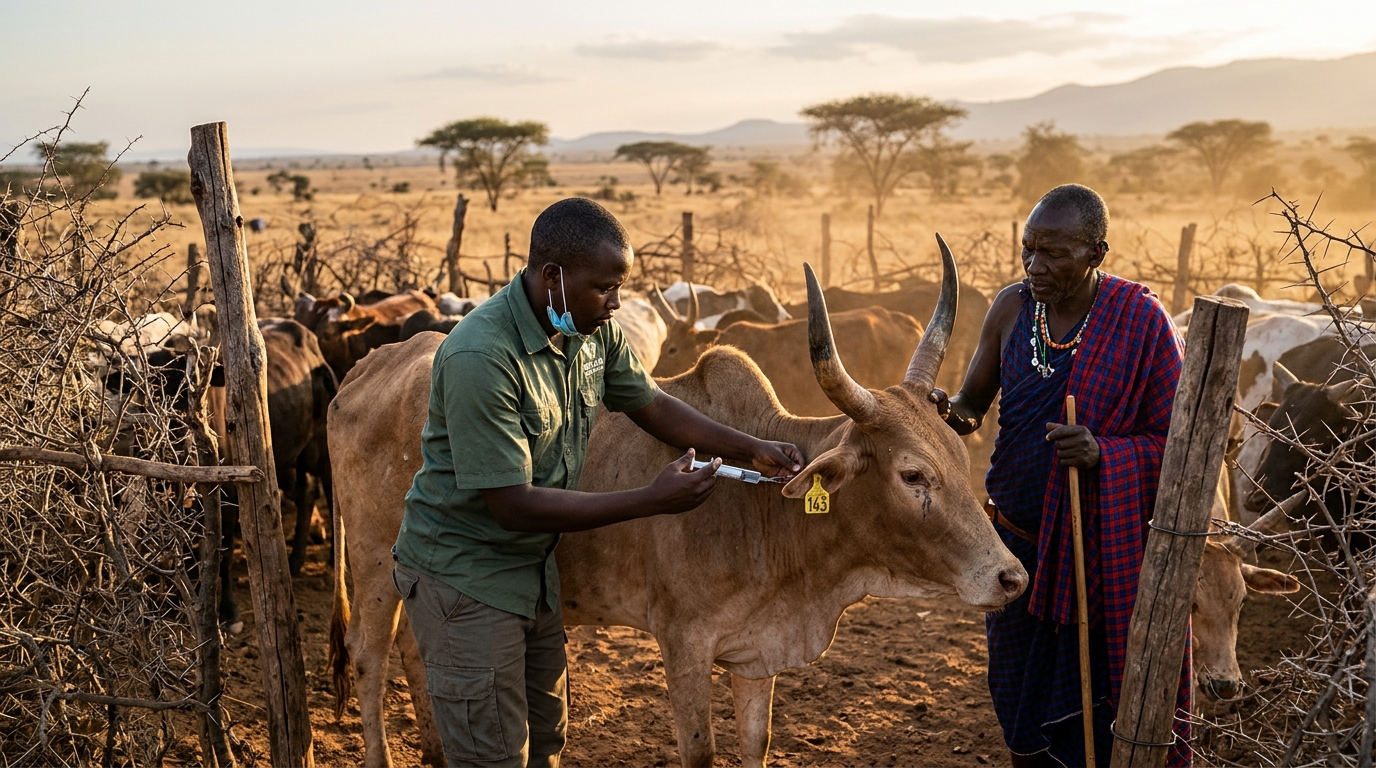
A recent investigation into livestock management practices in northern Tanzania has revealed significant variations in antibiotic utilization across three distinct agricultural production systems. The study, conducted by an international research team, employed a mixed-method approach—incorporating three cross-sectional surveys, qualitative interviews, and direct observations—to analyze how different farming setups influence the use of veterinary medicines. Researchers found that antibiotic administration is prevalent in these low-resource settings, driven primarily by the high burden of infectious diseases and the limited availability of professional veterinary services. By analyzing data from various households, the study identified clear patterns in the types of drugs preferred, the channels through which they are acquired, and the specific clinical or preventative scenarios in which they are deployed.
Oxytetracycline emerged as the most frequently used antibiotic across the studied communities, serving as a primary treatment option for a wide array of perceived livestock ailments. The research highlighted that pastoralist communities reported higher overall usage rates and a more diverse range of antibiotics compared to those practicing agropastoralism or smallholder farming. These practices were often guided by informal advice from peers or local retail sellers, with farmers frequently relying on past experiences to inform current treatment decisions. Importantly, the study observed that antibiotics were not reserved solely for bacterial infections; they were regularly utilized to manage generic clinical signs or applied preventatively, reflecting a broader trend of prophylactic use in these agricultural landscapes.
The study identified several injudicious treatment habits that pose potential risks for antimicrobial resistance, including the administration of drugs via suboptimal routes, the failure to observe required withdrawal periods, and the use of antibiotics primarily intended for human consumption in livestock. Statistical analysis, specifically generalized linear models, demonstrated that the production system itself was a significant predictor of treatment behavior. Farmers residing in pastoral areas were substantially more likely to use antibiotics than their counterparts in other systems, with odds ratios indicating that pastoralists were 3.92 times more likely to use these drugs than agropastoralists, and 7.87 times more likely than smallholders. These findings underscore the influence of structural factors on individual farm-level management choices.
Species-specific data further refined the understanding of antibiotic application, with cattle identified as the animal group for which these treatments were most common. The study reported that cattle had an odds ratio of 6.32 for antibiotic use compared to poultry, and 2.29 compared to sheep and goats. Researchers also noted that the intensity of treatment, measured by the number of courses administered per cow per year, was significantly higher in smaller herds and among households that sourced their supplies directly from local markets. This suggests that accessibility and herd size play critical roles in shaping the frequency and intensity of drug administration, potentially exacerbating the risks associated with non-professional use.
Beyond the logistical factors of sourcing and herd size, the researchers found that treatment variations were closely linked to broader socio-economic and environmental influences, such as access to professional healthcare, existing disease risks, deep-seated cultural norms, and geographic proximity to urban centers. These intersecting factors create a complex decision-making environment where farmers must balance the immediate health needs of their livestock against the availability and cost of veterinary inputs. The findings indicate that there is no one-size-fits-all solution for reducing antibiotic reliance, as the unique pressures facing pastoralists, agropastoralists, and smallholders require distinct, tailored management interventions.
To address the challenges identified in this research, the study team emphasized the necessity of community-driven awareness campaigns that specifically target the diverse needs of each production system. Strengthening formal veterinary infrastructure, implementing rigorous biosecurity protocols, and expanding access to vaccination programs are identified as essential steps toward reducing the current reliance on antibiotics. By improving veterinary diagnostics and professional oversight, such measures could lower the frequency of unnecessary antibiotic use, ultimately helping to mitigate the escalating threat of antimicrobial resistance in East African livestock sectors and similar settings worldwide.
Subject of Research: Veterinary antibiotic utilization patterns in Tanzanian livestock production systems
Article Title: An analysis of antibiotic use in livestock in three East African livestock production systems
Article References: Loosli, K., McIntyre, H., Matthews, L., Johnson, P., Almadhoon, H., Bootthong, K., Buyugu, P., Ibrahim, Y., Lea, R., Manangwa, O., Nthambi, M., Melubo, M., Mnzava, K., Mramba, F., Nasuwa, F., Shinini, T., Shirima, G., Muwonge, A., Torr, S., … Auty, H. (2026). An analysis of antibiotic use in livestock in three East African livestock production systems. One Health Outlook. https://doi.org/10.1186/s42522-026-00251-2
Image Credits: AI Generated
DOI: 10.1186/s42522-026-00251-2
Keywords: antibiotic resistance, livestock management, veterinary medicine, Tanzania, pastoralism, agropastoralism, smallholder farming, oxytetracycline, animal health, antimicrobial use, One Health, disease prevention, veterinary services, livestock biosecurity, treatment practices
News Source: William Thompson. (November 16, 2026). Antibiotic Usage Patterns Across Diverse Tanzanian Livestock Production Systems. Scienmag.