In the frozen soils of James Ross Island, Antarctica, where temperatures hover near freezing and nutrients are vanishingly scarce, an unassuming bacterium has been quietly manufacturing a class of molecules no scientist has ever seen before. Researchers screening a long-term culture collection built from Antarctic permafrost soils have discovered and characterized the kineochelins, a previously undescribed group of siderophores—specialized iron-scavenging compounds—produced by a difficult-to-cultivate actinomycete that appears to be an entirely new species. The finding, published in Microbial Biotechnology, not only expands the known chemical universe but also demonstrates that Earth’s most isolated continent remains a nearly untouched reservoir of drug-discovery potential.
The urgency behind such searches is difficult to overstate. Antimicrobial resistance already kills millions of people annually, and the pipeline of genuinely new antibiotics has slowed to a trickle. Of the 13 antimicrobial drugs approved between 2017 and 2023, only two met the World Health Organization’s innovation criteria—most were merely derivatives of existing chemical scaffolds. This stagnation has pushed researchers toward ever more exotic sources of chemical novelty, including the microorganisms that thrive in Earth’s most punishing environments. Extreme habitats impose brutal selective pressures—cold, desiccation, radiation, nutrient starvation—that favor microbes with unusual metabolic toolkits, and those toolkits often translate into structurally distinctive secondary metabolites.
The new study emerged from a biodiversity campaign on James Ross Island that has run since 2007, yielding a collection of 972 bacterial strains isolated from the active soil layer above permafrost. Among the most phylogenetically divergent of these was strain UV203, isolated on starch-casein agar from a sample collected at Abernethy Flats during the austral summer of 2022. Genome-scale analysis placed it firmly within the actinomycete genus Actinokineospora, but with average nucleotide identity of just 93.6% and digital DNA–DNA hybridization of 51.8% relative to its closest relative, Actinokineospora alba—both far below the thresholds used to delineate bacterial species. In other words, UV203 is likely a species new to science, belonging to a lineage of rare actinomycetes that rarely appear in standard cultivation surveys.
When the team ran antiSMASH biosynthetic gene cluster prediction on the UV203 genome, the software flagged 21 distinct biosynthetic gene clusters, many with no close match in public databases—a strong hint that the organism was manufacturing chemistry the world had never catalogued. Untargeted liquid chromatography–mass spectrometry confirmed the suspicion, detecting more than 28 secondary metabolites under various culturing conditions, a large fraction of which could not be matched to any known natural product in the GNPS, NPAtlas, or CAS databases. An accidental clue sharpened the hunt: a genetically engineered strain that had unexpectedly lost all antimicrobial activity also lacked a whole family of structurally related compounds, ranging in mass from 219 to 722 daltons, that the wild type produced abundantly.
Structural elucidation, anchored by comprehensive one- and two-dimensional NMR spectroscopy and Marfey’s amino acid analysis, revealed the architecture of the family. The smallest purified congener, kineochelin E1, consists of a 2-(2-hydroxyphenyl)-5-methyl-4,5-dihydrooxazole-4-carbonyl unit—derived from salicylic acid and L-threonine—capped with a glycine residue. The largest, kineochelin A1 (C30H42N8O13), extends this core with a chain of glycine, N5-hydroxy-N5-formyl-ornithine, two serine residues, and a cyclized N5-hydroxy-ornithine that closes the molecule into a macrocyclic amide. The hydroxamate-bearing ornithine residues are the chemical business end of the molecule: they are the classic iron-binding motifs found in high-affinity siderophores, allowing kineochelin A1 to clamp onto ferric and ferrous iron with strong, selective affinity.
Genome mining pinpointed the machinery behind this chemistry. A dedicated biosynthetic gene cluster, dubbed the kin cluster, carries three core nonribosomal peptide synthetase genes—kinA, kinB, and kinC—encoding six NRPS modules, plus a standalone salicylate synthase (kinL) and a separate aryl carrier protein–thioesterase didomain protein (kinT) hypothesized to release the final product by cyclizing the C-terminal ornithine. The biosynthetic logic is elegant: salicylate synthesized from chorismate is loaded onto an aryl carrier protein, condensed with L-threonine to form the signature oxazoline ring, and then extended module by module into the full-length siderophore. Yet despite sharing roughly 38% homology with the gobichelin cluster, the kin genes show full-length protein identities that never exceed 40% against any known mixed-ligand siderophore pathway, and comparative network analysis placed the cluster in its own gene cluster family alongside only two uncharacterized clusters from A. alba strains. The kineochelins, in short, represent a distinct biosynthetic lineage.
Because targeted gene knockouts of kinA and kinB repeatedly failed despite successful integration of control plasmids, the team turned to transcriptomics to seal the connection. Growing UV203 under three iron regimes—standard medium, iron-rich medium supplemented with 200 μM FeCl3, and iron-limited medium containing the chelator 2,2′-bipyridine—they showed that siderophore production surged between days 4 and 6 of cultivation and that antimicrobial activity appeared on cue at day 8. RNA sequencing at days 3 and 7 demonstrated that the entire kin cluster is co-transcribed and significantly upregulated under siderophore-producing, iron-limited conditions, while iron-replete conditions almost completely repress both gene expression and metabolite production. An additional co-regulated gene outside the cluster, encoding a lysine/ornithine N-oxygenase and named kinO, likely supplies the hydroxylated ornithine building blocks. The correlation between gene expression, iron availability, and chemical output ties the kin cluster to kineochelin production beyond reasonable doubt.
The ecological and biomedical implications are equally compelling. Crude culture extracts from UV203 inhibited the growth of bacterial strains isolated from the very same Antarctic soils, suggesting that kineochelins function as weapons in iron-mediated microbial warfare—a scarce nutrient wielded as a competitive tool in one of Earth’s harshest ecosystems. More provocatively, kineochelin-enriched fractions showed moderate but selective inhibitory activity against Nakaseomyces glabratus, an opportunistic yeast pathogen of growing clinical concern, and against a clinical isolate of Saccharomyces cerevisiae associated with invasive infection.
Siderophores have become especially attractive in the resistance era because of their specialized uptake systems. The “Trojan Horse” strategy—chemically welding an antibiotic to a siderophore-like moiety so that resistant bacteria actively import their own poison—has already reached the clinic in the form of cefiderocol, and natural sideromycins such as albomycin have long illustrated the principle. Any genuinely new siderophore scaffold, with its own distinct transporter-recognition features, therefore represents potential raw material for next-generation conjugate antibiotics, metal homeostasis disruptors, and even biotechnology applications ranging from bioremediation to metal recovery and biosensing.
The kineochelin discovery also closes a stubborn gap in polar microbiology. Cultivation-independent surveys have revealed a wealth of biosynthetic gene clusters in Antarctic microbes, but very few of those predicted pathways have ever been linked to purified molecules. By coupling cultivation, genome mining, transcriptomics, and activity-guided isolation, this study delivers a complete arc from biosynthetic prediction to purified, structurally solved, functionally validated chemistry—a template the authors argue should now be applied across the broader collection of 972 strains. With most of the genome-sequenced isolates representing previously undescribed species or higher taxa, and with 21 biosynthetic gene clusters in UV203 alone, the odds are good that kineochelins are only the first of many chemical surprises still buried in the permafrost.
Subject of Research: Characterization of kineochelins, a new group of mixed-ligand siderophores produced by the Antarctic actinomycete Actinokineospora sp. UV203
Subject of Research: Biology
Article Title: Kineochelins-A New Group of Siderophores From an Antarctic Bacterium
Article References: Kralova, S., Spacek, P., Gafriller, J., Bezdicek, M., Medvedcova, V., Séneca, J., Osvatic, J., Grienke, U., Rattei, T., Sekurova, O. N., Zotchev, S. B., Zehl, M., & Loy, A. (2026). Kineochelins—A New Group of Siderophores From an Antarctic Bacterium. Microbial Biotechnology, 19(6), Article e70386. https://doi.org/10.1111/1751-7915.70386
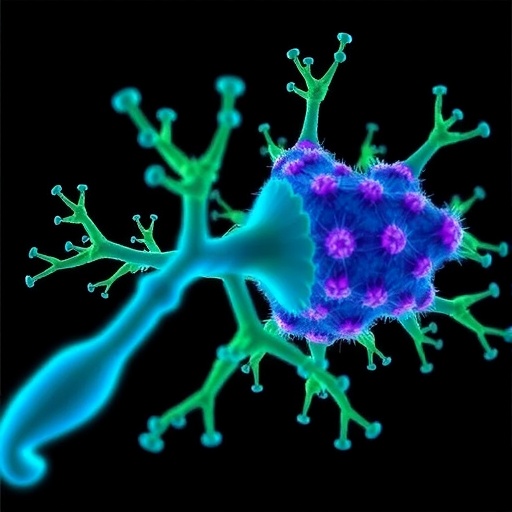
Image Credits: AI Generated
DOI: 10.1111/1751-7915.70386
Keywords: kineochelins, siderophores, Antarctic actinomycetes, Actinokineospora, nonribosomal peptide synthetase, biosynthetic gene cluster, antimicrobial resistance, iron chelation, natural products, polar microbiology
Cite Scienmag News
APA MLA Chicago
Morgan Morrow. (September 3, 2026). Antarctic Bacterium Yields Kineochelins, a Novel Class of Iron-Binding Molecules. Scienmag. https://scienmag.com/antarctic-bacterium-yields-kineochelins-a-novel-class-of-iron-binding-molecules/
Morgan Morrow. “Antarctic Bacterium Yields Kineochelins, a Novel Class of Iron-Binding Molecules.” Scienmag, 3 September 2026, https://scienmag.com/antarctic-bacterium-yields-kineochelins-a-novel-class-of-iron-binding-molecules/. Accessed 3 September 2026.
Morgan Morrow. “Antarctic Bacterium Yields Kineochelins, a Novel Class of Iron-Binding Molecules.” Scienmag. September 3, 2026. https://scienmag.com/antarctic-bacterium-yields-kineochelins-a-novel-class-of-iron-binding-molecules/
Copy citation Download RIS
Tags: actinomycete bacteria producing bioactive moleculesAntarctic bacterium discoveryAntarctic microbiology and drug discoveryAntarctic soil bacteriabiodiversity of Antarctic soilschallenges of cultivating Antarctic microorganismsexploration of Antarctic microbial metabolitesextremophile microorganisms and antibiotic developmentiron-binding siderophores from Antarctic microbesKineochelinskineochelins chemical characterizationmicrobial adaptation to cold and nutrient scarcitymicrobial adaptation to cold environmentsmicrobial biosynthesis of siderophoresmicrobial chemical diversity in Earth’s isolated ecosystemsmicrobial drug discovery in polar regionsnovel antimicrobial compounds from extreme environmentsnovel iron-binding siderophorespotential for new antibiotics from extreme habitat microbespotential new antibiotics from Antarctic microbesrole of actinomycetes in natural product synthesisrole of siderophores in microbial survivaluncharted microbial chemical diversityuntapped biodiversity in Antarctic permafrost