• HOME
  • NEWS
  • EXPLORE
    • CAREER
      • Companies
      • Jobs
    • EVENTS
    • iGEM
      • News
      • Team
    • PHOTOS
    • VIDEO
    • WIKI
  • BLOG
  • COMMUNITY
    • FACEBOOK
    • INSTAGRAM
    • TWITTER
Monday, May 11, 2026
BIOENGINEER.ORG
No Result
View All Result
  • Login
  • HOME
  • NEWS
  • EXPLORE
    • CAREER
      • Companies
      • Jobs
        • Lecturer
        • PhD Studentship
        • Postdoc
        • Research Assistant
    • EVENTS
    • iGEM
      • News
      • Team
    • PHOTOS
    • VIDEO
    • WIKI
  • BLOG
  • COMMUNITY
    • FACEBOOK
    • INSTAGRAM
    • TWITTER
  • HOME
  • NEWS
  • EXPLORE
    • CAREER
      • Companies
      • Jobs
        • Lecturer
        • PhD Studentship
        • Postdoc
        • Research Assistant
    • EVENTS
    • iGEM
      • News
      • Team
    • PHOTOS
    • VIDEO
    • WIKI
  • BLOG
  • COMMUNITY
    • FACEBOOK
    • INSTAGRAM
    • TWITTER
No Result
View All Result
Bioengineer.org
No Result
View All Result
Home NEWS Science News Biology

Ancient mantis-man petroglyph discovered in Iran

Bioengineer by Bioengineer
March 16, 2020
in Biology
Reading Time: 2 mins read
0
IMAGE
Share on FacebookShare on TwitterShare on LinkedinShare on RedditShare on Telegram

IMAGE

Credit: Dr. Mohammad Naserifard


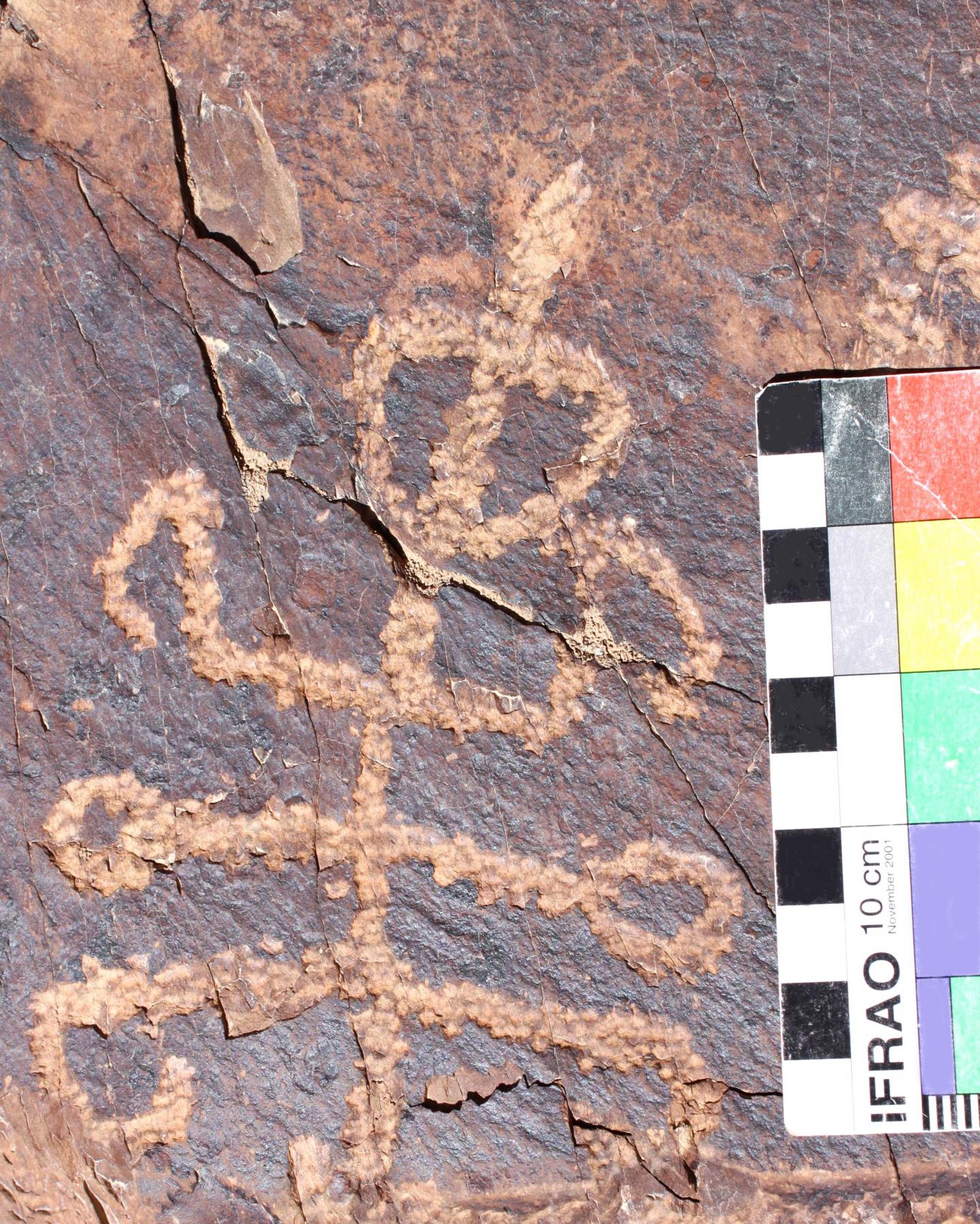
A unique rock carving found in the Teymareh rock art site (Khomein county) in Central Iran with six limbs has been described as part man, part mantis. Rock carvings, or petroglyphs, of invertebrate animals are rare, so entomologists teamed up with archaeologists to try and identify the motif. They compared the carving with others around the world and with the local six-legged creatures which its prehistoric artists could have encountered.

Entomologists Mahmood Kolnegari, Islamic Azad University of Arak, Iran; Mandana Hazrati, Avaye Dornaye Khakestari Institute, Iran; and Matan Shelomi, National Taiwan University teamed up with freelance archaeologist and rock art expert Mohammad Naserifard and describe the petroglyph in a new paper published in the open access Journal of Orthoptera Research.

The 14-centimetre carving was first spotted during surveys between 2017 and 2018, but could not be identified due to its unusual shape. The six limbs suggest an insect, while the triangular head with big eyes and the grasping forearms are unmistakably those of a praying mantid, a predatory insect that hunts and captures prey like flies, bees and even small birds. An extension on its head even helps narrow the identification to a particular genus of mantids in this region: Empusa.

Even more mysterious are the middle limbs, which end in loops or circles. The closest parallel to this in archaeology is the ‘Squatter Man,’ a petroglyph figure found around the world depicting a person flanked by circles. While they could represent a person holding circular objects, an alternative hypothesis is that the circles represent auroras caused by atmospheric plasma discharges.

It is presently impossible to tell exactly how old the petroglyphs are, because sanctions on Iran prohibit the use of radioactive materials needed for radiocarbon dating. However, experts Jan Brouwer and Gus van Veen examined the Teymareh site and estimated the carvings were made 40,000-4,000 years ago.

One can only guess why prehistoric people felt the need to carve a mantis-man into rock, but the petroglyph suggests humans have linked mantids to the supernatural since ancient times. As stated by the authors, the carving bears witness, “that in prehistory, almost as today, praying mantids were animals of mysticism and appreciation.”

###

Original source:

Kolnegari M, Naserifard M, Hazrati M, Shelomi M (2020) Squatting (squatter) mantis man: A prehistoric praying mantis petroglyph in Iran. Journal of Orthoptera Research 29(1): 41-44. https://doi.org/10.3897/jor.29.39400

Media Contact
Mr Mahmood Kolnegari
[email protected]

Related Journal Article

http://dx.doi.org/10.3897/jor.29.39400

Tags: AnthropologyArchaeologyBiodiversityBiologyEntomologyEvolutionPaleontology
Share13Tweet8Share2ShareShareShare2

Related Posts

Transforming Jellyfish Bycatch into a Valuable Collagen Source for Cosmetics and Biotechnology — Biology

Transforming Jellyfish Bycatch into a Valuable Collagen Source for Cosmetics and Biotechnology

May 11, 2026
Ancient Plant Populations Reveal Fresh Insights into Climate Resilience — Biology

Ancient Plant Populations Reveal Fresh Insights into Climate Resilience

May 8, 2026

Rare Brain Disorders in Children Linked to Mutations in Lesser-Known Protein Complex

May 8, 2026

From Odd Insect to Underwater Predator: The Remarkable Evolution of a Bloodthirsty Fruit Fly

May 8, 2026
Please login to join discussion

POPULAR NEWS

  • Research Indicates Potential Connection Between Prenatal Medication Exposure and Elevated Autism Risk

    840 shares
    Share 336 Tweet 210
  • New Study Reveals Plants Can Detect the Sound of Rain

    728 shares
    Share 290 Tweet 182
  • Salmonella Haem Blocks Macrophages, Boosts Infection

    62 shares
    Share 25 Tweet 16
  • Breastmilk Balances E. coli and Beneficial Bacteria in Infant Gut Microbiomes

    57 shares
    Share 23 Tweet 14

About

We bring you the latest biotechnology news from best research centers and universities around the world. Check our website.

Follow us

Recent News

NELA, P-POSSUM, Muscle Index Predict Elderly Surgery Risk

PeroCycle Partners with Jindal Steel (Oman) to Pioneer Low-Carbon Steel Innovation

Widely Used Cholesterol Medication Could Disrupt Ovarian Cancer’s Stealth Defense

Subscribe to Blog via Email

Enter your email address to subscribe to this blog and receive notifications of new posts by email.

Join 82 other subscribers
  • Contact Us

Bioengineer.org © Copyright 2023 All Rights Reserved.

Welcome Back!

Login to your account below

Forgotten Password?

Retrieve your password

Please enter your username or email address to reset your password.

Log In
No Result
View All Result
  • Homepages
    • Home Page 1
    • Home Page 2
  • News
  • National
  • Business
  • Health
  • Lifestyle
  • Science

Bioengineer.org © Copyright 2023 All Rights Reserved.