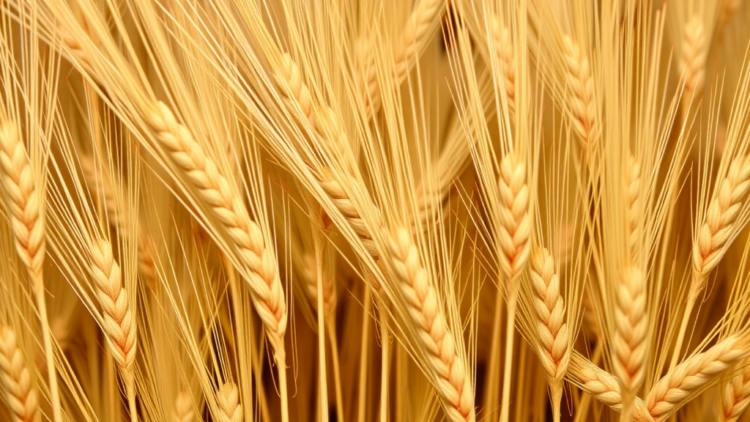
Every wheat plant makes a decision, over and over, that determines how much food it will ultimately provide: whether a side shoot, called a tiller, should keep growing and produce a grain-bearing head, or quietly die. The number of those productive tillers is one of the three pillars of wheat yield, alongside kernels per spike and kernel weight, and it is also the pillar that breeders understand least. Now, a team at Sichuan Agricultural University has pinned down a major genetic locus that exerts striking, stable control over productive tiller number in an ancient and unusual wheat lineage from China, and they have identified candidate genes that may explain how the effect works. The study, published in Theoretical and Applied Genetics, offers plant breeders a concrete molecular target for one of the most environmentally fickle traits in cereal crops.
The wheat at the center of the story is no ordinary bread wheat. Chinese endemic wheat, a distinct subspecies long cultivated in the highlands and river valleys of southwestern China, including Yunnan and Tibet, has survived centuries of isolation and carries genetic variation that modern elite varieties have largely lost. Landrace collections like these are increasingly viewed as treasure troves for crop improvement, because the intense yield-focused selection of the twentieth century stripped away alleles that might prove invaluable under future climates. Earlier work by the same group had already mined Chinese endemic wheat for stripe rust resistance and flag leaf architecture; the new study turns the same genomic lens on tillering, a trait whose genetic architecture has proven notoriously slippery.
Productive tiller number is slippery for a good reason. Unlike kernel size, which is largely locked in by the plant’s genome, tillering is a developmental program that the plant adjusts in real time in response to nutrient availability, planting density, water status, and temperature. Field measurements of the same variety can swing dramatically from season to season, which makes it hard to separate genuine genetic effects from environmental noise. Quantitative trait locus mapping and genome-wide association studies have both struggled to find tiller-number loci that hold up across sites and years, and only a handful, such as the tiller inhibitor gene tin on chromosome 1AS and the TaD27-B gene involved in strigolactone biosynthesis, have been characterized at the molecular level in wheat.
To confront that variability head-on, the researchers assembled a panel of 182 Chinese endemic wheat accessions and grew them across three distinct environments at Chongzhou in Sichuan Province, in 2022, 2023, and 2025, supplementing the field data with best linear unbiased predictions that integrate information across all settings. They counted productive tillers, measured plant height, spike length, and spikelet number per spike, and estimated broad-sense heritability for each trait. Productive tiller number showed heritability of roughly 69.6 percent, a figure indicating moderate-to-strong genetic control, but the analysis also revealed clear genotype-by-environment interactions, confirming that the trait’s expression depends heavily on where and how the plants are grown.
With the phenotypes in hand, the team scanned roughly the whole genome for associations using a 55K single nucleotide polymorphism array and three complementary statistical models: a mixed linear model that corrects for both population structure and kinship, along with the generalized linear model and the FarmCPU algorithm as cross-checks. The standout result was a locus on the short arm territory of chromosome 5D, which the authors named QPTN.sicau-CEW-5D. This single region accounted for 70.6 percent of all significant marker-trait associations detected in the study, an unusually dominant contribution for a quantitative trait. Haplotype analysis of the interval revealed four distinct allelic combinations in the panel, and the carriers of the favorable haplotype, Hap1, consistently produced significantly more productive tillers than plants carrying the alternatives.
Crucially, the advantage of Hap1 came with a trade-off profile that breeders will find attractive. Plants carrying the favorable haplotype were also taller, but spike length and spikelet number per spike showed no significant differences among haplotype classes across multiple environments. That pattern matters because it suggests the locus specifically boosts the number of fertile, grain-bearing shoots without penalizing the size or complexity of each individual head. Since grain yield in wheat is roughly the product of spike number, spikelet number, and kernel weight, a variant that raises spike number while leaving the other components untouched is exactly the kind of allele a yield-improvement program wants in its toolkit.
A major locus found in one population is only as good as its performance in another, so the team ran an independent validation experiment using 220 Sichuan wheat cultivars and landraces, a genetically distinct germplasm pool. The 5D locus again showed a highly significant and stable association with productive tiller number, confirming that its effect is not an artifact of the original panel or a peculiarity of Chinese endemic wheat. By contrast, two other loci the study detected, on chromosomes 3A and 6A, behaved in an environment-dependent fashion, significant in some settings and absent in others. That contrast between a rock-solid 5D effect and fickle signals elsewhere neatly illustrates why so many tillering QTL reported over the past two decades have failed to translate into breeding practice.
To move from a genomic region to actionable biology, the researchers dissected the candidate interval using two complementary approaches: screening for non-synonymous variants, the DNA changes that actually alter protein sequences, and testing those variants for independent associations with the trait. This triage prioritized three genes. Two encode receptor-like protein kinases, designated TraesCS5D02G556900 and TraesCS5D02G557800, and one encodes an NLR-type immune receptor, TraesCS5D02G557600. The receptor-like kinases are particularly compelling candidates. This large family of cell-surface signaling proteins is deeply involved in developmental control in grasses, including the regulation of shoot branching and meristem fate. In rice, overexpression of leucine-rich repeat receptor-like kinases such as LRK1 and LRK2 has been shown to increase tiller number and improve yield components, and the CLAVATA signaling pathway, which calibrates stem cell populations in meristems, likewise runs through receptor kinase complexes. A signaling variant that tunes how aggressively a wheat plant commits axillary buds to becoming fertile tillers fits the observed phenotype well.
The involvement of an NLR gene is more surprising and hints at a possible link between immunity and architecture. NLR proteins are best known as intracellular sensors of pathogen attack, but growing evidence suggests crosstalk between defense signaling and developmental pathways, and pleiotropy between disease resistance and plant form is a recurring theme in crop genetics. The authors are careful to frame all three genes as candidates requiring functional validation, and the study’s data availability statement notes that no new datasets were generated beyond those reported, so independent functional studies, whether through mutants, gene editing, or transgenic complementation, remain the necessary next step before the mechanism is settled.
Even before that mechanistic work is complete, the practical implications are immediate. The four-haplotype structure at QPTN.sicau-CEW-5D means breeders can now screen for the favorable Hap1 allele with molecular markers and introgress it into elite backgrounds through marker-assisted selection, bypassing the slow and unreliable process of selecting on tiller counts in the field, where weather and management confound everything. Because the locus was validated in both Chinese endemic wheat and independent Sichuan germplasm, its breeding value appears to transcend the landrace panel in which it was discovered. As global wheat demand continues to climb against the headwinds of climate volatility, genes that add a few more fertile heads per plant, reliably and across environments, are precisely the kind of quiet, cumulative wins on which food security depends. This study shows that the old wheat of southwestern China, patiently collected and genotyped, still has lessons to teach the modern field.
Subject of Research: Genetic mapping of a productive tiller number locus and candidate genes in Chinese endemic wheat
Article Title: Genetic identification and characterization of a locus controlling productive tiller number with breeding value in Chinese endemic wheat
Article References: Wang, T., Chen, J., Hu, X., Lohani, M. N., Tang, H., Liu, Y., Xu, Q., Jiang, Y., Jiang, Q., Chen, G., Wei, Y., & Ma, J. (2026). Genetic identification and characterization of a locus controlling productive tiller number with breeding value in Chinese endemic wheat. Theoretical and Applied Genetics, 139(10), Article 276. https://doi.org/10.1007/s00122-026-05391-7
Image Credits: AI Generated
DOI: 10.1007/s00122-026-05391-7
Keywords: wheat, productive tiller number, GWAS, QTL, Chinese endemic wheat, chromosome 5D, haplotype, receptor-like kinase, NLR gene, marker-assisted selection, crop breeding, yield
Cite Scienmag News
APA MLA Chicago
Alan Morgan. (September 26, 2026). Ancient Chinese Wheat Yields a Genetic Key to More Grain Per Plant. Scienmag. https://scienmag.com/ancient-chinese-wheat-yields-a-genetic-key-to-more-grain-per-plant/
Alan Morgan. “Ancient Chinese Wheat Yields a Genetic Key to More Grain Per Plant.” Scienmag, 26 September 2026, https://scienmag.com/ancient-chinese-wheat-yields-a-genetic-key-to-more-grain-per-plant/. Accessed 26 September 2026.
Alan Morgan. “Ancient Chinese Wheat Yields a Genetic Key to More Grain Per Plant.” Scienmag. September 26, 2026. https://scienmag.com/ancient-chinese-wheat-yields-a-genetic-key-to-more-grain-per-plant/
Copy citation Download RIS
Tags: Ancient Chinese wheat geneticsancient crop genetics and modern breedingChinese endemic wheatchromosome 5Dcrop breedinggenetic loci in cereal cropsgenetically unique wheat lineages in ChinaGWAShaplotypelandrace wheat genetic diversitymarker-assisted selectionmolecular targets for wheat improvementNLR geneplant breeding for grain productionproductive tiller numberQTLreceptor-like kinasetraditional Chinese wheat varietieswheatwheat plant decision-making processeswheat tiller number controlwheat yield determinationwheat yield traits and environmental stabilityyield