IIASA research highlights that besides the devastating impacts of the Israel-Hamas War, there are additional longstanding causes for the ongoing food crisis, and tailored strategies are urgently required to resolve it.
Credit: Rotem Zelingher / IIASA
IIASA research highlights that besides the devastating impacts of the Israel-Hamas War, there are additional longstanding causes for the ongoing food crisis, and tailored strategies are urgently required to resolve it.
The recent escalation of the Israel-Hamas conflict sparked a devastating humanitarian crisis in the Gaza Strip. In response to a large-scale attack on Israel by Hamas and its allies, Israel responded with airstrikes, a blockade, and a ground invasion of Gaza, resulting in widespread destruction and significant loss of life on both sides. The conflict is further complicated by increasing food insecurity in the Gaza Strip, with alarming levels of acute food insecurity affecting 95% of the population, according to the Integrated Food Security Phase Classification (IPC) Famine Review Committee (FRC).
A new policy brief by IIASA Postdoctoral Research Fellow Rotem Zelingher explores the root causes of the food crisis in the Gaza Strip, highlighting that chronic food insecurity in the region pre-dated the war and stems from a multiplicity of governance-related factors. The outbreak of conflict has further exacerbated the pre-existing vulnerabilities, making the situation even more dire.
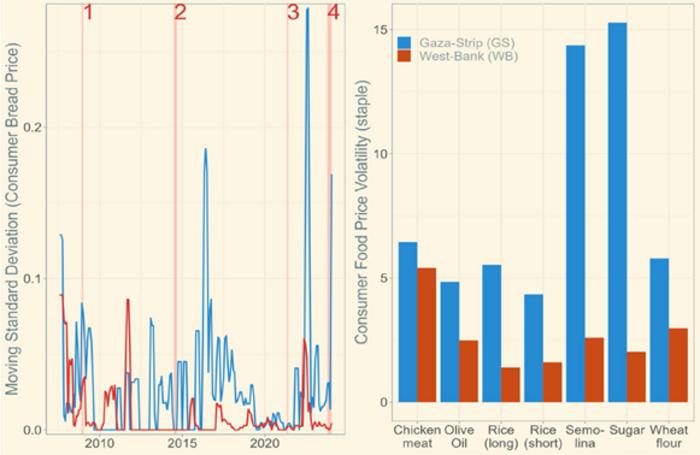
As part of her research, Zelingher investigated the complex interconnectedness of factors contributing to the current situation. She traced the market trends back to 2007, the pivotal year when the State of Palestine was divided into two entities: the West Bank and the Gaza Strip. The analysis uncovered major disparities with regard to the prices of staple foods.
The study shows that both the Gaza Strip and the West Bank heavily rely on bread as a staple food, making them particularly vulnerable to food price fluctuations and disruptions in supply chains. Research uncovered that the West Bank displayed efforts to stabilize food prices, resulting in growing stability in price trends over time, possibly due to effective government-led food security initiatives. In contrast, the Gaza Strip experienced erratic fluctuations in prices of all staple foods, especially rice and sugar, highlighting a potential contrast in governance approaches. It is evident that the fluctuation of bread prices in the Gaza Strip was more closely linked to global wheat prices than to local security crises.
This disparity suggests underlying governance differences and raises questions about the efficacy of the implemented food-security strategies in the Gaza Strip. Inconsistency in pricing in the Gaza Strip continues to be exacerbated by purported corruption and suppression of dissenting views by Gazan authorities.
In addition, the policy brief highlights that observer reports by the United Nations, USAID, and other organizations have alleged exploitation by Gazan government officials of humanitarian aid intended for civilians, including seizing control of food aid. Similar reports have been made regarding fuel and electricity supplies, as well as financial aid, which could further complicate the situation. The research further considers Israel’s tight control over the economy of the Palestinian territories as a factor in the delayed development process of both the West Bank and the Gaza Strip.
To address these underlying issues, the policy brief offers a list of recommended actions to be taken by the international community. Those include immediate action: a ceasefire and unrestricted access to humanitarian aid; long-term solutions addressing underlying governance disparities and root causes of food insecurity; promotion of transparency, accountability, and responsible governance in the region; decisive intervention, focused on supplying aid directly to civilians, preventing misuse of aid addressing, as well as addressing documented instances of government misuse of aid.
Further information:
Click here for the full policy brief.
Method of Research
Case study
Subject of Research
People
Article Title
Food insecurity in the Gaza Strip: An urgent priority with deep roots