• HOME
  • NEWS
  • EXPLORE
    • CAREER
      • Companies
      • Jobs
    • EVENTS
    • iGEM
      • News
      • Team
    • PHOTOS
    • VIDEO
    • WIKI
  • BLOG
  • COMMUNITY
    • FACEBOOK
    • INSTAGRAM
    • TWITTER
Saturday, February 7, 2026
BIOENGINEER.ORG
No Result
View All Result
  • Login
  • HOME
  • NEWS
  • EXPLORE
    • CAREER
      • Companies
      • Jobs
        • Lecturer
        • PhD Studentship
        • Postdoc
        • Research Assistant
    • EVENTS
    • iGEM
      • News
      • Team
    • PHOTOS
    • VIDEO
    • WIKI
  • BLOG
  • COMMUNITY
    • FACEBOOK
    • INSTAGRAM
    • TWITTER
  • HOME
  • NEWS
  • EXPLORE
    • CAREER
      • Companies
      • Jobs
        • Lecturer
        • PhD Studentship
        • Postdoc
        • Research Assistant
    • EVENTS
    • iGEM
      • News
      • Team
    • PHOTOS
    • VIDEO
    • WIKI
  • BLOG
  • COMMUNITY
    • FACEBOOK
    • INSTAGRAM
    • TWITTER
No Result
View All Result
Bioengineer.org
No Result
View All Result
Home NEWS Science News Biology

Anaerobically disinfect soil to increase phosphorus using diluted ethanol

Bioengineer by Bioengineer
June 15, 2020
in Biology
Reading Time: 2 mins read
0
IMAGE
Share on FacebookShare on TwitterShare on LinkedinShare on RedditShare on Telegram

IMAGE

Credit: Takashi Kunito, Department of Environmental Science, Faculty of Science, Shinshu University

Scientists in Japan and the Netherlands have independently developed anaerobic soil disinfestation, also known as biological soil disinfestation or reductive soil disinfestation to kill off pathogenic bacteria, parasitic nematodes and even weeds in soils without using pesticides. By covering the soil with plastic to cut off access to oxygen, unwanted organisms suffocate and do not need to be chemically fumigated.

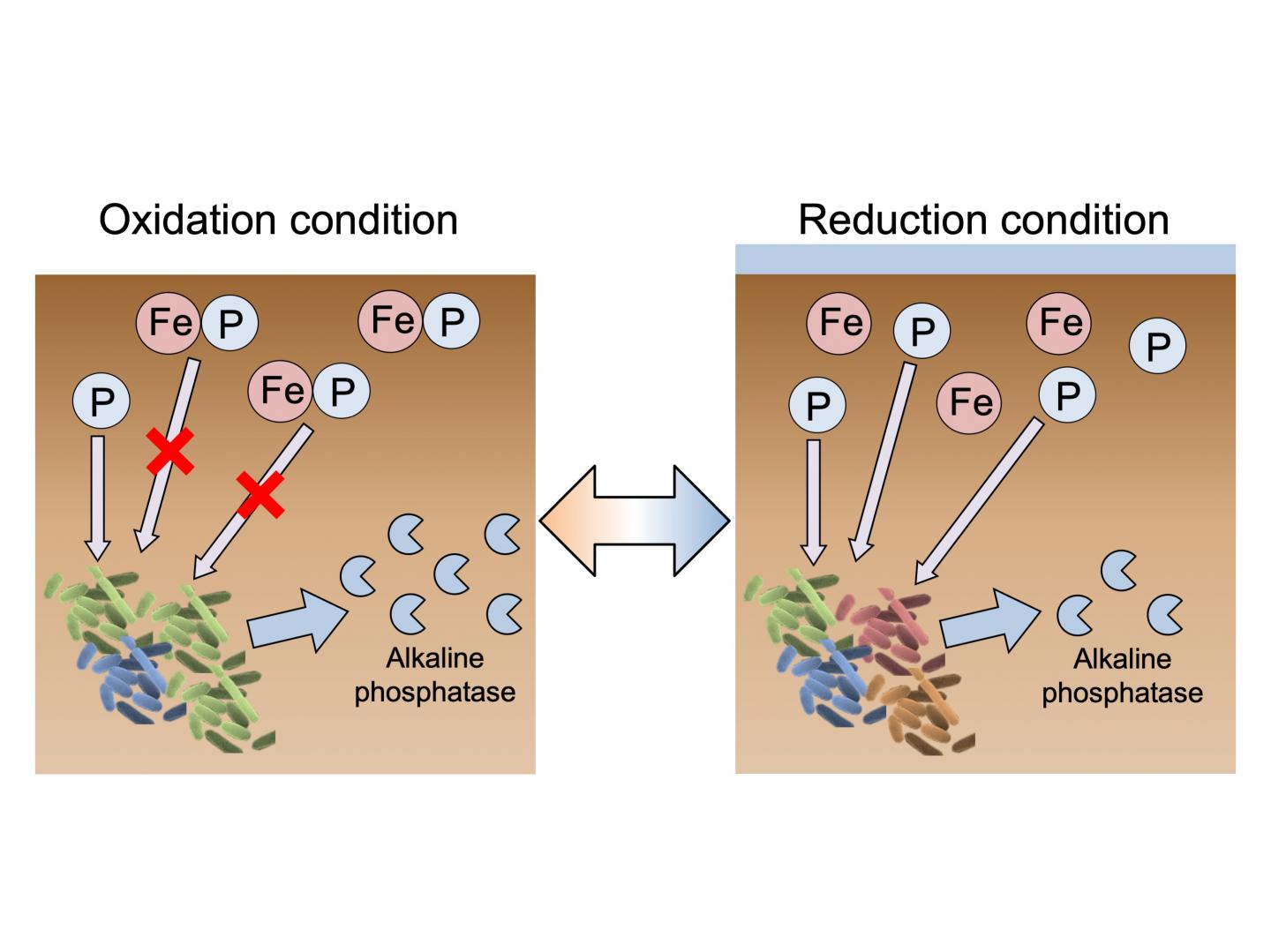
A research team led by Kazuki Fujita formerly of Shinshu University and Takashi Kunito currently of Shinshu University focused on the phosphorus dynamics and microbial phosphorus acquisition during anaerobic soil disinfestation in Andosols. Andosol comes from the Japanese word, “an” which means dark, and “do” which means soil. Japan is lucky in that about half of its landmass is covered in this rich, black, productive soil. However, this soil absorbs phosphorus considerably making them unavailable to plants to use as nutrients. The team at Shinshu University were able to demonstrate that phosphorus can become more available in arable Andosols by giving them the anaerobic soil disinfestation treatment.

The group evaluated the availability of phosphorus using biological indicators. They first applied the resource allocation model for enzyme synthesis. This was because there were conflicting indicators from the initial chemical extractant tests. One interesting finding from the study was that a less diverse bacterial group might produce more alkaline phosphomonoesterase in soils by alkaline phosphomonoesterase gene harbored by microbial communities, or phoD.

When a field is filled with water, as are rice paddies in many parts of Asia, it had been known that the phosphorus leaks out and turns into a form easily available to plants. However, when the soil is then dried, it becomes unavailable again. The researchers looked into the mechanism of this process.

The increase in availability of accessible phosphorus may be effected by drying treatments after anaerobic soil disinfection. The researchers hope to continue their studies to learn of other factors that influence phosphorus dynamics. This experiment was conducted in an indoor lab, so the researchers hope to continue their experiment in real world environments, and also look into why the phosphorus did not increase in one of the samples.

###

Please read Anaerobic soil disinfestation using diluted ethanol increases phosphorus availability in arable Andosols for more information.

Acknowledgments: We are grateful to Tsuyoshi Sato (Nagano Prefecture Vegetable and Ornamental Crops Experiment Station, Japan) for providing soil samples.

Media Contact
Hitomi Thompson
[email protected]

Related Journal Article

http://dx.doi.org/10.1007/s00374-020-01472-x

Tags: BacteriologyBiologyEcology/EnvironmentFertilizers/Pest ManagementGeology/SoilPlant Sciences
Share12Tweet8Share2ShareShareShare2

Related Posts

Florida Cane Toad: Complex Spread and Selective Evolution

Florida Cane Toad: Complex Spread and Selective Evolution

February 7, 2026
New Study Uncovers Mechanism Behind Burn Pit Particulate Matter–Induced Lung Inflammation

New Study Uncovers Mechanism Behind Burn Pit Particulate Matter–Induced Lung Inflammation

February 6, 2026

DeepBlastoid: Advancing Automated and Efficient Evaluation of Human Blastoids with Deep Learning

February 6, 2026

Navigating the Gut: The Role of Formic Acid in the Microbiome

February 6, 2026
Please login to join discussion

POPULAR NEWS

  • Robotic Ureteral Reconstruction: A Novel Approach

    Robotic Ureteral Reconstruction: A Novel Approach

    82 shares
    Share 33 Tweet 21
  • Digital Privacy: Health Data Control in Incarceration

    63 shares
    Share 25 Tweet 16
  • Study Reveals Lipid Accumulation in ME/CFS Cells

    57 shares
    Share 23 Tweet 14
  • Breakthrough in RNA Research Accelerates Medical Innovations Timeline

    53 shares
    Share 21 Tweet 13

About

We bring you the latest biotechnology news from best research centers and universities around the world. Check our website.

Follow us

Recent News

Digital Health Perspectives from Baltic Sea Experts

Florida Cane Toad: Complex Spread and Selective Evolution

Exploring Decision-Making in Dementia Caregivers’ Mobility

Subscribe to Blog via Email

Enter your email address to subscribe to this blog and receive notifications of new posts by email.

Join 73 other subscribers
  • Contact Us

Bioengineer.org © Copyright 2023 All Rights Reserved.

Welcome Back!

Login to your account below

Forgotten Password?

Retrieve your password

Please enter your username or email address to reset your password.

Log In
No Result
View All Result
  • Homepages
    • Home Page 1
    • Home Page 2
  • News
  • National
  • Business
  • Health
  • Lifestyle
  • Science

Bioengineer.org © Copyright 2023 All Rights Reserved.