Credit: Matthias Stöck
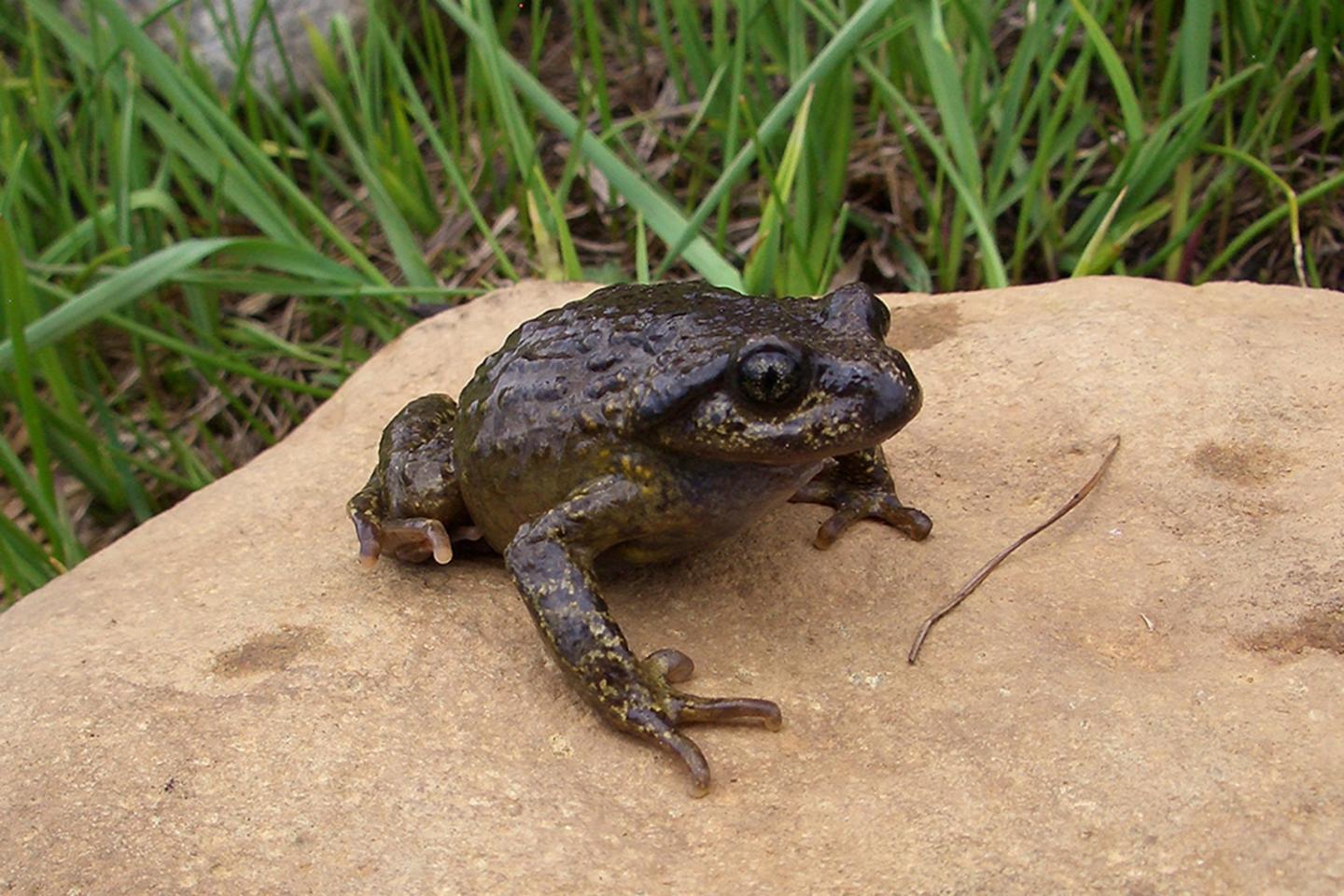
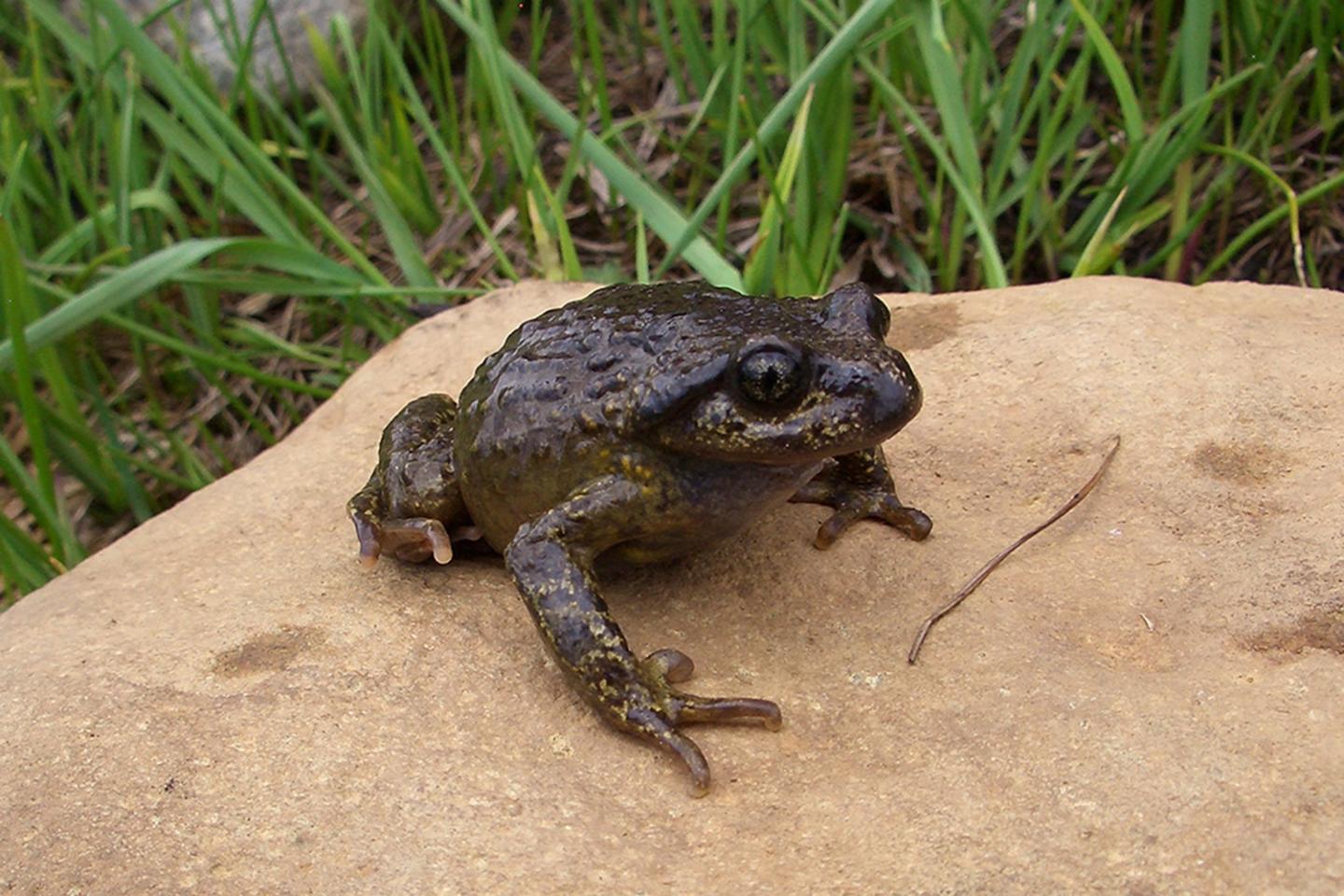
Until now, the fauna of the Himalayas was considered to be an "immigration fauna", with species that have immigrated primarily from neighbouring regions to the west and east since the geological formation of this mountain range. Using molecular-genetic methods, a German-Chinese research team has now tested an alternative colonization hypothesis on lazy toads (Pelobatoidea). The findings indicate that this group arose earlier than assumed in southern Tibet, and went on to colonize the Himalayas from there after its formation. The immigration and evolution of many species in the Himalayas might therefore have taken a different course than previously assumed.
The Himalayas are one of the global "hotspots" of biodiversity; thousands of species are believed to be as yet undiscovered or not yet scientifically described. The history of the population of the Himalayas is still not fully understood. Until now, most species were assumed to have immigrated into the High Himalayas relatively recently, from the west and east. One theory that has received little attention to date works on the assumption that the origins of many Himalayan species began far earlier, in southern Tibet. This assumption is also in line with modern findings of the geological origins of the Himalaya-Tibet mountain system.
Researchers from the Helmholtz Centre for Environmental Research (UFZ), the Leibniz-Institute of Freshwater Ecology and Inland Fisheries (IGB), the University of Rostock, the Natural History Museum of Erfurt and the Chinese Academy of Sciences have now been the first to test this theory on a group of high-mountain vertebrates. For this purpose, they chose the less mobile lazy toads from the genus Scutiger of the Pelobatoidea, a species group found along of the Himalayas and in eastern Tibet, in habitats at altitudes between 2,500 and 5,000 metres. To date, it was also assumed that lazy toads had colonized the Himalayas from neighbouring mountainous regions to the east. The researchers analysed genetic samples from populations of Scutiger in order to decode their evolutionary relationships. Furthermore, they dated the origin of the species using evolutionary trees calculated from DNA sequences in comparison to the uplifting history of the Himalaya-Tibetan mountain system. This revealed that the Himalayan species formed a separate group that is apparently evolutionarily older than the one found on the Tibetan Plateau and in adjacent mountain ranges to the east.
The question is: where do these evolutionarily older Scutiger come from? "They apparently evolved in today's southern Tibet as long ago as in the Eocene Epoch, i.e. the period in which lignite was created. But the formation of mountains and the desiccation of Tibet forced the populations to gradually move out of their original habitats towards the south into the Himalayas that were rising upwards", outlines Dr. Joachim Schmidt of the University of Rostock. Further research is now planned to substantiate the researchers' observations. "Our findings demonstrate that common biogeographical opinions have to be called into question time and time again and checked on the basis of the most recent geoscientific knowledge", explains the UFZ's Dr. Sylvia Hofmann. "Molecular-genetic methods provide a decisive new approach to testing old biogeographical hypotheses", adds the IGB's Dr. Matthias Stöck.
###
Media Contact
Dr. Sylvia Hofmann
[email protected]
49-341-235-482-306
@ufz_de
http://www.ufz.de/
Original Source
http://www.ufz.de/index.php?en=36336&webc_pm=19/2017 http://dx.doi.org/10.1038/s41598-017-03395-4