Credit: The Morton Arboretum
If you had been in northern Canada 45 million years ago, you might have encountered the distant ancestor of all of the oaks in the Americas. That single species gave rise to 220 more and two distinct lineages — red oaks and white oaks — that moved south through the boreal zone to populate large swaths of the continent all the way into Mexico. These two findings–simultaneous evolutionary diversification in the red and white oaks, each following the same geographic routes; and two relatively recent origins of the Mexican oaks–are a surprise conclusion to a scientific mystery that went unresolved until now. Research published today in the journal New Phytologist tells this story of the evolutionary history of American oaks for the first time.
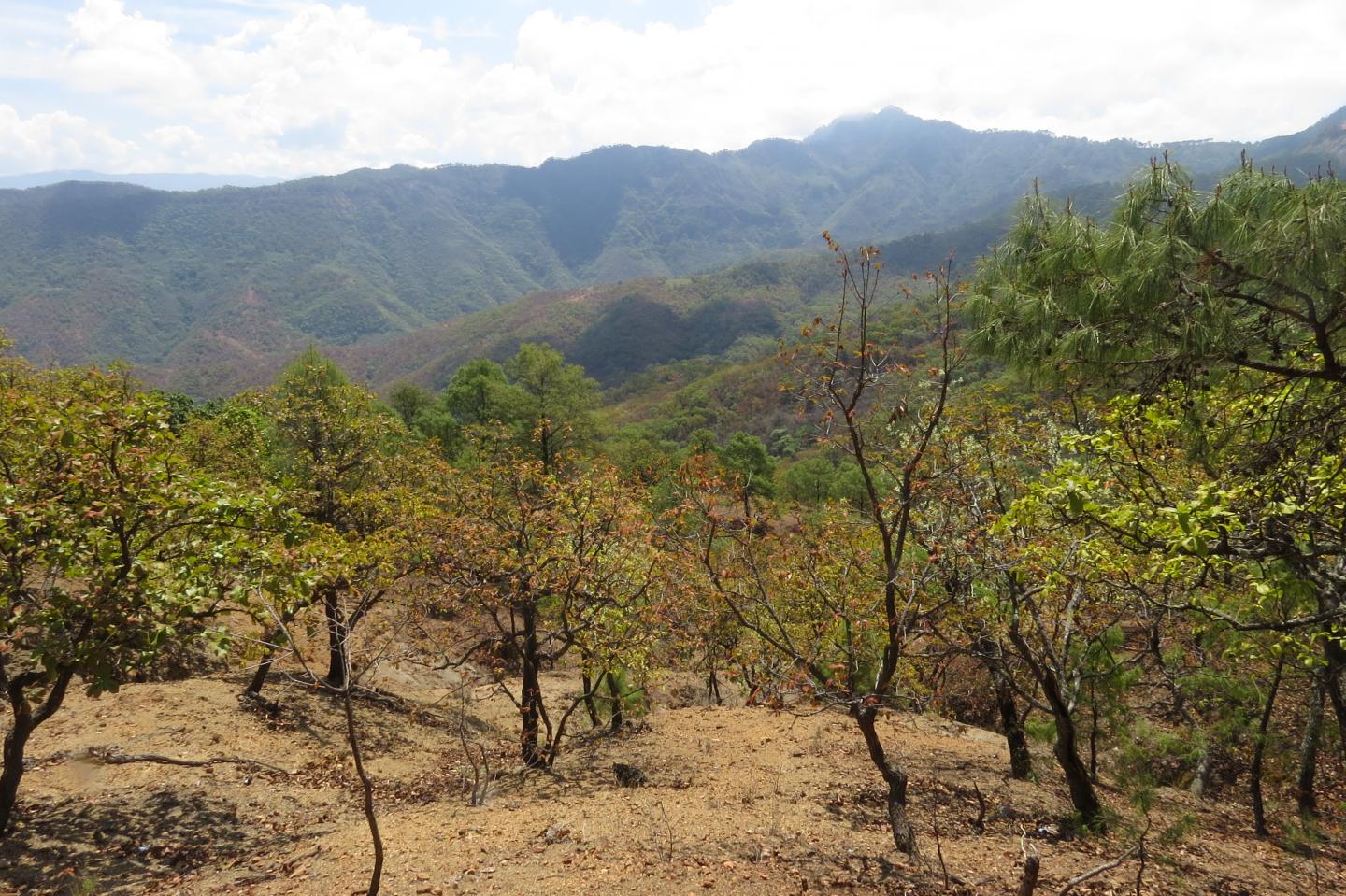
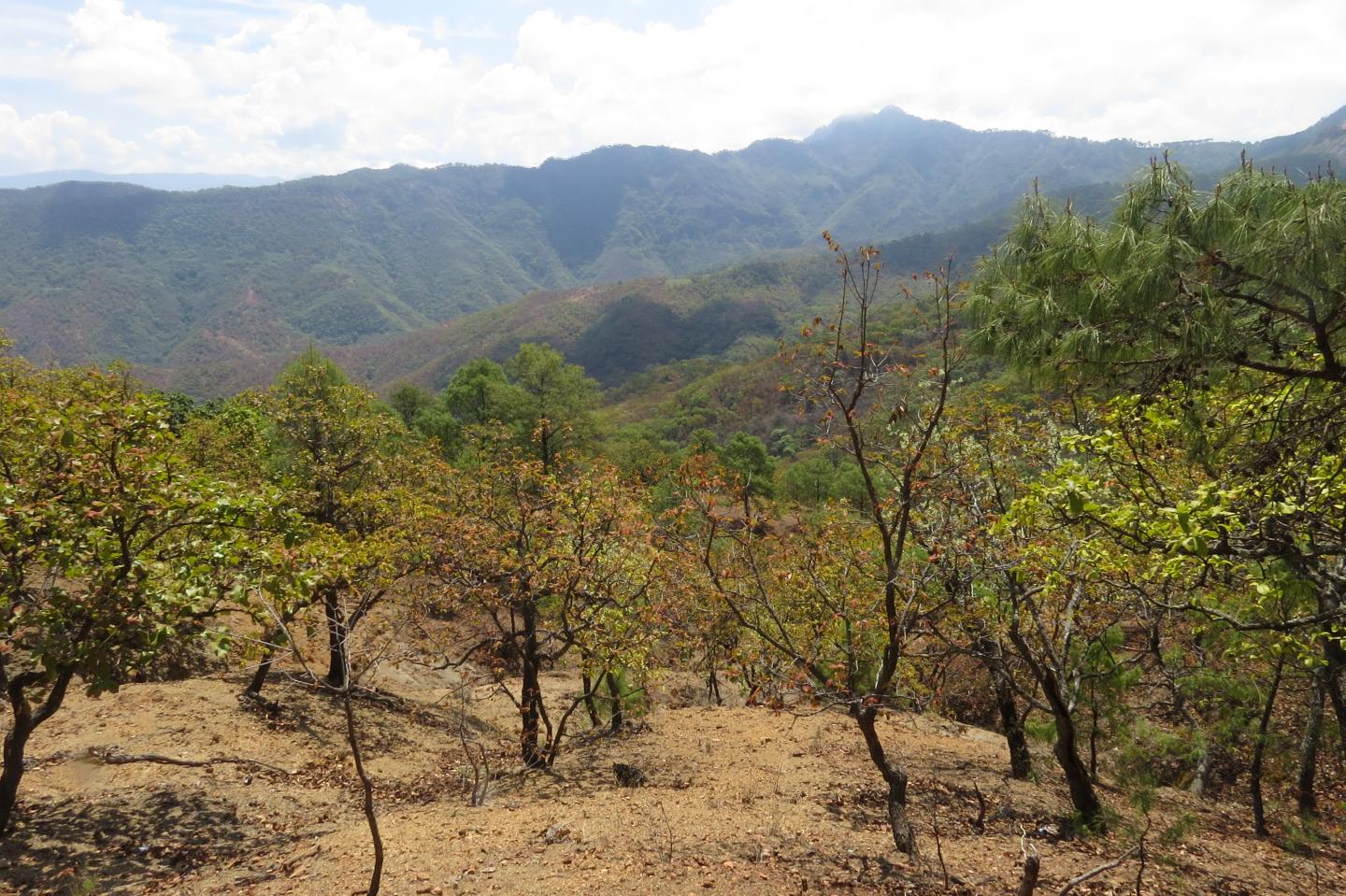
Using a combination of next-generation DNA sequencing and statistical ecological methods, the researchers inferred the most detailed and comprehensive evolutionary history to date for the oak genus Quercus. Their work demonstrates that the two major groups of oaks in North America–the red oaks and the white oaks–independently and simultaneously radiated over the past 45 million years from a common ancestor. The red oaks and the white oaks simultaneously filled ecological space in California while also filling available habitats of eastern North America. Then, between 10 and 20 million years ago, both groups made their move down to the mountains of Mexico, where the two groups began to diversify at an increased rate, rapidly moving around to fill ecological (niche) space and producing species more rapidly than they had done in the north.
"Despite the fact that the genus Quercus dominates wooded ecosystems of North America and Mexico in both number and biomass, we knew very little prior to this study about relationships among species, and even about genetic distinctiveness of many of the oaks we sampled for the paper," said lead author Andrew Hipp of The Morton Arboretum. "Our finding that the red oaks and white oaks diversified simultaneously and in parallel in the Americas explains much of the diversity of American oaks: there is not just one major oak lineage in the Americas, but two, and a few smaller ones. When you add these together, you find you have a lot of oak diversity."
The results explain a long-standing question that collaborator Jeannine Cavender-Bares of the University of Minnesota has been studying: why do distantly related oak species occur together more often than expected? Cavender-Bares spent her sabbatical in Mexico in 2011 funded by a Fulbright grant at the Universidad Nacional Autónoma de Mexico with Antonio Gonzalez-Rodriguez, an oak specialist and collaborator on the study. They collected and studied the Mexican oaks for the project. "Including the Mexican oaks in the analysis was critical," says Cavender-Bares, "because they revealed starkly increased rates of diversification as a consequence of the dynamic rise of the mountain chains in that region with volcanic activity some 10-20 million years ago."
To reach their conclusions, the lead researchers spent years collecting specimens and extracting DNA from more than 300 oak samples from the U.S., Mexico, and Central America. The scientists read large numbers of regions of the genome from each sample using next generation DNA sequencing methods, then reconstructed roughly 40,000 regions of the genome using computational methods. They then analyzed these regions of the genome statistically, to estimate the oak tree of life. This estimate of oak evolutionary history served as the framework to infer the distribution of each species in biogeographic and ecological space, and to reconstruct the evolutionary history of ecological and species diversification in the genus.
"The incursion of temperate lineages like the oaks into Latin America marks an interesting biogeographic catalyst in the development of the montane plant communities of Mexico," said study collaborator Paul Manos of Duke University. "Scattered pollen fossil records from lake sediments provided some evidence on when the oaks arrived, but we now have an independent estimate based on a calibrated phylogeny, and reasonable hypotheses on the ecological drivers of these two parallel radiations of red and white oaks."
###
The study is the result of a long-standing collaboration among scientists at The Morton Arboretum, the University of Minnesota, Duke University, and the Universidad Nacional Autonoma de Mexico. The study was funded by a collaborative four-year National Science Foundation grant to these institutions and by a Fulbright grant to Cavender-Bares to work in Mexico.
Media Contact
Kelley Regan
[email protected]
630-725-2103
@MortonArboretum
Original Source
http://www.mortonarb.org/news/american-oaks-share-common-northern-ancestor http://dx.doi.org/10.1111/nph.14773