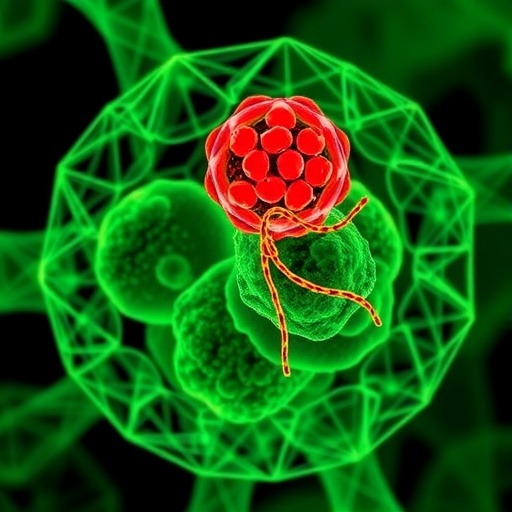
In an extraordinary revelation poised to reshape our understanding of cellular maintenance and survival strategies, a groundbreaking study published in Nature Communications unveils the pivotal role of AMC-F1 in regulating the intricate crosstalk between mitochondria and autophagy, independent of nutrient stress. This discovery not only challenges prevailing paradigms that primarily associate autophagic processes with nutrient scarcity but also introduces novel perspectives on cellular homeostasis that may revolutionize therapeutic approaches for a spectrum of diseases characterized by mitochondrial dysfunction.
Mitochondria, often referred to as the powerhouses of the cell, orchestrate essential bioenergetic and metabolic functions critical for cell survival. Their dynamic interplay with autophagy—specifically mitophagy, a selective form of autophagy targeting damaged or superfluous mitochondria—is central to maintaining cellular integrity and function. Prior research largely emphasized the induction of mitophagy in response to metabolic stressors, particularly nutrient deprivation, as a survival mechanism. However, the latest findings by Wang, Rao, Vu, and colleagues delineate a hitherto unappreciated regulatory axis mediated by AMC-F1 that governs this mitochondria-autophagy dialogue under conditions independent of nutrient sensing.
The meticulous study employed a combination of advanced molecular biology techniques, live-cell imaging, and genetic manipulation to unravel the mechanisms underpinning AMC-F1’s function. AMC-F1, identified as a mitochondrial membrane-associated factor, appears to act as a critical molecular sentinel that modulates autophagic flux through signaling pathways distinct from canonical nutrient-responsive cascades. This suggests that cells possess autonomous regulatory systems that fine-tune mitochondrial quality control beyond mere energy balance considerations, adding a complex layer to cellular self-renewal frameworks.
By dissecting the biochemical landscape, the researchers discovered that AMC-F1 interfaces with key autophagy-related proteins, orchestrating their recruitment and activation in a spatially and temporally precise manner. This interaction facilitates the selective sequestration and degradation of dysfunctional mitochondria, thereby averting the propagation of mitochondrial damage that could precipitate cellular senescence or apoptosis. Significantly, this process unfolds in scenarios where nutrient levels remain stable, indicating that AMC-F1-mediated regulation is a proactive rather than reactive mechanism.
The implications of this are profound, especially concerning neurodegenerative diseases, metabolic syndromes, and aging, all of which have been linked to compromised mitochondrial dynamics and defective autophagic processes. The capacity of AMC-F1 to sustain mitochondrial quality control independently of classic nutrient-sensing pathways opens avenues for targeted interventions that can restore cellular homeostasis without perturbing systemic metabolism. Such a therapeutic strategy could circumvent the adverse effects typically associated with broad-spectrum autophagy modulation.
Moreover, the study sheds light on the structural and functional attributes of AMC-F1, revealing that its activity is modulated by post-translational modifications, which fine-tune its interaction with the autophagy machinery. This nuanced regulation underscores the protein’s role as a sophisticated integrator of mitochondrial status cues, enabling cells to adapt swiftly to subtle perturbations in mitochondrial integrity. The identification of these molecular switches within AMC-F1 may inform the development of pharmacological modulators capable of enhancing mitophagy selectively.
The research also expands our understanding of autophagy beyond a mere catabolic process induced by starvation, painting it instead as a versatile housekeeping system continuously engaged in quality control under varying physiological contexts. The delineation of AMC-F1’s function thus represents a paradigm shift, emphasizing the importance of intrinsic regulatory networks in dictating organelle health beyond external environmental triggers.
Importantly, the innovative methodologies implemented in this study, particularly the use of live-cell imaging combined with CRISPR-Cas9 gene editing, have set new benchmarks in mitochondrial research. These technologies permitted real-time visualization of AMC-F1-mediated autophagic events, offering unprecedented insights into the spatiotemporal dynamics of mitochondria-autophagy crosstalk at a level of granularity previously unattainable.
The discovery also raises intriguing questions regarding the evolutionary conservation of AMC-F1 and its homologs across species, potentially indicating an ancient and fundamental cellular system for organelle quality assurance. Comparative studies in diverse model organisms could elucidate the broader biological significance and conservation of this regulatory axis.
Furthermore, the findings prompt a reevaluation of existing models that correlate autophagic activity primarily with energy depletion. Instead, the AMC-F1 axis exemplifies a paradigm wherein mitochondrial integrity is preserved through continuous surveillance and targeted degradation independent of metabolic cues, highlighting the sophistication of intracellular quality control mechanisms.
As this research gains traction, it is anticipated that future investigations will explore the interplay between AMC-F1 and other mitochondrial dynamics regulators such as fission and fusion proteins, potentially revealing an integrated network that governs mitochondrial morphology and turnover. Deciphering these interactions may provide a comprehensive blueprint for maintaining mitochondrial health, crucial for cell viability under diverse stress conditions.
In conclusion, the unveiling of AMC-F1 as a master regulator of mitochondria-autophagy crosstalk independent of nutrient stress marks a milestone in cell biology. This insight offers promising opportunities for the development of therapies aimed at mitigating mitochondrial dysfunction, a hallmark of numerous pathological conditions ranging from neurodegeneration to metabolic disease. As the scientific community delves deeper into the mechanistic intricacies and physiological relevance of AMC-F1, the prospects for translational applications appear exceptionally bright, heralding a new era in understanding and manipulating cellular homeostasis.
Subject of Research:
Regulation of mitochondria-autophagy interaction by AMC-F1 independent of nutrient stress conditions.
Article Title:
AMC-F1 regulates mitochondria-autophagy crosstalk independent of nutrient stress.
Article References:
Wang, Y., Rao, R.K., Vu, T. et al. AMC-F1 regulates mitochondria-autophagy crosstalk independent of nutrient stress. Nat Commun (2026). https://doi.org/10.1038/s41467-026-73841-3
Image Credits: AI Generated
Tags: AMC-F1 mitochondrial regulationautophagy regulation pathwaysbioenergetic function in cell survivalcellular homeostasis mechanismsgenetic manipulation in autophagy researchlive-cell imaging mitophagy studiesmitochondria-autophagy crosstalkmitochondrial dysfunction therapiesmitochondrial membrane-associated proteinsmitochondrial quality controlmitophagy independent of nutrient stressmolecular biology of mitophagy