• HOME
  • NEWS
  • EXPLORE
    • CAREER
      • Companies
      • Jobs
    • EVENTS
    • iGEM
      • News
      • Team
    • PHOTOS
    • VIDEO
    • WIKI
  • BLOG
  • COMMUNITY
    • FACEBOOK
    • INSTAGRAM
    • TWITTER
Monday, December 1, 2025
BIOENGINEER.ORG
No Result
View All Result
  • Login
  • HOME
  • NEWS
  • EXPLORE
    • CAREER
      • Companies
      • Jobs
        • Lecturer
        • PhD Studentship
        • Postdoc
        • Research Assistant
    • EVENTS
    • iGEM
      • News
      • Team
    • PHOTOS
    • VIDEO
    • WIKI
  • BLOG
  • COMMUNITY
    • FACEBOOK
    • INSTAGRAM
    • TWITTER
  • HOME
  • NEWS
  • EXPLORE
    • CAREER
      • Companies
      • Jobs
        • Lecturer
        • PhD Studentship
        • Postdoc
        • Research Assistant
    • EVENTS
    • iGEM
      • News
      • Team
    • PHOTOS
    • VIDEO
    • WIKI
  • BLOG
  • COMMUNITY
    • FACEBOOK
    • INSTAGRAM
    • TWITTER
No Result
View All Result
Bioengineer.org
No Result
View All Result
Home NEWS Science News Biology

Almond orchard recycling a climate-smart strategy

Bioengineer by Bioengineer
April 1, 2020
in Biology
Reading Time: 2 mins read
0
IMAGE
Share on FacebookShare on TwitterShare on LinkedinShare on RedditShare on Telegram

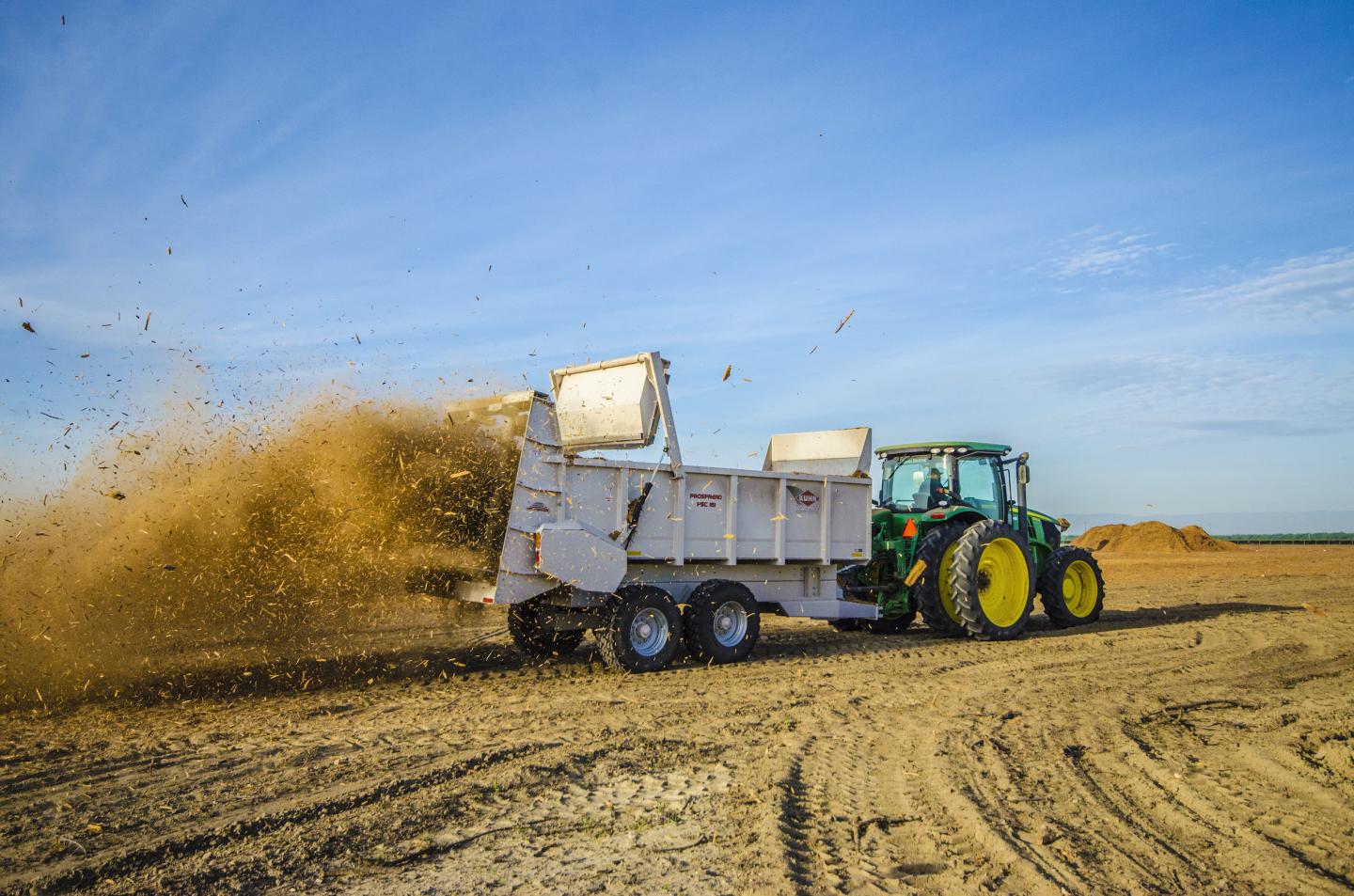
The practice can create healthier soils, save water and yield more almonds
IMAGE

Credit: Brent Holtz, UCANR

Recycling trees onsite can sequester carbon, save water and increase crop yields, making it a climate-smart practice for California’s irrigated almond orchards, finds a study from the University of California, Davis.

Whole orchard recycling is when old orchard trees are ground, chipped and turned back into the soil before new almond trees are planted.

The study, published in the journal PLOS ONE, suggests that whole orchard recycling can help almond orchards be more sustainable and resilient to drought while also increasing carbon storage in the soil.

“To me what was really impressive was the water piece,” said corresponding author Amélie Gaudin, an associate professor of agroecology in the UC Davis Department of Plant Sciences. “Water is central to how we think about agriculture in California. This is a clear example of capitalizing on soil health. Here we see some real benefits for water conservation and for growers.”

BURN VS. TURN

Drought and high almond prices have encouraged higher rates of orchard turnover in recent years. The previous practice of burning trees that are no longer productive is now restricted under air quality regulations, so whole orchard recycling presents an alternative. But how sustainable and effective is it for the environment and for farmers?

For the study, scientists measured soil health and tree productivity of an almond orchard that turned previous Prunus woody biomass back into the soil through whole orchard recycling and compared it with an orchard that burned its old trees nine years prior.

They also experimentally reduced an orchard’s irrigation by 20 percent to quantify its water resilience.

Their results found that, compared with burn treatments, whole orchard recycling can:

  • Sequester 5 tons of carbon per hectare
  • Increase water-use efficiency by 20 percent
  • Increase crop yields by 19 percent

“This seems to be a practice that can mitigate climate change by building the soil’s potential to be a carbon sink, while also building nutrients and water retention,” said Gaudin. “That can be especially important as water becomes more limited.”

###

Study co-authors included Emad Jahanzad and Kelsey Brewer of UC Davis; Brent Holtz, Sean Hogan and Cameron Zuber of UC Agriculture and Natural Resources’ Cooperative Extension; and David Doll, who was formerly with UC Cooperative Extension.

The study was funded by a Specialty Crop Block Grant Program of the California Department of Food and Agriculture and the Almond Board of California.

Media Contact
Kat Kerlin
[email protected]

Original Source

https://climatechange.ucdavis.edu/news/almond-orchard-recycling-a-climate-smart-strategy/

Related Journal Article

http://dx.doi.org/10.1371/journal.pone.0229588

Tags: Agricultural Production/EconomicsAgricultureClimate ChangeEcology/EnvironmentPlant Sciences
Share12Tweet8Share2ShareShareShare2

Related Posts

Adipose Progenitor Cell Variations in Bovine Fats

Adipose Progenitor Cell Variations in Bovine Fats

November 30, 2025

Alien Nudibranch’s Unique Prey and Nematocyst Dynamics

November 30, 2025

Identifying Crustacyanin Gene Family in Neocaridina Denticulata

November 30, 2025

Varied Genetic Resistance to Key Bacterial Pathogen in Trout

November 30, 2025
Please login to join discussion

POPULAR NEWS

  • New Research Unveils the Pathway for CEOs to Achieve Social Media Stardom

    New Research Unveils the Pathway for CEOs to Achieve Social Media Stardom

    203 shares
    Share 81 Tweet 51
  • Scientists Uncover Chameleon’s Telephone-Cord-Like Optic Nerves, A Feature Missed by Aristotle and Newton

    120 shares
    Share 48 Tweet 30
  • Neurological Impacts of COVID and MIS-C in Children

    106 shares
    Share 42 Tweet 27
  • MoCK2 Kinase Shapes Mitochondrial Dynamics in Rice Fungal Pathogen

    66 shares
    Share 26 Tweet 17

About

We bring you the latest biotechnology news from best research centers and universities around the world. Check our website.

Follow us

Recent News

Impact of Temperature on Strength of Geopolymer Clay

Tibial Nerve Techniques Boost Diabetic Neuropathy Recovery

Exploring West Africa’s Health Policy Collaboration Networks

Subscribe to Blog via Email

Enter your email address to subscribe to this blog and receive notifications of new posts by email.

Join 69 other subscribers
  • Contact Us

Bioengineer.org © Copyright 2023 All Rights Reserved.

Welcome Back!

Login to your account below

Forgotten Password?

Retrieve your password

Please enter your username or email address to reset your password.

Log In
No Result
View All Result
  • Homepages
    • Home Page 1
    • Home Page 2
  • News
  • National
  • Business
  • Health
  • Lifestyle
  • Science

Bioengineer.org © Copyright 2023 All Rights Reserved.