


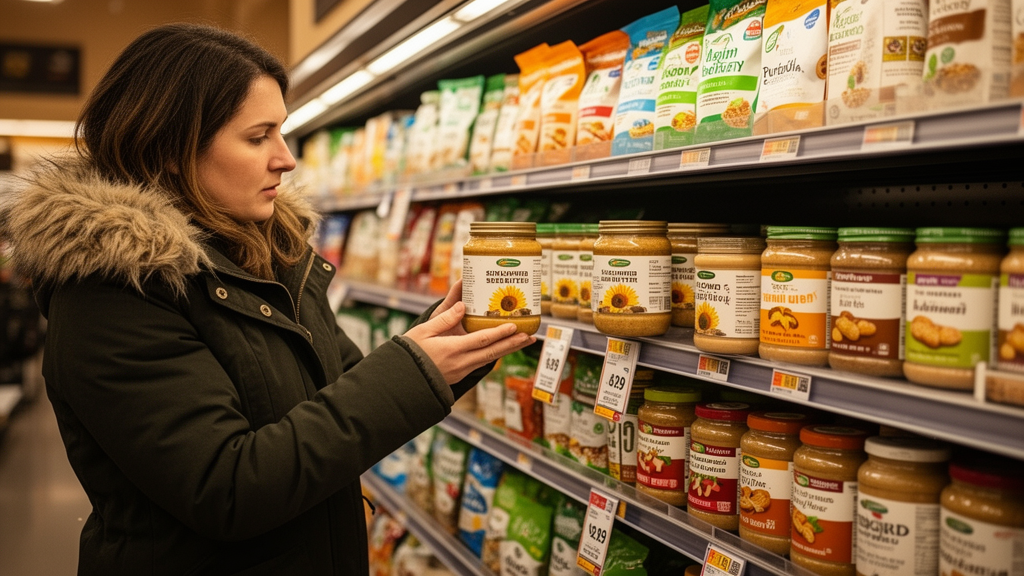
Canadians living with food allergy continue to pay substantially more for the foods they need to eat safely, according to a repeated cross-sectional analysis of retail prices published in Allergy, Asthma & Clinical Immunology. The study compared prices at major Canadian grocery retailers at two time points, January 2023 and January 2026, and found that allergy-friendly alternatives carried price premiums of 84.1 percent in 2023 and 71.2 percent in 2026 relative to conventional products.
Food allergy requires strict dietary avoidance, and people managing the condition often rely on specially formulated products labeled free from at least one selected priority allergen. These items are typically more expensive than their conventional counterparts, and the resulting financial burden is a recognized concern for affected families. The authors note that recent Canadian data on these price differences had been limited, motivating the new analysis.
The research team standardized all prices per 100 grams or 100 milliliters to allow fair comparisons between products of different sizes, and calculated price premiums relative to conventional products. In 2023, the analysis included 296 products, of which 276, or 93.2 percent, were available again in 2026. For the 20 items that had disappeared from shelves by 2026, the researchers identified replacement products so they could be included in the comparison.
Across both years, allergy-friendly alternatives were significantly more expensive than conventional products, with all comparisons reaching statistical significance at p less than 0.05.
The premium narrowed between the two measurement points, from 84.1 percent to 71.2 percent, which the authors describe as a modest reduction over time. A sensitivity analysis that excluded the replaced products yielded similar results, indicating that the findings were not driven by the substitution of new items for discontinued ones.
The study’s design has important limitations to keep in mind. As a repeated cross-sectional retail price analysis, it captured prices at two January snapshots rather than tracking prices continuously, and it examined products from major Canadian grocery retailers rather than the full national market. The findings describe retail costs, not household spending, and the analysis does not establish why the premiums narrowed between 2023 and 2026.
Nevertheless, the authors conclude that allergy-friendly foods remain substantially more expensive than conventional products despite the modest reduction over time. They characterize this persistent gap as a clinically relevant financial barrier to safe dietary management for Canadians living with food allergy, since strict avoidance of priority allergens leaves affected households little choice but to purchase these higher-priced alternatives.
The article was published on 15 October 2026 as an open access research paper by Madeline R. S. Hiebert, Michael A. Golding and Jennifer L. P. Protudjer. The work was shared early as a peer-reviewed, accepted version of record, citable under its permanent DOI, with a final version to follow.
Subject of Research: Retail price disparities between allergy-friendly and conventional foods in Canada from 2023 to 2026
Article Title: Persistent price disparities in allergy-friendly foods in Canada: a repeated cross-sectional analysis of retail costs from 2023 to 2026
Article References: Hiebert, M. R. S., Golding, M. A., & Protudjer, J. L. P. (2026). Persistent price disparities in allergy-friendly foods in Canada: a repeated cross-sectional analysis of retail costs from 2023 to 2026. Allergy, Asthma & Clinical Immunology. https://doi.org/10.1186/s13223-026-01069-3
Image Credits: AI Generated
DOI: 10.1186/s13223-026-01069-3
Keywords: food allergy, allergy-friendly foods, price premium, grocery prices, Canada, cross-sectional study, food costs, dietary management, financial burden, retail analysis, Persistent, price
News Source: Ophelia Keating. (October 28, 2026). Allergy-friendly foods in Canada still cost far more than conventional products. Scienmag.



