

• HOME
  • NEWS
  • EXPLORE
    • CAREER
      • Companies
      • Jobs
    • EVENTS
    • iGEM
      • News
      • Team
    • PHOTOS
    • VIDEO
    • WIKI
  • BLOG
  • COMMUNITY
    • FACEBOOK
    • INSTAGRAM
    • TWITTER
Monday, July 27, 2026
BIOENGINEER.ORG
No Result
View All Result
  • Login
  • HOME
  • NEWS
  • EXPLORE
    • CAREER
      • Companies
      • Jobs
        • Lecturer
        • PhD Studentship
        • Postdoc
        • Research Assistant
    • EVENTS
    • iGEM
      • News
      • Team
    • PHOTOS
    • VIDEO
    • WIKI
  • BLOG
  • COMMUNITY
    • FACEBOOK
    • INSTAGRAM
    • TWITTER
  • HOME
  • NEWS
  • EXPLORE
    • CAREER
      • Companies
      • Jobs
        • Lecturer
        • PhD Studentship
        • Postdoc
        • Research Assistant
    • EVENTS
    • iGEM
      • News
      • Team
    • PHOTOS
    • VIDEO
    • WIKI
  • BLOG
  • COMMUNITY
    • FACEBOOK
    • INSTAGRAM
    • TWITTER
No Result
View All Result
Bioengineer.org
No Result
View All Result
Home NEWS Science News Biology

All-Trans Retinoic Acid Suppresses Severe Fever With Thrombocytopenia Virus Inflammation in Mice

Bioengineer by Bioengineer
July 27, 2026
in Biology
Reading Time: 2 mins read
0
All-Trans Retinoic Acid Suppresses Severe Fever With Thrombocytopenia Virus Inflammation in Mice
Share on FacebookShare on TwitterShare on LinkedinShare on RedditShare on Telegram

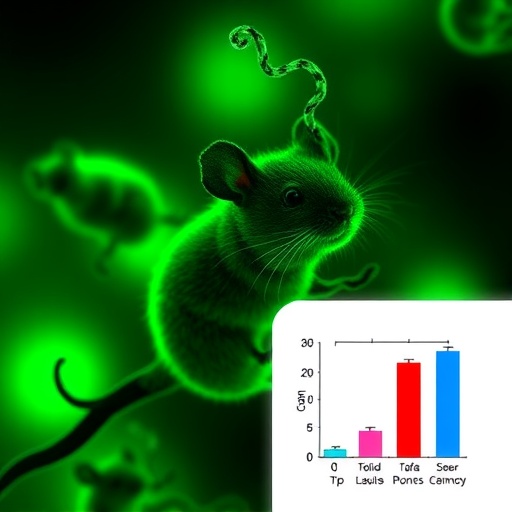
Severe fever with thrombocytopenia syndrome (SFTS), driven by SFTS virus, can trigger life-threatening systemic inflammation, yet targeted host-directed therapies have remained limited. In new work in Nature Microbiology, researchers report that all-trans retinoic acid (ATRA), a vitamin A–derived molecule best known for regulating immune differentiation, markedly dampens inflammatory cascades in a mouse model of infection.

Using infected mice to mimic key aspects of SFTS disease, the team evaluated whether ATRA could reduce the overwhelming immune activation associated with viral burden. Rather than simply slowing replication, the study emphasizes a broader immunomodulatory effect: ATRA reshaped host inflammatory signaling so that systemic cytokine production was curtailed.

At the cellular level, the authors focus on how innate immune pathways amplify inflammation during severe infection. By interfering with pro-inflammatory transcriptional programs, ATRA reduced signals that typically escalate during viral stress. This included down-tuning pathways that recruit and activate immune effectors, thereby lowering the intensity of systemic immune responses.

The findings also connect ATRA to platelet- and vascular-adjacent disease features seen in SFTS. Although the study centers on inflammation, controlling downstream immune overactivity can influence the physiological deterioration that accompanies severe disease. In this context, the work supports the idea that retinoid signaling can act as a host “brake” during infection-driven dysregulation.

Mechanistically, the study integrates retinoid biology with antiviral immunology, highlighting that ATRA can bias immune programs toward resolution rather than escalation. Such a shift is particularly relevant when inflammation becomes self-reinforcing and harmful, even as viral replication proceeds.

Importantly, the research frames ATRA as a candidate for translational exploration because retinoids are already established pharmacologically. That practical angle may speed early evaluation of dosing strategies that balance immune suppression with the need to control infection.

Overall, the study presents ATRA as a promising host-targeted approach to suppress systemic inflammatory pathology in SFTS. By converting damaging immune activation into a more controlled response, all-trans retinoic acid may offer a new direction for managing severe viral disease where inflammation is a central driver of morbidity.

Subject of Research: Severe fever with thrombocytopenia syndrome (SFTS) virus; systemic inflammation; host-directed immunomodulation
Article Title: All-trans retinoic acid suppresses systemic inflammation induced by severe fever with thrombocytopenia syndrome virus in mice
Article References: Yu, X., Wu, J., Yin, X. et al. All-trans retinoic acid suppresses systemic inflammation induced by severe fever with thrombocytopenia syndrome virus in mice. Nat Microbiol (2026). https://doi.org/10.1038/s41564-026-02411-6
Image Credits: AI Generated
DOI: https://doi.org/10.1038/s41564-026-02411-6

Tags: all-trans retinoic acidcytokine suppressionhost-directed therapyimmune signaling pathwaysimmunomodulationinflammation regulationinnate immune pathwaysplatelet and vascular involvementSevere Fever with Thrombocytopenia SyndromeSFTS virussystemic inflammationviral infection models


Share12Tweet7Share2ShareShareShare1

Related Posts

Scientists identify compound that could help muscles remain strong with age

Scientists identify compound that could help muscles remain strong with age

July 27, 2026
Saber-Toothed Cats’ Spinal Tumors Reveal How Inbreeding Threatened Survival

Saber-Toothed Cats’ Spinal Tumors Reveal How Inbreeding Threatened Survival

July 27, 2026

Infection Study Maps Protein Contact Sites, Shows Influenza Hijacks Paraspeckles

July 27, 2026

Study Finds Species-Specific MANF Function in Nonhuman Primates

July 27, 2026

POPULAR NEWS

  • APOBEC3 deficiency reshapes macrophage lipid metabolism, boosting anti-tumor immunity

    29 shares
    Share 12 Tweet 7
  • ONR Unveils 2026 Science and Technology Strategy for Navy and Marine Corps

    29 shares
    Share 12 Tweet 7
  • Brain Metabolism Forecasts Survival in Advanced Non–Small Cell Lung Cancer

    29 shares
    Share 12 Tweet 7
  • Ytterbium Thrives as Researchers Celebrate Breakthrough in Science

    29 shares
    Share 12 Tweet 7

About

We bring you the latest biotechnology news from best research centers and universities around the world. Check our website.

Follow us

Recent News

APOBEC3 deficiency reshapes macrophage lipid metabolism, boosting anti-tumor immunity

ONR Unveils 2026 Science and Technology Strategy for Navy and Marine Corps

Brain Metabolism Forecasts Survival in Advanced Non–Small Cell Lung Cancer

Subscribe to Blog via Email

Enter your email address to subscribe to this blog and receive notifications of new posts by email.

Join 85 other subscribers
  • Contact Us

Bioengineer.org © Copyright 2023 All Rights Reserved.

Welcome Back!

Login to your account below

Forgotten Password?

Retrieve your password

Please enter your username or email address to reset your password.

Log In
No Result
View All Result
  • Homepages
    • Home Page 1
    • Home Page 2
  • News
  • National
  • Business
  • Health
  • Lifestyle
  • Science

Bioengineer.org © Copyright 2023 All Rights Reserved.
