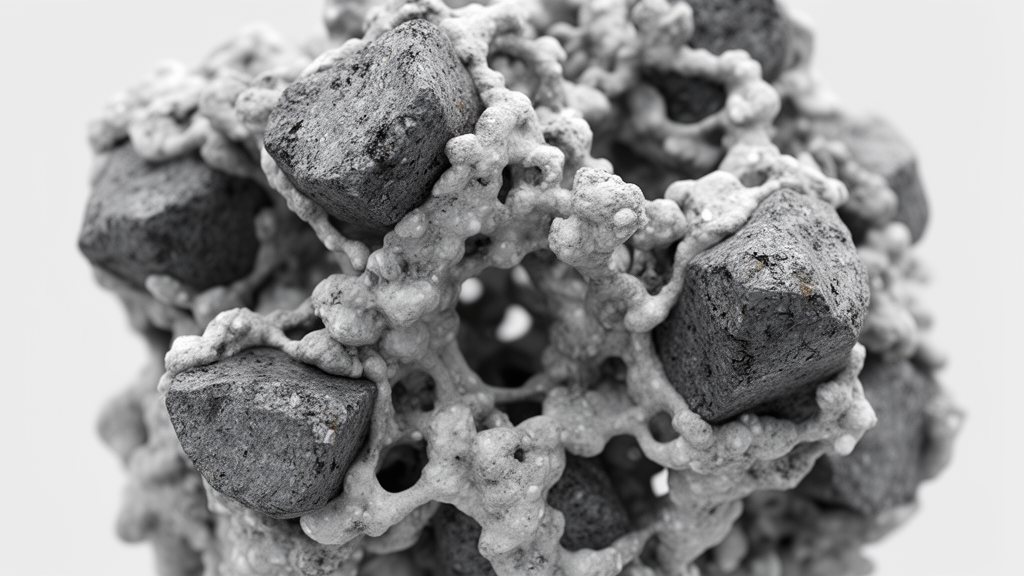
A comprehensive environmental life cycle assessment and ecotoxicity investigation of municipal solid waste incinerator bottom ash produced by a Portuguese waste-to-energy power plant has demonstrated substantial improvements in aquatic ecotoxicity and non-renewable energy consumption alongside significant trade-offs in greenhouse gas emissions. The research investigated both the standalone industrial production of bottom ash aggregates and downstream alkali-activated concrete formulations intended for precast construction applications. By tracing mass and energy flows from raw municipal waste combustion through advanced metal recovery, thermal curing, and chemical activation, the study identified critical environmental hotspots across different impact categories. The findings reveal that transforming post-combustion residues into alternative binder systems reduces biological hazard classifications while simultaneously shifting the environmental burdens toward electricity and chemical activator supply chains.
The first component of the investigation focused on raw municipal incinerator bottom ash processed at the Slag Treatment and Recovery Facility operated by Valorsul, which manages domestic waste generated across nineteen municipalities in Portugal. Using a cradle-to-gate system boundary across modules A1 through A3 as defined by international standards, the researchers modelled the material requirements and emissions associated with producing one tonne of bulk aggregate at the plant exit gate. Industrial-scale mechanical operations encompass vibrating grids that eliminate oversized fragments exceeding 250 millimetres, rotating sieves that separate fractions into coarse, intermediate, and fine gradings, and unburned material extractors that return combustible fractions back to the incineration centre. Subsequent magnetic and electromagnetic separators isolate ferrous steel, aluminium, and non-ferrous metals for third-party industrial recycling prior to a three-month controlled maturation process.
Analysis of this industrial processing chain revealed net environmental benefits across most baseline impact categories, largely driven by the recovery of secondary metals that displace virgin cast iron and primary aluminium production. Specifically, the processing of one tonne of bulk bottom ash achieved a 20 percent decrease in global warming potential, amounting to a net avoidance of 0.18 kilograms of carbon dioxide equivalents, as well as a 1724 megajoule reduction in non-renewable energy demand. Net negative environmental impact values were recorded for ozone depletion, photochemical oxidant formation, acidification, and eutrophication potentials. Conversely, positive environmental burdens were observed for abiotic resource depletion and renewable energy consumption, where energy spent in material sorting exceeded the savings from displaced virgin production. Within internal facility logistics, transport stages involving haulage trucks and site dumpers accounted for over 50 percent of impacts across most categories.
In the second phase of the study, the investigators formulated alkali-activated binders by incorporating treated municipal bottom ash as a complete replacement for ordinary Portland cement, comparing performance metrics directly against fly ash and standard cement systems. Raw bottom ash underwent supplementary laboratory preparation comprising oven drying at 105 degrees Celsius, manual extraction of residual impurities, and multi-stage comminution utilizing a Los Angeles abrasion machine followed by steel ball milling to match Portland cement fineness. Experimental binder compositions maintained a consistent water-to-binder ratio of 0.25, with alkaline activator solutions formulated from sodium hydroxide pellets and liquid sodium silicate at an equivalent sodium oxide to precursor content of 10 percent and a silica to sodium oxide modulus of 1.0. The mixtures also integrated sodium tetraborate decahydrate to counteract flash setting and a polycarboxylate superplasticiser to preserve workability.
When these alkali-activated concrete mixes were evaluated on a volumetric basis, substantial reductions in specific environmental impact categories were observed alongside pronounced increases in others. Compared with reference concrete formulations, the bottom ash mix yielded a 59 percent reduction in acidification potential and a 57 percent decrease in non-renewable energy consumption, illustrating an environmental advantage of roughly 300 percent relative to ordinary cement. However, the alkali-activated system incurred a 442 percent increase in global warming potential, driven primarily by the carbon intensity of producing commercial sodium silicate and the electrical energy required to operate laboratory curing ovens at 70 degrees Celsius. Component contribution breakdowns confirmed that despite its moderate dosage, sodium silicate represented the dominant driver across most non-metal categories, corroborating literature identifying soluble silicate production as an energy-intensive industrial bottleneck.
To account for differing technical performance levels across the materials, the environmental impact values were normalized against the 28-day compressive strengths of the concrete mixes. Laboratory compressive testing yielded strengths of 58.6 megapascals for the reference cement mix, 80.0 megapascals for the alkali-activated fly ash mix, and 20.5 megapascals for the alkali-activated bottom ash formulation. Because the bottom ash specimen demonstrated significantly lower strength, dividing lifecycle burdens by mechanical resistance inverted several comparative rankings, resulting in higher normalized impacts per megapascal across acidification, eutrophication, global warming, and ozone depletion potentials. In contrast, the high compressive resistance of fly ash concrete balanced its higher gross impacts, yielding functional unit values comparable to ordinary cement and highlighting the necessity of structural redesign for bottom ash applications such as precast paving blocks.
The accompanying toxicological evaluation combined standardised chemical leaching tests under Decree-Law 183/2009 with multi-trophic biological assays to assess potential ecotoxicity in simulated end-of-life landfilling or uncontained environmental exposure scenarios. Static batch diffusion experiments conducted at a liquid-to-solid ratio of ten with deionized water revealed that eluates from unbound and alkali-activated bottom ash conformed to regulatory limits for non-hazardous waste disposal. In contrast, fly ash specimens exhibited selenium concentrations that breached non-hazardous waste thresholds, classifying both bound and unbound fly ash matrices as hazardous waste. Incorporating bottom ash into the alkali-activated concrete matrix mitigated the release of most metallic elements, although an increase in dissolved arsenic was documented due to heightened oxyanion mobility under the elevated pH conditions established by sodium hydroxide activation.
Biological testing across three distinct trophic levels evaluated acute physiological inhibition in the microcrustacean Daphnia magna, metabolic bioluminescence reduction in the bacterium Vibrio fischeri, and cellular growth inhibition in the unicellular green alga Selenastrum capricornutum. Eluates from standard Portland cement exhibited the highest acute ecotoxicity toward aquatic crustaceans, yielding an effective concentration of 8 percent and triggering a Class IV severe toxicity rating under the Toxicity Classification System. Conversely, alkali-activated bottom ash mixes exhibited a dramatic 89 percent reduction in Daphnia magna toxicity units, with an effective concentration reaching 79 percent and shifting the overall biological hazard rating down to Class III. Microalgae proved to be the most sensitive bioindicator across all tested binder formulations, whereas bottom ash mixes consistently demonstrated superior biological compatibility relative to traditional cement matrices.
The authors outlined several methodological constraints that temper the immediate generalisability of the laboratory outcomes to industrial-scale manufacturing. All thermal activation and physical comminution processes were conducted using bench-scale ball mills and small-volume laboratory drying chambers, which possess considerably lower thermal efficiencies and higher specific power consumptions than continuous industrial kilns, potentially overestimating heat curing impacts by 25 to 40 percent. Furthermore, background inventory data relied on Western European regional averages rather than contemporary changes in the Portuguese electrical grid, although sensitivity analyses demonstrated that a 10 percent variation in carbon intensity would alter global warming outputs by only 5 percent without overturning the relative hierarchy of the binder systems.
Additional operational uncertainties stem from the reliance on a single municipal incineration source, static single-batch leaching protocols that do not emulate real-world cyclic wetting and drying regimes, and the absence of multi-year fatigue and durability metrics under authentic structural loads. The research team noted that conducting batch leaching on finely ground particles smaller than 10 millimetres overestimates realistic contaminant migration relative to intact concrete elements in service. To advance the commercial viability of municipal bottom ash valorisation, future efforts must concentrate on scaling up comminution systems, developing low-impact alternative alkaline activators to curb upstream chemical burdens, formulating blended binary systems combining bottom ash with fly ash to enhance compressive strength, and conducting field-scale environmental monitoring.
Subject of Research: Environmental life cycle and ecotoxicity assessment of alkali-activated municipal solid waste incinerator bottom ash
Article Title: Environmental impacts and ecotoxicity of alkali-activated municipal solid waste incinerator bottom ash
Article References: Maia, M. B., Lamaa, G., Pereira, C., de Brito, J., Silvestre, J. D., & Silva, R. V. (2025). Environmental impacts and ecotoxicity of alkali-activated municipal solid waste incinerator bottom ash. Low-carbon Materials and Green Construction, 3(1), Article 30. https://doi.org/10.1007/s44242-025-00091-9
Image Credits: AI Generated
DOI: 10.1007/s44242-025-00091-9
Keywords: incinerator bottom ash, alkali-activated materials, life cycle assessment, ecotoxicity, concrete binders, waste valorisation, circular economy, Daphnia magna, heavy metal leaching, non-renewable energy, acidification potential, global warming potential, sodium silicate, precast concrete, portuguese energy grid, environmental engineering, sustainable construction
News Source: Denise Maddox. (November 19, 2026). Alkali-Activated Incinerator Bottom Ash Cuts Toxicity Despite Higher Warming Potential. Scienmag.