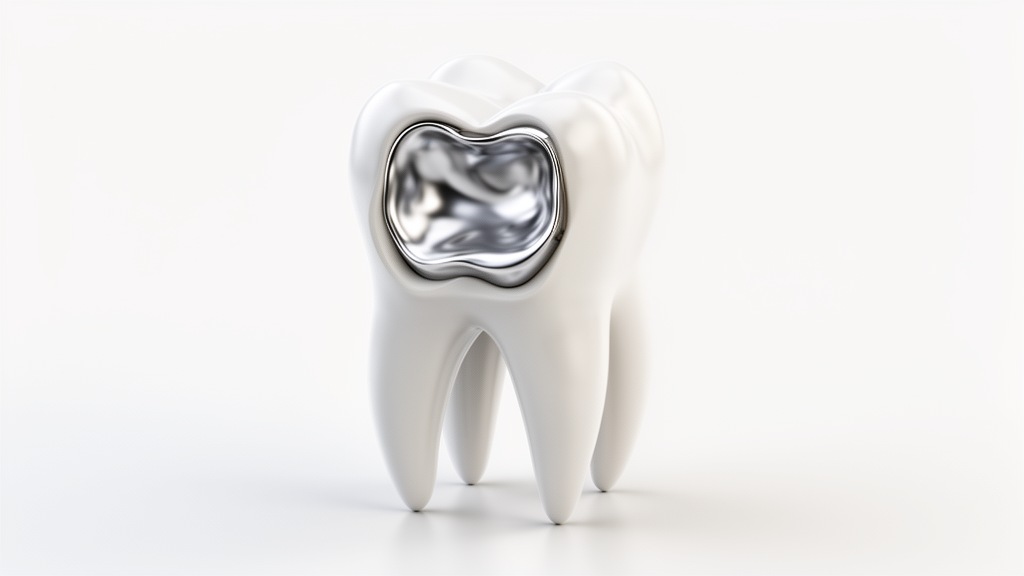
In an in vitro methodological study published in BMC Oral Health, researchers evaluated an in-house-developed algorithm designed to automate the reconstruction of missing tooth structures for dental inlays. The computational method, known as the Procrustes analysis-nonrigid iterative closest point (PA-NICP) algorithm, generated external surfaces for six types of mandibular right first-molar inlays on three-dimensional digital models. Across all tested preparation types, the algorithm produced inlay external surfaces that achieved morphological similarity and marginal adaptation significantly below prespecified numerical benchmarks.
The investigation addressed a persistent challenge in digital inlay design: achieving accurate reconstruction of missing tooth morphology solely from remaining tooth structure. To examine whether an algorithmic registration framework could resolve this design task, the study authors developed the PA-NICP algorithm and evaluated its performance using both morphological similarity and marginal adaptation as primary metrics.
The research team acquired forty three-dimensional digital models of mandibular right first molars exhibiting mild wear from the publicly available DCPR-GAN dataset. The forty models were split into two equal groups of twenty models each to support different phases of the investigation. Twenty digital models were allocated specifically for template construction, from which the researchers established a single mean crown template. The remaining twenty digital models were designated for algorithm evaluation.
To test the algorithmic approach across varied restorative geometries, the researchers digitally simulated six standardised inlay preparations on each of the twenty evaluation models. The simulated preparations comprised occlusal, bucco-occlusal, linguo-occlusal, mesio-occlusal, disto-occlusal, and mesio-occluso-distal configurations. Because each of the twenty evaluation models received all six standardized cavity preparations, the experimental protocol generated a total of 120 digitally simulated preparations for evaluation.
The PA-NICP algorithm operated by deforming the constructed mean template to match each simulated preparation, thereby producing the corresponding external surface of the dental inlay. To evaluate how closely the template aligned with the remaining tooth structure, the researchers measured root mean square (RMS) deviations after initial alignment and after nonrigid registration. In the non-defective regions of the models, mean RMS deviations decreased after nonrigid registration across all six preparation types, confirming that nonrigid registration improved template agreement with remaining tooth surfaces.
To assess restoration quality against ground-truth digital data, the investigators evaluated two distinct dimensions of performance: morphological similarity and marginal adaptation. Morphological similarity was quantified through three-dimensional morphological deviation, while marginal adaptation was evaluated through three-dimensional curve deviation along the preparation margin. The investigators established prespecified numerical benchmarks for both parameters, setting the morphological deviation benchmark at 0.150 mm and the marginal curve deviation benchmark at 0.050 mm.
The observed deviations were compared with their respective prespecified benchmarks using one-sided one-sample t tests or Wilcoxon signed-rank tests, chosen based on the distribution of the data. For all six inlay preparation types, the three-dimensional morphological deviations were significantly below the prespecified benchmark of 0.150 mm, with all adjusted P values falling below 0.001. Similarly, the three-dimensional curve deviations for all six preparation types were significantly below the prespecified benchmark of 0.050 mm, also yielding adjusted P values below 0.001.
The researchers also conducted exploratory comparisons among the six preparation types using Friedman tests followed by pairwise Wilcoxon signed-rank tests, applying Bonferroni correction to adjust P values for multiple comparisons. Following this correction, only two pairwise comparisons demonstrated statistically significant differences. Mesio-occluso-distal inlays showed greater morphological deviation than mesio-occlusal inlays, while occlusal inlays showed greater digital curve deviation than mesio-occluso-distal inlays. No other pairwise comparisons between preparation types reached statistical significance under the corrected testing threshold.
The authors concluded that the PA-NICP algorithm generated inlay external surfaces with close morphological and margin-curve agreement at the digital-model level, providing preliminary support for the algorithm as a technical approach to digital inlay design. However, the researchers emphasized that these findings were obtained in an in vitro setting using a single mean crown template and six simulated, idealized preparation types in mildly worn mandibular right first molars from a single dataset. They noted that the performance of the PA-NICP algorithm relative to existing inlay design methods remains to be established.
Subject of Research: Algorithmic reconstruction of dental inlay external surfaces using nonrigid registration
Article Title: Generation of external surfaces for dental inlays using a nonrigid registration algorithm: an in vitro methodological study
Article References: Guo, S., Zhang, X., Wen, A., Bai, Y., Gao, Z., Li, W., Shan, S., Yang, Y., Zhao, Y., & Wang, Y. (2026). Generation of external surfaces for dental inlays using a nonrigid registration algorithm: an in vitro methodological study. BMC Oral Health. https://doi.org/10.1186/s12903-026-10442-y
Image Credits: AI Generated
DOI: 10.1186/s12903-026-10442-y
Keywords: dental inlays, nonrigid registration, PA-NICP algorithm, Procrustes analysis, in vitro study, marginal adaptation, morphological similarity, mandibular first molar, DCPR-GAN dataset, digital inlay design, root mean square deviation, three-dimensional models, crown template, occlusal preparation, mesio-occluso-distal inlays, curve deviation, tooth morphology reconstruction
News Source: Ophelia Keating. (November 26, 2026). Algorithm Generates Accurate External Surfaces for Simulated Dental Inlays in Vitro. Scienmag.