• HOME
  • NEWS
  • EXPLORE
    • CAREER
      • Companies
      • Jobs
    • EVENTS
    • iGEM
      • News
      • Team
    • PHOTOS
    • VIDEO
    • WIKI
  • BLOG
  • COMMUNITY
    • FACEBOOK
    • INSTAGRAM
    • TWITTER
Tuesday, May 12, 2026
BIOENGINEER.ORG
No Result
View All Result
  • Login
  • HOME
  • NEWS
  • EXPLORE
    • CAREER
      • Companies
      • Jobs
        • Lecturer
        • PhD Studentship
        • Postdoc
        • Research Assistant
    • EVENTS
    • iGEM
      • News
      • Team
    • PHOTOS
    • VIDEO
    • WIKI
  • BLOG
  • COMMUNITY
    • FACEBOOK
    • INSTAGRAM
    • TWITTER
  • HOME
  • NEWS
  • EXPLORE
    • CAREER
      • Companies
      • Jobs
        • Lecturer
        • PhD Studentship
        • Postdoc
        • Research Assistant
    • EVENTS
    • iGEM
      • News
      • Team
    • PHOTOS
    • VIDEO
    • WIKI
  • BLOG
  • COMMUNITY
    • FACEBOOK
    • INSTAGRAM
    • TWITTER
No Result
View All Result
Bioengineer.org
No Result
View All Result
Home NEWS Science News Biology

AIDS — an approach for targeting HIV reservoirs

Bioengineer by Bioengineer
December 20, 2018
in Biology
Reading Time: 3 mins read
0
IMAGE
Share on FacebookShare on TwitterShare on LinkedinShare on RedditShare on Telegram

IMAGE

Credit: © Institut Pasteur / Nicolas Huot


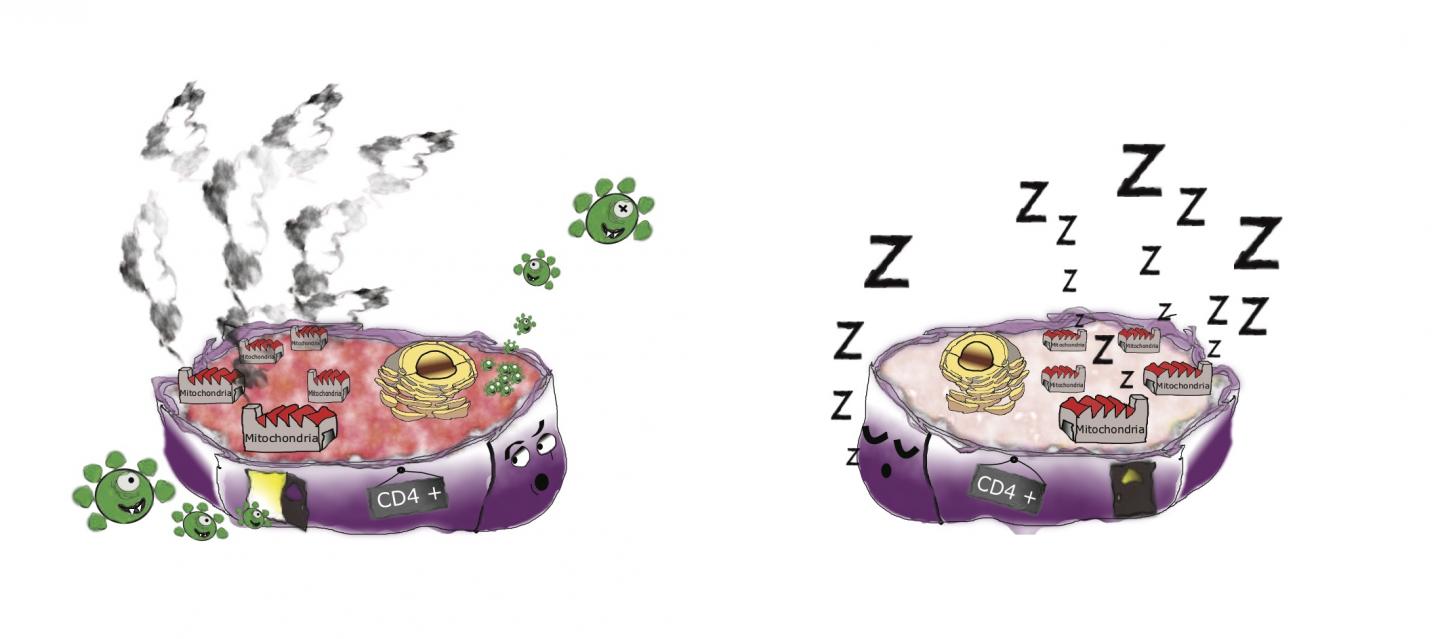
Current HIV treatments need to be taken for life by those infected as antiretroviral therapy is unable to eliminate viral reservoirs lurking in immune cells. Institut Pasteur scientists have identified the characteristics of CD4 T lymphocytes that are preferentially infected by the virus – it is their metabolic (or energy-producing) activity1 that enables the virus to multiply. Thanks to metabolic activity inhibitors, the researchers have managed to destroy these infected cells, or “reservoirs”, ex vivo. Their findings were published in the journal Cell Metabolism on December 20, 2018.

Current HIV treatments need to be taken for life by those infected as antiretroviral therapy is unable to eliminate viral reservoirs lurking in immune cells. Institut Pasteur scientists have identified the characteristics of CD4 T lymphocytes that are preferentially infected by the virus – it is their metabolic (or energy-producing) activity[1] that enables the virus to multiply. Thanks to metabolic activity inhibitors, the researchers have managed to destroy these infected cells, or “reservoirs”, ex vivo. Their findings were published in the journal Cell Metabolism on December 20, 2018.

The antiretroviral treatment used today is designed to block HIV infection but it is not able to eliminate the virus from the body. The virus remains in reservoirs – the CD4 T lymphocyte immune cells, the main targets of HIV. However, the virus does not infect all types of CD4 cell and until now the reason for this was not well known. In this study, scientists from the HIV, Inflammation and Persistence Unit at the Institut Pasteur and colleagues have identified the characteristics of the different CD4 subpopulations, which are associated with HIV infection.

The more the CD4 cells are differentiated, or experienced, the more they need to produce energy to perform their function. Experiments have shown that it is the metabolic activity of the cell, and in particular its glucose consumption, that plays a key role in susceptibility to HIV infection. The virus primarily targets cells with high metabolic activity. To multiply, it hijacks the energy and products provided by the cell.

This requirement constitutes a weakness for the virus and could be exploited to tackle infected cells. Scientists succeeded in blocking the infection ex vivo thanks to metabolic activity inhibitors that have already been investigated in cancer research.

“We have observed ex vivo that, thanks to certain metabolic inhibitors, the virus is no longer able to infect cells and amplification is halted in reservoirs of patients receiving antiretroviral treatment.”

###

Asier Saez-Cirion, coordinator of the study

This research opens new ways towards possible remission through the elimination of reservoir cells. The next research phase will involve assessing the potential of these metabolic inhibitors in vivo.

This study was funded by the Institut Pasteur, AmfAR (American Foundation for AIDS research) and Sidaction.

[1] Metabolic (energy) activity of a cell. It is the cell’s molecule synthesis and breakdown activities that enable it to produce energy. There are numerous metabolic pathways. Glycolysis, for example, is when sugar is turned into energy.

Media Contact
Aurelie Perthuison
[email protected]

Original Source

https://www.pasteur.fr/en/home/press-area/press-documents/aids-approach-targeting-hiv-reservoirs

Related Journal Article

http://dx.doi.org/10.1016/j.cmet.2018.11.015

Tags: AIDS/HIVBiologyMedicine/Health
Share12Tweet8Share2ShareShareShare2

Related Posts

From Complexity to Clarity: Unraveling the “Topological Laws” Governing Cell Death — Biology

From Complexity to Clarity: Unraveling the “Topological Laws” Governing Cell Death

May 11, 2026
New Classification Framework Identifies Tumor-Associated Bacterial Effectors as Crucial Drivers of Tumor Biology and Immune Response — Biology

New Classification Framework Identifies Tumor-Associated Bacterial Effectors as Crucial Drivers of Tumor Biology and Immune Response

May 11, 2026

HIV-1 Strains Reveal Varied Paths to Antibody Escape

May 11, 2026

CRISPRi Screening Identifies Fungal-Specific Drug Targets

May 11, 2026
Please login to join discussion

POPULAR NEWS

  • Research Indicates Potential Connection Between Prenatal Medication Exposure and Elevated Autism Risk

    841 shares
    Share 336 Tweet 210
  • New Study Reveals Plants Can Detect the Sound of Rain

    728 shares
    Share 290 Tweet 182
  • Salmonella Haem Blocks Macrophages, Boosts Infection

    62 shares
    Share 25 Tweet 16
  • Breastmilk Balances E. coli and Beneficial Bacteria in Infant Gut Microbiomes

    57 shares
    Share 23 Tweet 14

About

We bring you the latest biotechnology news from best research centers and universities around the world. Check our website.

Follow us

Recent News

Humans and Zebra Finches Share Similar Speech Learning Techniques #ASA190

New Study Uncovers How Fungal Parasites Attack Strawberries and Raspberries

City of Hope Researchers to Present Groundbreaking Immunotherapy and Precision Medicine Advances Across Multiple Cancer Types at ASCO 2026

Subscribe to Blog via Email

Enter your email address to subscribe to this blog and receive notifications of new posts by email.

Join 82 other subscribers
  • Contact Us

Bioengineer.org © Copyright 2023 All Rights Reserved.

Welcome Back!

Login to your account below

Forgotten Password?

Retrieve your password

Please enter your username or email address to reset your password.

Log In
No Result
View All Result
  • Homepages
    • Home Page 1
    • Home Page 2
  • News
  • National
  • Business
  • Health
  • Lifestyle
  • Science

Bioengineer.org © Copyright 2023 All Rights Reserved.