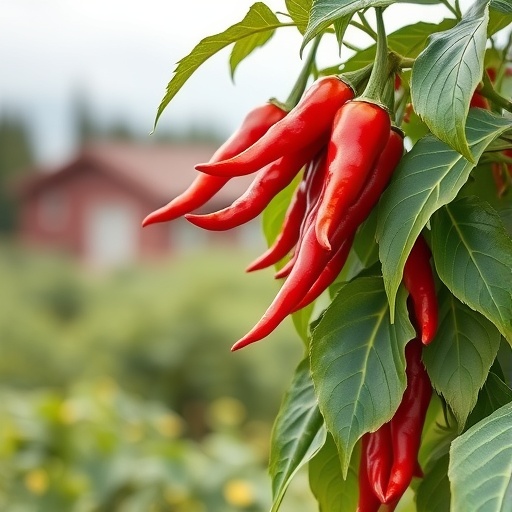
In a world where agricultural practices are grappling with the challenge of sustainability, the integration of cutting-edge technology is ushering in transformative changes. Recent advancements in deep learning algorithms have opened a new frontier in precision agriculture, particularly in the realm of disease detection among crops. A groundbreaking study conducted in Benin highlights the potential of AI-driven methods in the early identification of diseases affecting chili pepper plants, a critical crop in the region. This study illuminates the intertwining of artificial intelligence with agricultural practices, fostering sustainability while enhancing productivity.
Chili peppers are integral to both the diet and economy of many communities in Benin. However, crop diseases have become increasingly prevalent, threatening yields and, by extension, the livelihoods of farmers. Traditionally, the detection of such diseases relied heavily on the expertise of agricultural workers who would visually assess plants for signs of distress. This manual method, while valuable, is often slow and can lead to significant crop losses if diseases are not identified in their early stages. The advent of deep learning offers a promising alternative that could revolutionize this process.
The researchers applied advanced deep learning techniques to develop a robust model capable of accurately identifying various diseases afflicting chili pepper crops. By training this model on a diverse dataset containing thousands of images of both healthy and diseased plants, they sought to create a system that could learn to distinguish subtle differences that the human eye might overlook. The implications of such a system are manifold, enabling quicker responses to crop diseases and minimizing the economic impacts on farmers.
One of the primary advantages of using deep learning in disease detection is its ability to process vast quantities of data at unprecedented speeds. Unlike traditional methods, which may depend on individual assessment, deep learning systems can analyze images and identify patterns across large datasets almost instantaneously. This rapid processing allows for real-time monitoring of crops, enabling farmers to respond promptly to any emerging threats. Early detection is crucial in agriculture, as it can mean the difference between saving a crop and facing devastating losses.
Moreover, the use of this technology is aligned with the principles of sustainable agriculture. By accurately identifying disease at early stages, farmers can implement targeted interventions, such as localized treatment of affected areas, rather than widespread pesticide application. This precision not only reduces environmental impact but also promotes the health of adjacent ecosystems and beneficial organisms, fostering a more balanced agricultural environment.
Part of the research involved an intricate validation process to ensure the effectiveness and reliability of the deep learning model. By conducting comprehensive tests across various scenarios, the researchers were able to ascertain the model’s accuracy in different lighting conditions, plant species variations, and disease types. This rigorous testing is essential, as it builds confidence in the technology’s application in real-world settings, assuring farmers that they can rely on the system for critical decision-making.
One of the striking features of this study is the collaborative approach taken by the researchers, which involved not only rigorous technical development but also the engagement of local agricultural communities. By integrating feedback from farmers who would ultimately utilize the technology, the researchers were able to create a user-friendly interface and ensure that the tool met the practical needs of its end users. This participatory design process is vital to the success of any technological intervention in agriculture, as it fosters buy-in from those who are most affected.
As the global population continues to rise, and with it, the demand for food, the necessity for innovations in agriculture becomes increasingly urgent. This study from Benin serves as a beacon of hope, illustrating how technology can bridge the gap between necessity and sustainability. By harnessing the power of deep learning, the research not only addresses immediate agricultural challenges but also sets a precedent for the future of farming in other regions facing similar obstacles.
The implications of such technology extend beyond the borders of Benin. Countries worldwide could adopt these AI-driven systems to monitor and combat crop diseases more effectively. The adaptability of deep learning models to different crops and local conditions makes them a versatile solution in the global agricultural landscape. Furthermore, as more data becomes available and technology continues to evolve, these systems could be enhanced, providing farmers with even greater insights and predictive capabilities.
However, the shift towards integrating deep learning and AI in agriculture does not come without its challenges. Farmers may face barriers such as limited access to technology and the need for training to effectively utilize these new tools. Addressing these challenges will be crucial for the widespread adoption of these innovative solutions. Policymakers and agricultural organizations must work collaboratively to ensure that support systems are in place to facilitate this transition, making technology accessible to all farmers, regardless of their socioeconomic status.
In conclusion, the study spearheaded by Odounfa, Hounmenou, and Salako exemplifies the potential of deep learning in transforming agricultural practices. As the world strives for sustainable food production, innovations like this represent not just an opportunity to enhance crop health but to revolutionize the way we approach agriculture as a whole. By marrying traditional knowledge with modern technology, we can pave the way for a future where farmers are equipped to tackle the challenges of a changing world more effectively.
In summary, the findings from this study resonate with the growing narrative of sustainability in agriculture. They highlight that the future of farming lies in harnessing technology to enhance productivity while honoring environmental stewardship. As more farmers worldwide consider the possibilities presented by deep learning, we may very well be on the cusp of a new agricultural revolution—one where AI and human expertise coalesce seamlessly in the quest for sustainable food security.
Subject of Research: Precision Agriculture and Disease Detection in Chili Peppers
Article Title: Deep learning enables precision agriculture for sustainable chili pepper disease detection in Benin.
Article References:
Odounfa, M.G.F., Hounmenou, C.G., Salako, V.K. et al. Deep learning enables precision agriculture for sustainable chili pepper disease detection in Benin.
Discov Artif Intell 5, 315 (2025). https://doi.org/10.1007/s44163-025-00583-4
Image Credits: AI Generated
DOI: https://doi.org/10.1007/s44163-025-00583-4
Keywords: Deep learning, Precision Agriculture, Chili Pepper Disease Detection, Sustainable Farming, Agricultural Technology.
Tags: agricultural advancements in West AfricaAI in agricultureartificial intelligence in crop managementBenin chili pepper farmingchallenges in chili pepper cultivationcrop disease identification methodsdeep learning in farmingearly disease detection in plantsenhancing agricultural productivityprecision agriculture technologysustainable chili disease detectiontechnology-driven sustainable practices