A critical scoping review evaluating artificial intelligence applications in orthodontics has revealed that while deep learning models show promising technical capability in detecting and grading root resorption, critical methodological limitations and an absence of external validation prevent their current translation into clinical practice. Published in Frontiers in Oral Health by Huishun Yang, Qianying He, and Dongxu Hu, the investigation mapped available clinical evidence regarding artificial intelligence systems designed to predict, detect, or quantify periodontal risks in orthodontic patients. Despite high reported diagnostic accuracies in controlled retrospective environments, the review determined that robust individual-level clinical risk prediction remains unestablished across both hard and soft tissue complications.
The authors conducted their systematic search and reporting in strict accordance with the PRISMA-ScR extension for scoping reviews and PRISMA-S guidelines, examining literature published between January 1, 2018, and June 1, 2025. Searches were executed across six major electronic databases—PubMed, IEEE Xplore, Web of Science, Scopus, Embase, and the Cochrane Library—supplemented by grey-literature repositories including Google Scholar, medRxiv and bioRxiv preprints, and ProQuest Dissertations and Theses, alongside forward and backward citation tracking. From an initial identification of 880 records, 312 duplicates were removed and 568 records were screened, leading to the full-text evaluation of 56 studies. Ultimately, only three core clinical cone-beam computed tomography (CBCT) investigations met the authors’ strict eligibility criteria requiring human orthodontic patient data and quantitative performance reporting.
Among the qualifying hard-tissue investigations, an assessment by Xu and colleagues in 2024 evaluated 2,146 tooth radiographic slices using convolutional neural network architectures for resorption severity grading. In that study, the authors tested six distinct models, documenting a mean accuracy of 0.92 across the networks. Their selected EfficientNet-B4 architecture achieved an accuracy of 0.94, outperforming the 0.82 mean diagnostic accuracy recorded by clinical orthodontists on the same ground-truth consensus dataset. However, the scoping review noted that the model was developed on a retrospective single-center dataset utilizing only internal five-fold cross-validation, leaving its diagnostic generalizability across different clinical scanners unverified.
The remaining core clinical studies targeted specialized diagnostic and volumetric tasks but displayed similar structural constraints. Pirayesh and colleagues in 2024 evaluated canine-induced root resorption across 50 CBCT scans encompassing 176 incisors using a three-dimensional hierarchical deep learning framework based on 3D U-Net and 3D ResNet architectures. Their system achieved an overall diagnostic accuracy of 82.1 percent and an F1-score of 0.62 against specialist consensus, though performance showed lower precision and wider uncertainty margins when identifying minor resorption. In 2025, Zheng and colleagues retrospectively analyzed 4,534 teeth from 105 patient CBCT scans using a Dynamic Graph Convolutional Neural Network (DGCNN) for three-dimensional root and crown segmentation. While their model demonstrated intraclass correlation coefficients exceeding 0.95 for volumetric root quantification and an accuracy above 0.80 for severity classification, the network was validated solely against manual segmentations rather than longitudinal clinical outcomes and lacked reported calibration metrics.
Formal methodological appraisal conducted by the reviewers exposed substantial risk of bias across all three included investigations. Diagnostic accuracy studies were appraised using the QUADAS-2 tool, while prognostic modeling studies were assessed with the PROBAST instrument across domains spanning participant selection, index tests, reference standards, flow and timing, and statistical analysis. Every evaluated study was assigned an overall high risk of bias, driven primarily by single-center retrospective recruitment, inadequate management or reporting of class imbalance, missing calibration curves, and an absence of independent external validation cohorts. Applicability concerns were rated low for the studies by Xu and Zheng, while Pirayesh’s investigation exhibited moderate applicability concerns linked to its small sample size and constrained test set.
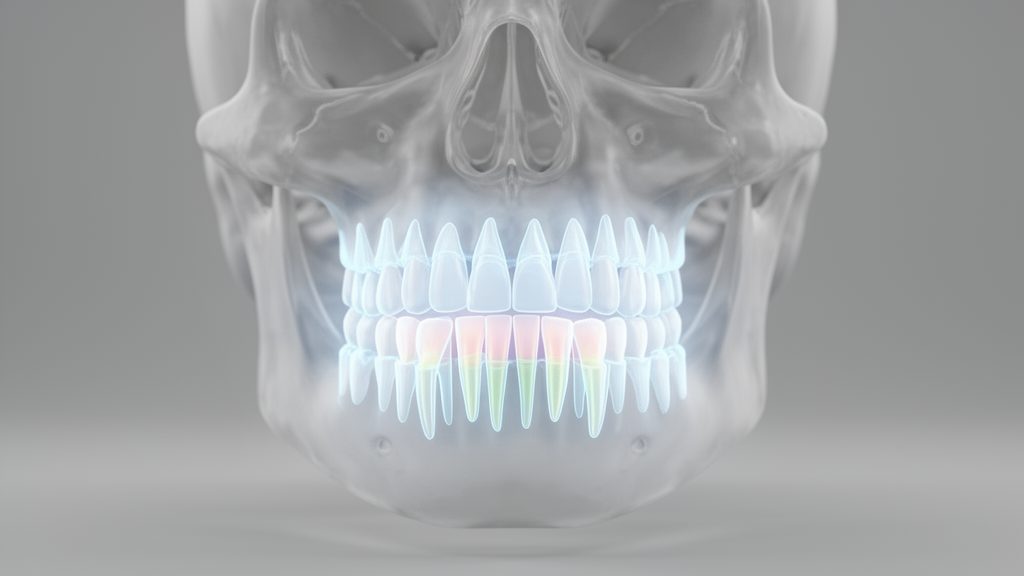
These technical evaluations occurred against the complex biological backdrop of orthodontically induced inflammatory root resorption (OIIRR), a pathological tissue breakdown that AI developers seek to monitor. The review detailed how OIIRR initiates when clastic cells known as dentinoclasts or odontoclasts remove necrotic, hyalinized tissue generated in the periodontium under sustained mechanical stress, leading irreversibly to apical root shortening and blunting. Biomechanical forces heavily influence this phenomenon: intrusive tooth movement generates a fourfold higher incidence of resorption than extrusion, while intrusive forces combined with lingual root torque represent the most detrimental mechanical approach. Mechanical loads delivered by Class II intermaxillary elastics and rapid maxillary expansion appliances also elevate resorption risks, underscoring the necessity for volumetric three-dimensional CBCT quantification rather than two-dimensional radiographic monitoring.
Regarding osseous support structures, the review established that direct clinical evidence for artificial intelligence models predicting orthodontic alveolar bone loss, dehiscence, or fenestration remains exceedingly scarce. The authors explicitly excluded AI studies addressing general non-orthodontic periodontitis and those utilizing ex vivo extracted teeth or simulated defects, emphasizing that performance in general periodontal cohorts cannot be assumed to translate to orthodontic force-induced bone remodeling. When orthodontic tooth movement exceeds the regulatory threshold of the Bone Remodeling Regulatory System, localized vertical bone resorption, cortical plate perforation, and furcation lesions can occur, especially in the presence of excessive force, extreme tooth inclination, or plaque-induced gingivitis and periodontitis. While advanced neural network variants such as 3D U-Net and nnU-Net possess proven segmentation capabilities in maxillofacial imaging, clinically validated predictive models specific to orthodontic alveolar bone loss are not yet available.
The review identified an even more pronounced deficit in artificial intelligence applications for predicting soft tissue complications, specifically gingival recession. Gingival recession involves the apical migration of the gingival margin, frequently developing when tooth displacement thins the alveolar bone plate and produces an underlying osseous dehiscence that guides a characteristic V-shaped soft-tissue margin contour. Factors predisposing patients to recession include a thin gingival biotype, diminished cortical plate thickness, plaque accumulation, and traumatic tooth brushing. Although high AI measurement precision has been demonstrated in specific automated CBCT tasks—such as measuring gingival thickness with an adjusted difference of 0.011 millimeters when using lip retractors—predictive models struggle with radiomic feature reproducibility across imaging protocols and high false-negative rates in clinical confusion matrices, leaving pre-cutoff direct clinical evidence for gingival recession prediction insufficient.
Addressing the broader pathway toward clinical adoption, the authors highlighted deep empirical, ethical, and regulatory voids that currently impede deployment. The preponderance of single-center retrospective datasets fails to provide the high level of evidence mandated for healthcare decision-making, which requires prospective multi-center randomized controlled trials designed in accordance with AI-specific standards such as CONSORT-AI and SPIRIT-AI. From a regulatory perspective, diagnostic and predictive software faces evolving oversight, such as the United States Food and Drug Administration’s framework for Software as a Medical Device (SaMD)—classifying tools under Class II 510(k) clearance or Class III Premarket Approval—and the European Union’s AI Act, which categorizes diagnostic systems as high-risk, demanding rigorous conformity assessments and robust data governance to protect patient privacy.
In their concluding analysis, the authors emphasized that although artificial intelligence models have confirmed technical feasibility in quantifying and grading orthodontic root resorption in controlled settings, they cannot yet reliably support individualized clinical decision-making. Future advancement requires shifting away from exploratory retrospective designs toward prospective, multicenter randomized trials, standardized imaging and annotation protocols, explainable AI architectures, and comprehensive model calibration. The ultimate clinical goal identified by the researchers is the development of real-time, closed-loop feedback platforms capable of interpreting early biological risk markers on three-dimensional imaging to dynamically adjust orthodontic force delivery, transforming reactive damage management into proactive prevention.
Subject of Research: Artificial intelligence applications in predicting periodontal and root resorption risks during orthodontic treatment
Article Title: Application of artificial intelligence in predicting periodontal risks in orthodontic patients: a scoping review
Article References: Yang, H., He, Q., & Hu, D. (2026). Application of artificial intelligence in predicting periodontal risks in orthodontic patients: a scoping review. Frontiers in Oral Health, 7, Article 1925434. https://doi.org/10.3389/froh.2026.1925434
Image Credits: AI Generated
DOI: 10.3389/froh.2026.1925434
Keywords: artificial intelligence, orthodontics, periodontal risk, root resorption, scoping review, cone-beam computed tomography, deep learning, clinical translation, Application, artificial, intelligence, predicting
News Source: Blake Davidson. (November 9, 2026). AI Predicts Orthodontic Root Resorption but Methodological Gaps Limit Clinical Translation. Scienmag.