


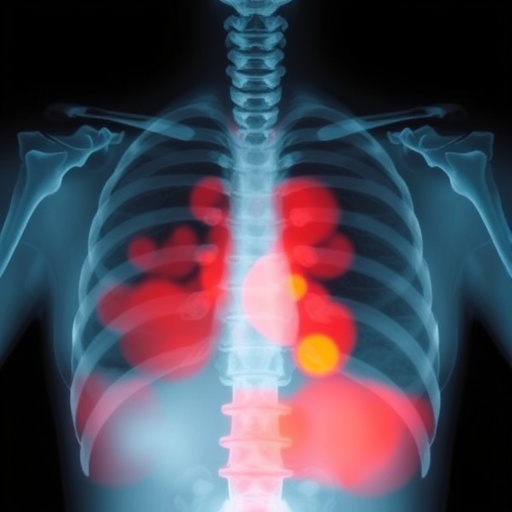
In a groundbreaking study published in Archives of Osteoporosis, researchers have harnessed the revolutionary power of artificial intelligence to enhance the screening process for low bone mass conditions using chest X-rays. This novel approach utilizes knowledge distillation, a method within deep learning that optimizes the performance of AI models, to identify patients at risk of osteoporosis. The implications of this research transcend traditional methods of bone density measurement, potentially reshaping the preventive landscape in osteoporosis management.
Within the study led by Park et al., the team devised an innovative framework that leverages existing chest X-ray images, commonly used for other diagnostic purposes, to evaluate bone mass. The ability to repurpose these images could lead to more efficient and widespread screening, especially in populations with limited access to specialized bone density testing. This not only can identify patients earlier but may also facilitate timely interventions that can significantly alter disease outcomes.
The methodology employed by the researchers is notable. The team trained a model based on knowledge distillation principles, which involves transferring knowledge from a larger, complex model (often referred to as the teacher) to a smaller, more efficient model (the student). This process enables the student model to perform comparably to the teacher while maintaining a lighter computational footprint. Such efficiency is crucial for implementing AI-based solutions in clinical settings where computational resources may be constrained.
Data validation played a pivotal role in this research. With rigorous external validation across diverse demographic groups and clinical environments, the findings demonstrated the robustness of the AI model. The study’s results indicated a significant correlation between the AI-generated assessments and conventional assessments of bone mass. Such concordance underscores the reliability and potential of AI-driven diagnostic tools in enhancing medical accuracy and early disease detection.
One of the standout aspects of this research is its accessibility. By utilizing chest X-ray images, a diagnostic tool that is ubiquitous in medical settings, the methodology not only streamlines the screening process but also ensures that it can be deployed in various healthcare contexts around the globe. This could prove especially beneficial in areas with limited access to advanced imaging technology and expertise in bone health.
The researchers emphasized the importance of training the AI model on a diverse dataset that represents varying age groups, ethnic backgrounds, and medical histories. This inclusivity aims to mitigate biases present in AI models that typically arise from narrow training datasets. By ensuring diverse representation, the study aspires to enhance the model’s applicability across different populations, reflecting a more equitable approach to healthcare innovation.
Furthermore, the study highlights the need for collaborative efforts between radiologists and data scientists. The fusion of clinical knowledge with machine learning capabilities creates a synergistic effect that can lead to richer insights and more comprehensive patient care solutions. This multidisciplinary approach not only improves the diagnostic process but also fosters an environment of shared learning and growth within the medical community.
Ethical considerations surrounding AI and healthcare cannot be underestimated. The researchers were keen to address the implications of introducing AI-based diagnostics into routine practice, emphasizing transparency in how the AI processes and interprets data. By making the algorithms understandable to healthcare professionals, the study advocates for informed decision-making, encouraging practitioners to view AI as a complement to their expertise rather than a replacement.
Moreover, the potential impact of expanding such screening methods reaches beyond individual patient care. As low bone mass and osteoporosis remain critical public health concerns, widespread adoption of AI-enabled screening could lead to a paradigm shift in how these conditions are monitored on a population scale. By promoting greater awareness and preventive measures, such innovations could ultimately reduce the burden of fractures and associated healthcare costs.
It is apparent that integrating AI into the screening for low bone mass not only holds promise for improving individual outcomes but also for fostering a more proactive approach to bone health. As health systems worldwide continue to evolve, the need for efficient, scalable solutions becomes ever more pressing. The advances pioneered by Park and colleagues accentuate how AI can propel the medical field forward, creating pathways for better management of chronic conditions.
Overall, this study signifies a significant advancement in the intersection of technology and healthcare. By addressing the dual challenges of accessibility and specificity in low bone mass screening, knowledge distillation-based deep learning presents a compelling case for the future of diagnostic medicine. As we move closer to a more interconnected and tech-driven health ecosystem, the findings from this research may serve as a cornerstone for future innovations in preventative healthcare approaches.
As hospitals and clinics begin to explore the integration of AI tools within their operations, the insights gleaned from this research will likely inspire further investigations and collaborations. The journey towards effective opportunistic screening for low bone mass is just beginning, but the fusion of traditional medical imaging with cutting-edge AI techniques promises to expand horizons and improve patient outcomes in unprecedented ways. By challenging existing norms and embracing novel paradigms, there’s hope that many more lives will be positively affected in the realm of bone health.
In conclusion, Park et al.’s research represents a revolution in the realm of osteoporosis screening, marking a significant leap forward for both AI applications in healthcare and the proactive management of bone health. As the medical community embraces these advancements, the journey towards improved diagnostics and patient care continues to evolve.
Subject of Research: Screening for low bone mass using AI and chest X-rays
Article Title: Opportunistic screening of low bone mass using knowledge distillation-based deep learning in chest X-rays with external validations
Article References: Park, J., Kim, NY., Bae, HJ. et al. Opportunistic screening of low bone mass using knowledge distillation-based deep learning in chest X-rays with external validations. Arch Osteoporos 20, 131 (2025). https://doi.org/10.1007/s11657-025-01609-1
Image Credits: AI Generated
DOI: https://doi.org/10.1007/s11657-025-01609-1
Keywords: AI, low bone mass, osteoporosis, deep learning, chest X-rays, knowledge distillation, opportunistic screening, healthcare innovation, preventive medicine, diagnostics
Tags: AI in medical imagingAI-driven osteoporosis management strategiesefficient screening techniques for bone densityenhancing patient outcomes through AIimproving accessibility to osteoporosis testinginnovative bone mass evaluation methodsknowledge distillation in deep learninglow bone mass screeningmachine learning in bone health assessmentosteoporosis diagnosis using X-rayspreventive healthcare for osteoporosisrepurposing chest X-rays for diagnostics



