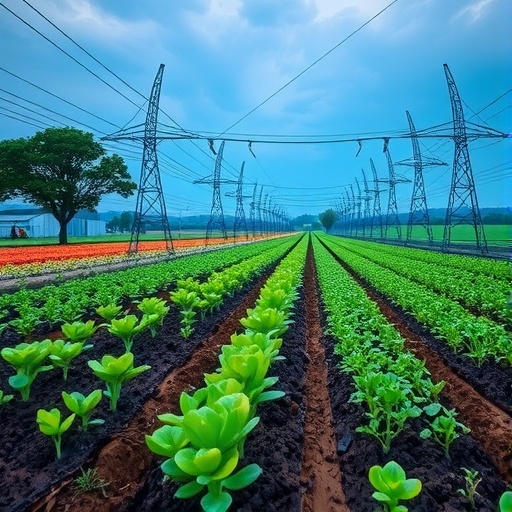
Artificial intelligence could reshape how farms manage nitrogen by treating the nitrogen cycle as a single, connected system that links crop growth, livestock feeding, manure recycling, and environmental monitoring. A new perspective in Nitrogen Cycling argues that the long-standing separation between crop production and livestock operations has fragmented nutrient flows, causing manure to accumulate near concentrated animal facilities while other regions over-rely on synthetic fertilizers.
Inefficient nitrogen use exacts a multi-front cost. Excess nitrogen contributes to air pollution, soil acidification, groundwater contamination, and emissions of nitrous oxide—an especially potent greenhouse gas. The authors focus on rebuilding nutrient continuity by tracking how nitrogen moves through fields, animals, manure storage, and the surrounding environment.
Their proposed framework combines three technical pillars designed to turn complex measurements into operational decisions. First, AI-enabled observation systems can draw from satellites, drones, soil sensors, animal wearables, computer vision, and monitors in livestock housing. Together, these inputs can map nitrogen pathways and identify where losses begin.
Second, the approach integrates data-driven machine learning with mechanistic models grounded in physical, biological, and chemical processes. Techniques such as physics-informed neural networks and knowledge-guided machine learning aim to improve predictive accuracy while enforcing constraints like nitrogen mass balance, supporting more reliable estimates of fertilizer requirements, nitrous oxide emissions, animal nitrogen retention, and manure-related losses.
Third, agricultural large language models are proposed as translation layers between scientific outputs and farmer-friendly guidance. Such systems could recommend optimal fertilizer source, rate, timing, and placement, while also improving animal feed strategies and coordinating manure transfer from nitrogen-surplus livestock zones to croplands that need nutrients.
The long-term vision is a whole-farm intelligent agent that coordinates crop fertilization, livestock nutrition, and manure recycling simultaneously. Early specialized AI systems reported in the literature suggest this direction is feasible, showing reductions in fertilizer or feed nitrogen use without sacrificing— and sometimes improving—productivity.
Despite the promise, the authors emphasize barriers that could slow adoption. Agricultural data remain fragmented across institutions, many AI models are difficult to interpret, and advanced sensing and computing tools may be too expensive for smallholder farmers. Methods such as federated learning and edge computing could address privacy and cost, while lowering-cost measurement options could broaden access.
Overall, the perspective positions AI as the potential central coordination layer for circular agriculture. Achieving impact will require sustained collaboration among agronomists, animal scientists, biogeochemists, computer scientists, farmers, and policymakers to ensure the technology is trustworthy, affordable, and usable.
Subject of Research: Artificial intelligence for sustainable agricultural nitrogen management
Article Title: Artificial intelligence empowers sustainable agricultural nitrogen management
News Publication Date: 4-Jun-2026
Web References: https://doi.org/10.48130/nc-0026-0009
References: Zhang X, Wei C, Zhang S, Gu B. 2026. Nitrogen Cycling 2: e022. doi:10.48130/nc-0026-0009
Image Credits: Xiuming Zhang, Chengkun Wei, Shaohui Zhang & Baojing Gu
Keywords: Artificial intelligence; nitrogen; livestock; circular agriculture; nitrogen cycle; precision fertilization; nitrous oxide; manure recycling
Tags: Agricultural nitrogen cycle managementAI-driven precision farmingAI-enabled environmental monitoringclimate-smart farming technologiesenvironmental impact of nitrogen emissionsintegrated nutrient flow systemsmachine learning in sustainable agriculturemanure recycling monitoringnitrogen pollution mitigation strategiesnitrogen use efficiency optimizationsatellite and drone for nutrient trackingsoil and livestock sensor data analysis