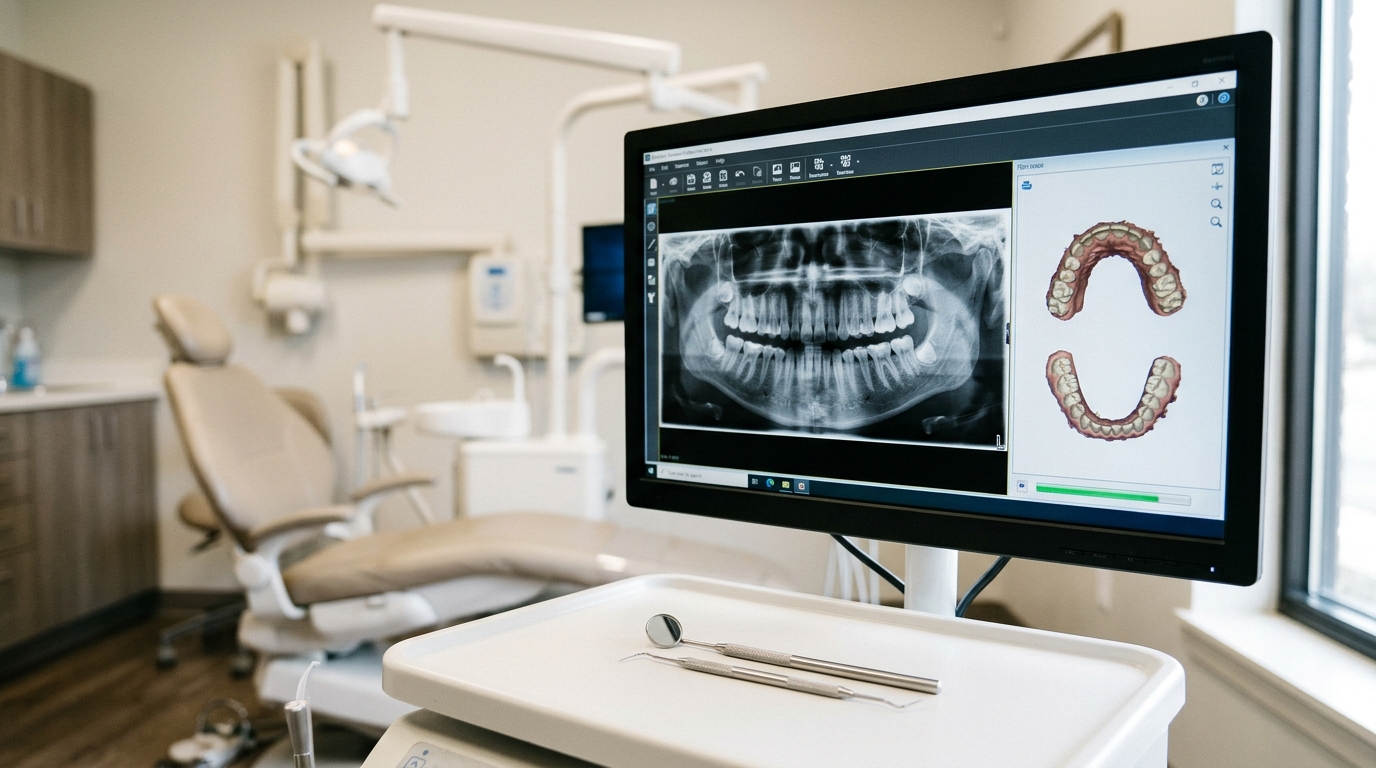
A comprehensive narrative review published in BMC Artificial Intelligence on November 3, 2025, synthesizes current evidence on the integration of artificial intelligence into dental practice. The study, led by Bharti Dua and colleagues, examines how AI technologies are influencing clinical workflows, diagnostic procedures, treatment planning, and surgical interventions. By analyzing 123 peer-reviewed articles identified through a systematic search of major databases from 2010 to 2025, the review provides a balanced assessment of AI’s potential in dentistry while highlighting significant implementation challenges that must be addressed to ensure equitable and effective patient care.
The review addresses the fundamental question of how artificial intelligence is currently being applied in dental practice and what opportunities and challenges exist for its future implementation. The authors conducted a systematic literature search across PubMed, MEDLINE, Scopus, Web of Science, and Google Scholar, using specific search terms related to AI and dental specialties. After removing duplicates and screening titles and abstracts, 312 full-text articles were assessed for eligibility. The final inclusion of 123 articles prioritized studies with robust methodology, larger sample sizes, and recent publication dates, ensuring a high-quality evidence base for the narrative synthesis.
AI encompasses various computational techniques, including machine learning, deep learning, natural language processing, computer vision, and generative models. Machine learning allows systems to learn patterns from data, with supervised learning applied in caries detection and risk assessment. Deep learning, a subfield of machine learning, employs multi-layered neural networks capable of hierarchical feature learning. Convolutional Neural Networks, widely used in dentistry, have been deployed for panoramic radiograph interpretation, cephalometric landmark detection, and periapical lesion diagnosis, demonstrating the technical feasibility of automated image analysis in clinical settings.
In diagnostic decision-making, AI applications show variable performance across different dental conditions. A meta-analysis of AI-assisted detection of oral squamous cell carcinoma reported pooled sensitivity of 92% and specificity of 91.9%, though significant heterogeneity existed between studies. Deep learning models evaluating periapical radiographs achieved F1-scores of 0.82 for caries and periodontitis detection in controlled settings. However, the review notes that performance in clinical practice may differ from these controlled environments, and questions remain about the generalizability of these models across diverse patient populations.
Radiographic analysis using AI models analyzing cone-beam computed tomography scans and panoramic radiographs shows promise but with important limitations. AI-powered software detected contact caries and periapical changes with reported accuracy of 90–95% in controlled studies. While automated analysis time was reduced to approximately 5–10 minutes compared to 20–25 minutes for manual review, this excludes image acquisition time and verification procedures. A systematic review found that CNN-based models achieved sensitivity of 0.79 and specificity of 0.87 for caries diagnosis, with performance varying significantly based on image quality and population demographics.
In orthodontics and prosthodontics, AI systems assist with growth pattern prediction, cephalometric landmark identification, and treatment simulation. Predictive tools for growth forecasting show moderate correlation with clinical outcomes, though long-term validation is limited. AI-enhanced CAD/CAM technologies show measurable improvements in design efficiency, with AI-designed crowns reducing fabrication time by 25–30% compared to conventional methods. Clinical trials comparing 3D-printed versus milled complete dentures found that digitally produced dentures achieved improved occlusal force balance in 73% of cases, with patient satisfaction scores showing modest but statistically significant improvements.
Robotic systems for implant placement have demonstrated technical precision with mean coronal deviation of 0.7 ± 0.3 mm and angular deviation of 1.1° ± 0.5° in controlled studies, representing improvements over freehand placement. These systems use real-time cone-beam computed tomography feedback for position adjustment. Feasibility has been demonstrated in complex scenarios, though cost-effectiveness and learning curves remain barriers to widespread adoption. The review highlights that while technical precision is high, the economic and operational challenges of implementing robotic surgery in routine dental practice are significant.
The integration of AI into electronic health records and clinical decision pathways is progressing slowly with mixed results. Machine learning algorithms can structure unstructured notes and identify patterns, though implementation remains limited. Voice recognition technologies for hands-free documentation show promise but accuracy varies, affecting clinical utility. Effective human-AI collaboration requires bidirectional knowledge exchange and interpretable outputs. Explainable AI methods, including SHAP and Layer-wise Relevance Propagation, help clinicians understand model predictions, improving trust but adding complexity to the clinical workflow.
Patient acceptance represents a critical factor in successful AI implementation. A regional survey in Germany revealed that patients generally welcome AI in dentistry, citing increased diagnostic confidence and time efficiency as primary benefits. However, nearly half of respondents reported limited AI knowledge and emphasized the need for transparency about AI involvement in their care. Older adults present unique considerations, with qualitative studies revealing mixed perspectives; this population recognizes utility for self-monitoring while expressing concerns about accuracy and emphasizing the irreplaceable value of human expertise in clinical care.
Significant ethical, legal, and social challenges temper initial enthusiasm for AI in dentistry. Algorithmic bias and fairness are critical concerns, as AI systems trained on homogeneous datasets may produce inaccurate predictions for underrepresented populations, potentially exacerbating health disparities. Patient autonomy and informed consent are challenged by the complexity of AI systems, particularly deep neural networks, which remain “black boxes” to both clinicians and patients. Determining liability when AI influences clinical decisions presents legal complexities, with traditional frameworks holding clinicians accountable becoming ambiguous when AI systems contribute to decisions.
The regulatory landscape for dental AI remains fragmented globally, with different jurisdictions adopting varying approaches to validation and approval. The European Union’s AI Act classifies AI used as a safety component or as a medical device as high-risk, mandating conformity assessment, risk management, transparency, and human oversight requirements. In the United States, the FDA treats most dental AI as Software-as-a-Medical-Device, maintaining a public list of AI/ML-enabled devices and developing frameworks for continuous learning systems. This regulatory complexity creates hesitation among practitioners and may slow adoption of beneficial technologies.
Future directions for AI in dentistry emphasize federated learning for collaborative model development, explainable AI to improve transparency, and integration with multi-omics data. Federated learning enables collaborative model training without direct data exchange, preserving privacy while enhancing generalizability. Explainable AI methods are being integrated to improve interpretability, and causal inference techniques enable moving beyond correlations to identify mechanistic relationships. The review concludes that rather than revolutionary transformation, AI’s integration into dentistry will likely be evolutionary, with gradual adoption of validated applications that demonstrate clear clinical benefit and economic viability.
Success will depend on interdisciplinary collaboration, robust governance, and maintaining focus on patient-centered care. With appropriate development and implementation strategies, AI has the potential to enhance, though not replace, human clinical judgment in delivering oral healthcare. The review underscores the need for addressing multiple dimensions simultaneously, including technical infrastructure development, regulatory framework establishment, clinician education, and ethical safeguards, to ensure that AI technologies are implemented equitably and effectively across diverse dental healthcare systems.
Subject of Research: AI applications and challenges in dental healthcare
Article Title: Redefining oral healthcare through artificial intelligence: a review of current applications and a roadmap for the future of dentistry
Article References: Dua, B., Kumar Gupta, R., Bhargava, A., Bhardwaj, A., Jain, M., & Tripathi, S. (2025). Redefining oral healthcare through artificial intelligence: a review of current applications and a roadmap for the future of dentistry. BMC Artificial Intelligence, 1(1), Article 13. https://doi.org/10.1186/s44398-025-00013-6
Image Credits: AI Generated
DOI: 10.1186/s44398-025-00013-6
Keywords: artificial intelligence, dentistry, machine learning, diagnostics, clinical workflow, regulatory framework, oral healthcare, deep learning, patient acceptance, ethical implications, Redefining, oral
News Source: Blake Davidson. (November 8, 2026). AI in Dentistry: Review Maps Current Uses and Future Challenges. Scienmag.