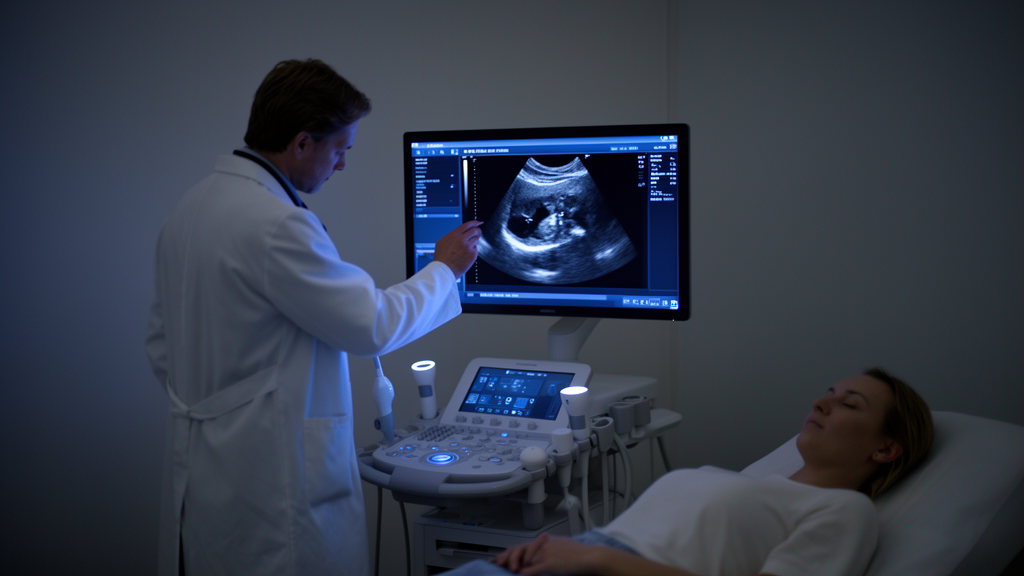
Artificial intelligence is rapidly moving into the cardiac imaging suite, promising faster and more reproducible readings of echocardiograms. But as these tools take on greater diagnostic responsibility, a pressing question has followed them: do they work equally well for women and men? A new retrospective study from Sweden set out to answer that question directly, and its findings offer a measure of reassurance alongside a few caveats worth understanding.
Researchers at Ryhov County Hospital in Jönköping compared the performance of a fully automated, commercially available AI-based echocardiographic analysis tool against the routine reports written by interpreting cardiologists. Their goal was not to test whether the AI was accurate in absolute terms, but whether its agreement with clinical assessments differed systematically between female and male patients — a potential signal of sex bias that could translate into unequal healthcare outcomes if left unchecked.
The study included patients who had undergone transthoracic echocardiography at the hospital’s Department of Clinical Physiology, drawn from examinations performed between January 31, 2022, and October 3, 2024. A total of 196 participants were initially selected and divided into three groups reflecting common clinical presentations: individuals with normal cardiac function, patients with systolic dysfunction, and patients with diastolic dysfunction. After excluding four women and nine men whose examinations the AI software could not process, the final analysis rested on 95 women and 88 men, with average ages of 65 and 66 years respectively. There were no significant differences in age or body mass index between the sexes, although men had significantly greater height, weight, and body surface area.
Seven echocardiographic parameters were evaluated, chosen because they represent key measures in diagnosing systolic and diastolic function under current clinical guidelines. These included ejection fraction, left ventricular end-diastolic volume, left atrial volume, septal and lateral é velocities, tricuspid valve regurgitation velocity, and the E/é ratio. All examinations were acquired using transthoracic 2D ultrasound on a Siemens Acuson SC2000, with volumes calculated by Simpson’s biplane method and Doppler measures obtained by pulsed and continuous-wave techniques. The AI software, US2ai version 2.1.1, is an FDA-approved tool that performs fully automated interpretation of cardiac structure and function in accordance with current guidelines, and it has previously been validated in diverse real-world cohorts.
A crucial methodological detail concerns blinding. The AI software performed its analysis independently, without access to clinical information or the results of the reference standard, which consisted of the routine echocardiographic reports compiled by different cardiologists. Those clinical assessments were completed before the AI analysis, so the cardiologists were likewise blinded to the AI-generated results. The E/é ratio was calculated manually, as the software did not provide this parameter directly, and no manual adjustments were made to any of the AI-generated measurements.
The results painted a mixed but largely reassuring picture. Correlation coefficients between AI-generated and clinically assessed values ranged from 0.67 to 0.93 in women, with the lowest value observed for the average E/é ratio. In men, the range was wider, from 0.32 to 0.93, with the weakest correlation appearing for tricuspid regurgitation velocity. For five of the seven parameters, absolute errors — the magnitude of the discrepancy between AI and clinical values — did not differ significantly between the sexes. However, two parameters did show sex-related differences. Men showed a significantly higher absolute error for tricuspid regurgitation velocity, at 0.15 metres per second compared with 0.07 in women, suggesting the software was less accurate for this measure in male patients. Conversely, women showed a significantly higher absolute error for the E/é ratio, at 0.76 versus 0.39 in men, indicating reduced accuracy for this diastolic function measure in female patients.
Bland-Altman analyses, which assess agreement between two measurement methods, added further nuance. The male group exhibited larger mean differences in five of the seven parameters compared with women, and the limits of agreement were wider in men for six of the seven parameters, pointing to greater variability and lower agreement with the reference values in male patients. Volume estimation appeared particularly less reliable in men: the limits of agreement for ejection fraction spanned 35.84 percent in men versus 21.44 percent in women, and for left ventricular end-diastolic volume they spanned 44.58 millilitres in men versus 22.64 millilitres in women. The E/é ratio was the only parameter for which women showed wider limits of agreement. The plots also revealed a slight tendency for the software to overestimate values in women and underestimate them in men.
When it came to classification performance — the software’s ability to distinguish normal from pathological findings — the picture was notably even. The researchers used receiver operating characteristic curves and area under the curve values, computed separately for each sex against guideline-derived cut-off values. The magnitude of the difference in AUC values between women and men was small, ranging from 0.017 for tricuspid regurgitation velocity to 0.048 for left ventricular ejection fraction. According to the authors, this indicates no sex-related differences in the software’s ability to classify normal versus pathological findings. Certain parameters, particularly left atrial volume, showed lower AUC values in both sexes, suggesting that this measurement is inherently more challenging for the software regardless of patient sex.
The authors are careful to note that their study has important limitations. It was retrospective and single-centre, with a relatively small sample size, and only a limited number of diagnoses were included; the patients were generally relatively healthy, which may limit generalizability to more complex clinical populations. The study did not assess potential differences in image quality between groups, and no detailed information was available about the technical design or training data of the AI algorithm, restricting interpretation of the underlying causes of the observed performance differences. Moreover, the reference standard was based on clinical measurements from a single measurement per parameter, which introduces inherent variability, and the absence of an independent reference method such as cardiac magnetic resonance imaging limits the ability to fully assess the accuracy of the AI-based analysis.
Despite these caveats, the study’s conclusion is measured: it did not demonstrate systematic sex-related differences in AI performance, but the findings require confirmation in larger cohorts, and continued monitoring for bias remains important as AI integration in echocardiography expands. The authors emphasize that the presence of bias in AI models is not merely a technical issue but a factor with potentially significant clinical and societal consequences, since biased models can lead to misdiagnoses and delayed care for underrepresented groups, reinforcing existing health disparities. They point to guidelines such as FUTURE-AI, which highlights fairness, equity, and transparency, and stress that robust post-deployment monitoring is necessary to ensure AI models maintain reliable performance over time.
Subject of Research: Sex-related differences in the agreement between an AI-based echocardiographic analysis tool and clinical assessments
Article Title: Evaluating sex bias in artificial intelligence-based echocardiographic analysis: a retrospective study on individuals with normal cardiac function and patients with systolic and diastolic dysfunction
Article References: Blixt, F. F., & Bjällmark, A. (2026). Evaluating sex bias in artificial intelligence-based echocardiographic analysis: a retrospective study on individuals with normal cardiac function and patients with systolic and diastolic dysfunction. Cardiovascular Ultrasound, 24(1), Article 18. https://doi.org/10.1186/s12947-026-00380-8
Image Credits: AI Generated
DOI: 10.1186/s12947-026-00380-8
Keywords: artificial intelligence, echocardiography, sex bias, cardiac imaging, algorithmic fairness, systolic dysfunction, diastolic dysfunction, ejection fraction, Bland-Altman analysis, retrospective study, diagnostic accuracy, healthcare equity
News Source: Ophelia Keating. (October 29, 2026). AI Echocardiography Shows No Systematic Sex Bias in Retrospective Swedish Study. Scienmag.