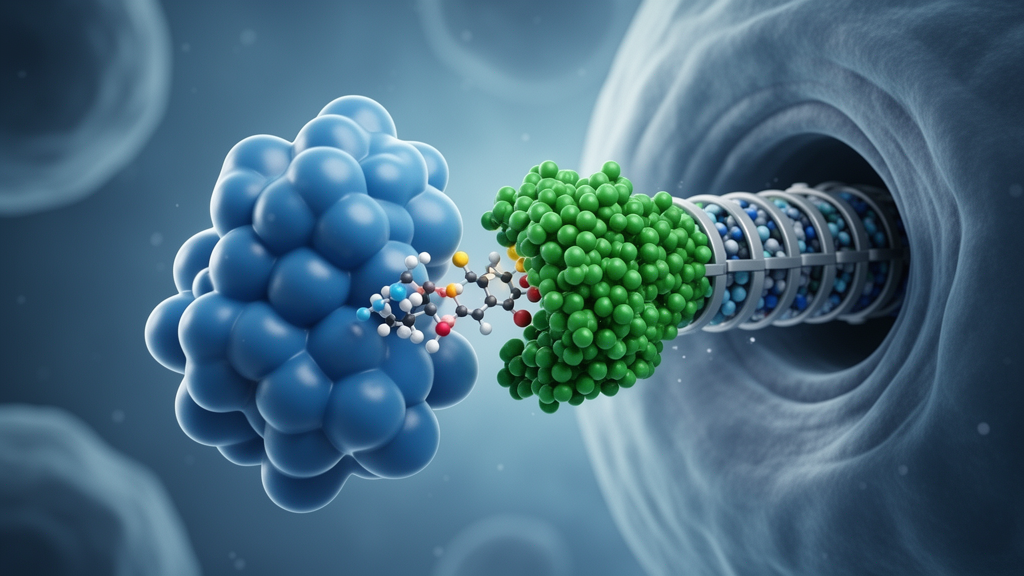
The nomination of ISM9546 arrives at a moment when the field of targeted protein degradation is moving well beyond its original scope. Molecular glue degraders, unlike the more widely known PROTAC molecules, are typically small compounds that induce or stabilize an interaction between a target protein and an E3 ubiquitin ligase, thereby marking the target for proteasomal destruction. Whereas PROTACs are generally large, bivalent molecules with two binding ends connected by a linker, molecular glues tend to be more compact and drug-like, often with better oral absorption characteristics. This structural simplicity is one reason the modality has attracted intense interest from pharmaceutical companies seeking to address proteins that resist conventional inhibition.
VAV1 itself is a compelling but difficult target. As a guanine nucleotide exchange factor, it functions as a molecular switch for Rho-family GTPases, transmitting signals downstream of the T-cell receptor and B-cell receptor complexes. When immune cells encounter antigen, VAV1 activation triggers a cascade of events: cytoskeletal rearrangement that enables cell movement and immune synapse formation, transcriptional programs that drive proliferation, and the release of cytokines such as interleukin-2 and interferon-gamma that amplify inflammatory responses. Because VAV1 sits near the top of this signaling hierarchy, dampening its activity can broadly restrain pathological immune activation, which is precisely what autoimmune diseases like rheumatoid arthritis and inflammatory bowel disease require. At the same time, its role in normal immune function means that any therapeutic strategy must carefully calibrate the degree and duration of suppression.
The historical difficulty in drugging VAV1 stems from its protein architecture. Like many signaling adaptors and enzymes, VAV1 lacks the deep, well-defined hydrophobic pockets that classical small-molecule inhibitors exploit. Its catalytic domains interact with partners through relatively flat, extended surfaces, and the protein’s activity is regulated through conformational changes and phosphorylation rather than ligand binding in a conventional active site. Traditional medicinal chemistry approaches, which depend on identifying a stable pocket to anchor an inhibitor, have therefore struggled. Molecular glue degraders sidestep this problem entirely: rather than needing to block VAV1’s function directly, they recruit the protein to the cellular degradation machinery, eliminating it altogether. The therapeutic effect derives from the loss of the protein rather than from inhibition of its enzymatic activity, opening targets that were previously considered inaccessible.
The peripheral restriction strategy embedded in ISM9546’s design deserves particular attention. Many immune-cell signaling proteins, including VAV1, are expressed in the central nervous system, where they participate in neuronal development, synaptic plasticity, and glial cell function. A degrader that crosses the blood-brain barrier could theoretically interfere with these processes, raising safety concerns that have complicated other immunomodulatory programs. By engineering the molecule to minimize brain exposure, confirmed through both in vitro transport assays using MDCKII-MDR1 cell lines and in vivo tissue distribution studies, the design team addressed a risk category that regulators and clinicians scrutinize closely, particularly for chronic therapies intended for long-term use in conditions like inflammatory bowel disease.
The pharmacokinetic profile described for ISM9546 also reflects a nuanced understanding of immunology. A balanced elimination half-life serves two purposes simultaneously. On one hand, sustained peripheral exposure maintains continuous target engagement, which is necessary because degraded VAV1 must remain suppressed for the therapeutic benefit to persist. On the other hand, the ability to allow prompt recovery of adaptive immune responses if treatment is interrupted provides a critical safety valve. Patients with autoimmune disease remain vulnerable to infections, and a degrader whose effects reverse quickly upon discontinuation offers clinicians more flexibility than agents with irreversible mechanisms or very long residence times. This reversibility-by-withdrawal property is inherent to the degradation mechanism itself, since new VAV1 protein is continuously synthesized by cells and will reaccumulate once the degrader clears.
The preclinical efficacy data reported for ISM9546 highlight several methodological points worth noting. The Disease Activity Index used in the acute colitis model is a composite measure that typically incorporates body weight change, stool consistency, and fecal blood, providing a longitudinal, non-invasive readout of disease severity. Observing significant improvement within days of treatment initiation suggests rapid target engagement and a swift downstream effect on inflammatory pathways, which is consistent with the expectation that removing a proximal signaling node like VAV1 should quickly curtail cytokine-driven inflammation. The approximately 60 percent improvement in histopathology scores provides an independent, tissue-level confirmation, as histological assessment captures cellular infiltration, epithelial damage, and architectural disruption that behavioral or clinical scores may miss. The comparison against a reference VAV1 degrader adds an important benchmarking dimension, indicating that the compound’s profile was evaluated not merely against placebo but against an active comparator in the same target class.
The proteomics profiling cited in the safety evaluation addresses one of the most significant liabilities of the degradation modality broadly. Because molecular glues work by recruiting proteins to E3 ligases, there is always a possibility that endogenous proteins other than the intended target will also be pulled into the degradation complex, a phenomenon known as neosubstrate degradation. Off-target protein depletion can produce unexpected toxicities that only become apparent in later development stages. A clean degradation profile, in which quantitative proteomics shows no significant depletion of proteins other than VAV1, is therefore a meaningful differentiator, though it is worth remembering that such profiling is typically performed in a limited set of cell types and conditions, and the full off-target landscape may only emerge through broader clinical exposure.
The 14-day toxicity studies in both rodents and non-human primates represent a standard early safety package, though the duration means they capture acute and subchronic effects rather than the chronic safety questions that will matter most for a therapy intended for long-term autoimmune disease management. Non-human primate data are particularly informative for degraders because cross-species differences in E3 ligase biology and protein turnover rates can affect both efficacy and toxicity predictions. The reported broad safety margins suggest the compound tolerated doses well above those expected to be pharmacologically active, which provides headroom for clinical dosing decisions.
The design workflow that produced ISM9546 illustrates how generative chemistry platforms have matured. The described process began with structural information about the target-ligand complex, from which the team defined a pharmacophore capturing the essential interaction points between the glue molecule, the target protein, and presumably the E3 ligase interface. Fragment growing, the de novo expansion of a small starting scaffold, was then guided by the generative models within Chemistry42, which reportedly integrates more than 40 generative architectures alongside predictive modules for properties such as permeability, metabolic stability, and brain penetration. The multi-objective nature of the optimization is notable: the team had to simultaneously improve potency, maintain selectivity, and reduce central nervous system exposure, objectives that frequently conflict in medicinal chemistry. Iterative design-make-test-analyze cycles, in which computational predictions are tested experimentally and the results feed back into the next design round, remain the practical engine of this approach, with the AI systems accelerating the exploration of chemical space rather than replacing experimental validation.
The broader productivity claims surrounding this nomination merit contextualization. Thirty-five preclinical candidates since 2021, with eleven in the first ten months of 2026 alone, represents an unusually high output for a single company, and the company attributes this to its AI-driven platform. Independent verification of such productivity claims is difficult, since the quality, novelty, and eventual clinical success of candidates matter more than raw counts. The company’s own pipeline provides a partial test case: Rentosertib, its most advanced internally discovered asset, has progressed to Phase III trials for idiopathic pulmonary fibrosis, which would represent a significant milestone for the field of AI-discovered drugs if it ultimately succeeds. The company’s reported financial performance, driven substantially by licensing and collaboration deals with established pharmaceutical partners, suggests that external parties are assigning real value to the platform’s output, though deal values reflect strategic assessments rather than validated clinical efficacy.
For patients with inflammatory bowel disease and rheumatoid arthritis, the therapeutic landscape already includes biologics targeting tumor necrosis factor, interleukin pathways, and integrins, as well as oral small molecules such as JAK inhibitors. However, a substantial fraction of patients fail to respond adequately to existing options or lose response over time, and safety concerns such as infection risk with immunosuppressive agents remain relevant across the class. A VAV1 degrader would represent a mechanistically distinct approach, intervening upstream of many of the cytokine pathways that current drugs target individually. Whether this translates into superior clinical outcomes, better safety, or advantages in specific patient subgroups will only be established through clinical trials, which have not yet begun for this candidate.
The path from preclinical candidate nomination to approved medicine remains long and uncertain. Typical development timelines span many years, with attrition rates high at every stage. For ISM9546, the immediate next steps would involve formal preclinical development activities, including formulation work, additional toxicology, and the preparation of an investigational new drug application or equivalent regulatory filing. The sub-nanomolar degradation potency and favorable preclinical safety profile provide a foundation, but human pharmacokinetics, immune function in diseased versus healthy populations, and long-term tolerability all remain to be demonstrated. The nomination of a preclinical candidate is best understood as the transition from discovery research to development-stage risk, not as the arrival of a therapy.
Within the larger arc of targeted protein degradation, the VAV1 program adds to a growing list of intracellular immune targets being pursued with degrader approaches, including kinases, transcriptional regulators, and signaling adaptors that were once dismissed as undruggable. The convergence of generative AI design tools with this modality suggests that the bottleneck in the field may be shifting from target identification and hit discovery toward clinical validation and the biology of degradation itself, including questions about tissue selectivity, degradation kinetics in humans, and the consequences of eliminating scaffold proteins that may have roles beyond their best-characterized functions. How these questions resolve will shape not only the fate of this particular candidate but the trajectory of the molecular glue field as a whole.
Subject of Research: AI-driven molecular glue innovation: Insilico nominates ISM9546, an oral, peripheral-restricted VAV1 degrader as PCC for autoimmune diseases
Article Title: AI-driven molecular glue innovation: Insilico nominates ISM9546, an oral, peripheral-restricted VAV1 degrader as PCC for autoimmune diseases
Article References: AI-driven molecular glue innovation: Insilico nominates ISM9546, an oral, peripheral-restricted VAV1 degrader as PCC for autoimmune diseases. (n.d.). Original publication
Image Credits: AI Generated
DOI: Not provided
Keywords: AI-driven, molecular, glue, innovation, Insilico, nominates, ISM9546, oral, peripheral-restricted, VAV1, degrader, autoimmune
News Source: Louis Brooks. (October 18, 2026). AI-designed molecular glue degrader ISM9546 targets VAV1 for autoimmune disease treatment. Scienmag.