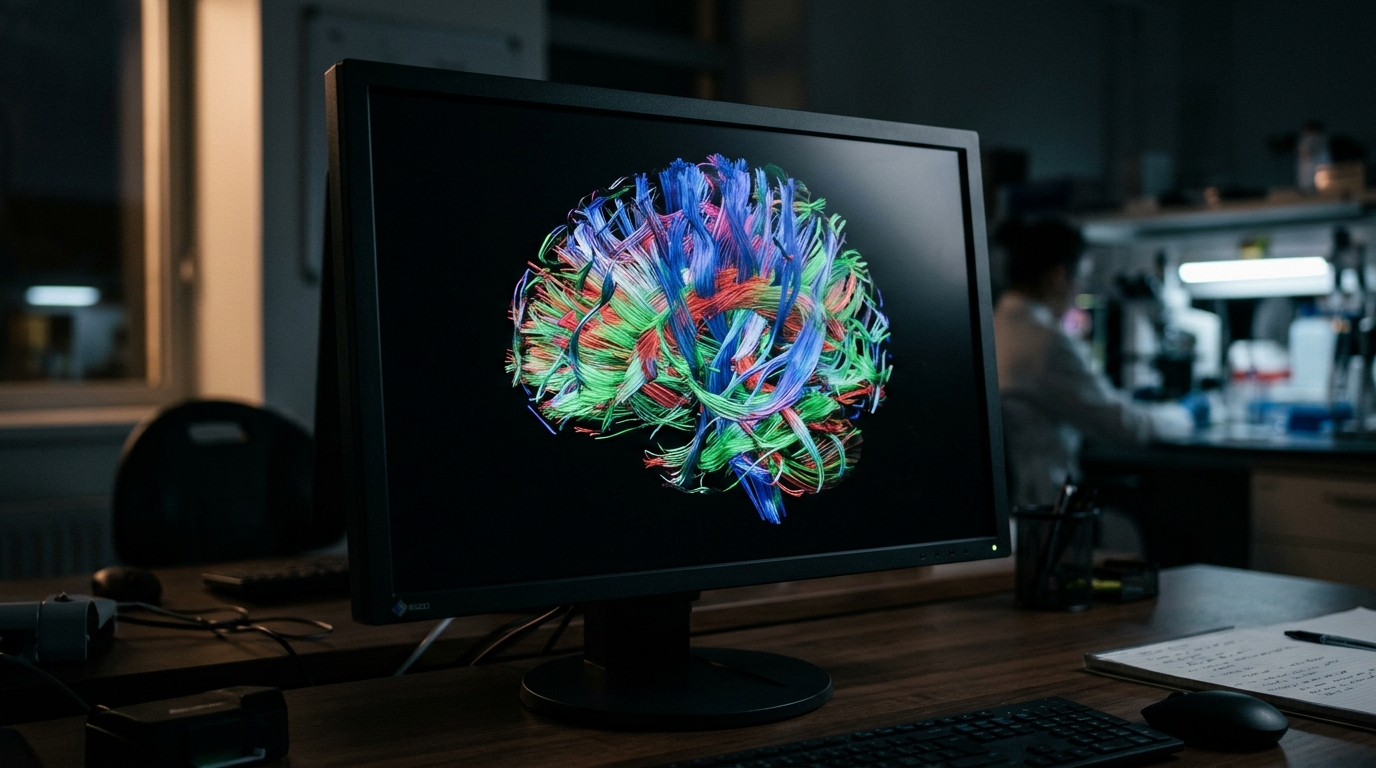
Artificial intelligence models analyzing routine structural brain scans can estimate structural and functional connectivity networks to predict cognitive outcomes in people with multiple sclerosis, according to a study published in Nature Communications. The research evaluated whether estimated structural connectivity and estimated functional connectivity could identify the neural circuits associated with baseline cognitive performance and predict cognitive function after four years of follow-up.
Structural and functional connectomes provide important insights into the relationships between neural circuits and cognitive functioning in individuals with multiple sclerosis. However, the diffusion and functional magnetic resonance imaging techniques conventionally required to map these connectomes are expensive and time-consuming, factors that currently prevent their regular use in clinical environments. Earlier research showed that estimated structural and functional connectomes generated from multiple sclerosis lesion masks through artificial intelligence can predict physical disability as effectively as connectomes directly measured using diffusion and functional imaging.
To evaluate cognitive predictions, the investigators studied a cohort of 171 individuals diagnosed with multiple sclerosis. The team applied the Network Modification tool to estimate structural connectivity networks from lesion masks extracted from clinically acquired structural magnetic resonance imaging scans. These estimated structural networks were subsequently provided as inputs to Krakencoder, an artificial intelligence encoder-decoder model used to estimate functional connectivity networks.
The study found that regional estimates of structural and functional connectivity achieved their highest predictive accuracy when forecasting long-term performance on the Symbol Digit Modalities Test at four-year follow-up. For these predictions, regional estimated structural connectivity attained a median Spearman’s correlation coefficient of 0.58, while regional estimated functional connectivity achieved a median Spearman’s correlation coefficient of 0.56. Specific regional circuit alterations were linked to cognitive performance: decreased estimated structural and functional connectivity in the cerebellum and increased estimated functional connectivity within the default mode network were associated with lower follow-up test scores.
The authors concluded that estimated connectome measures derived from clinically standard magnetic resonance imaging scans and artificial intelligence models can effectively predict cognitive measures in multiple sclerosis. Utilizing lesion-based connectome estimates may help inform future clinical trials by pinpointing specific brain circuits that could be targeted with non-invasive therapies designed to improve cognitive function.
Subject of Research: Predicting cognitive performance in multiple sclerosis using AI-estimated brain connectomes
Article Title: Predicting follow-up cognition using estimated structural and functional connectivity networks and artificial intelligence in multiple sclerosis
Article References: Tozlu, C., Ong, D., Piccirillo, C., Schwartz, H., Jaywant, A., Nguyen, T., Jamison, K., Gauthier, S. A., & Kuceyeski, A. (2026). Predicting follow-up cognition using estimated structural and functional connectivity networks and artificial intelligence in multiple sclerosis. Nature Communications. https://doi.org/10.1038/s41467-026-75827-7
Image Credits: AI Generated
DOI: 10.1038/s41467-026-75827-7
Keywords: Multiple Sclerosis, Artificial Intelligence, Brain Connectomes, Cognitive Function, Symbol Digit Modalities Test, Structural MRI, Krakencoder, Cerebellum, Predicting, follow-up, cognition, estimated
News Source: Scienmag.