• HOME
  • NEWS
  • EXPLORE
    • CAREER
      • Companies
      • Jobs
    • EVENTS
    • iGEM
      • News
      • Team
    • PHOTOS
    • VIDEO
    • WIKI
  • BLOG
  • COMMUNITY
    • FACEBOOK
    • INSTAGRAM
    • TWITTER
Wednesday, November 18, 2026
BIOENGINEER.ORG
No Result
View All Result
  • Login
  • HOME
  • NEWS
  • EXPLORE
    • CAREER
      • Companies
      • Jobs
        • Lecturer
        • PhD Studentship
        • Postdoc
        • Research Assistant
    • EVENTS
    • iGEM
      • News
      • Team
    • PHOTOS
    • VIDEO
    • WIKI
  • BLOG
  • COMMUNITY
    • FACEBOOK
    • INSTAGRAM
    • TWITTER
No Result
View All Result
Bioengineer.org
No Result
View All Result
Home NEWS Science News Agriculture

Fungal Fermentation Drives Aroma Compound Production in Tea

by
November 7, 2026
in Agriculture
Reading Time: 2 mins read
0
Fungal Fermentation Drives Aroma Compound Production in Tea

Fungal Fermentation Drives Aroma Compound Production in Tea

Share on FacebookShare on TwitterShare on LinkedinShare on RedditShare on Telegram

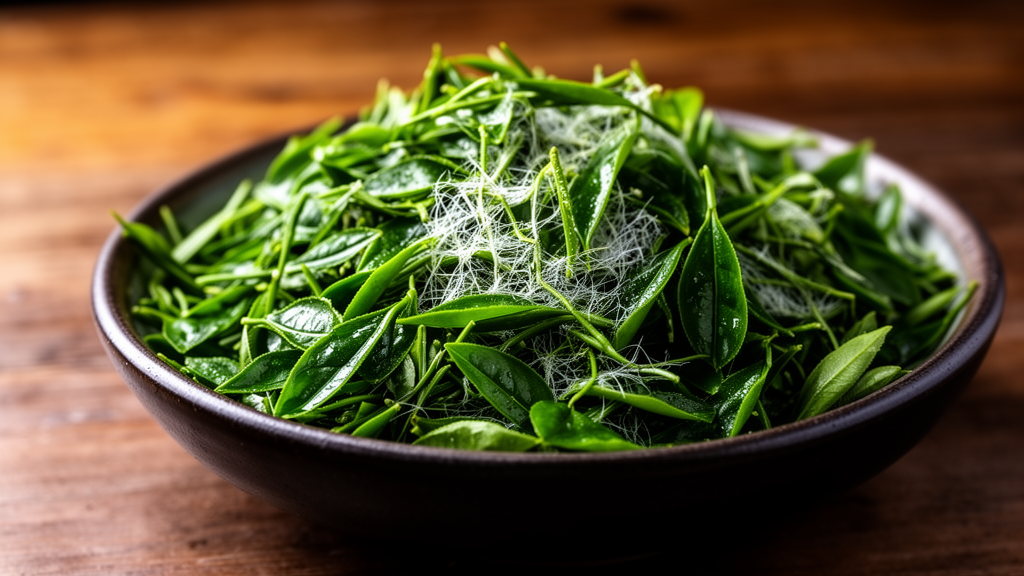
Researchers combined transcriptomic and metabolomic analyses to investigate monoterpenoid biosynthesis in Aspergillus cristatus during tea infusion fermentation. A study published in npj Science of Food details how the fungus Aspergillus cristatus synthesizes specific monoterpenoids during the liquid-state fermentation of tea infusions. The work, led by Haoran Sun and colleagues, combines transcriptomic and metabolomic analyses to track the biological origins of key odor-active compounds.

The investigation focused on the accumulation of monoterpenoids, which are critical contributors to the characteristic aromas of fermented tea. The study team monitored the fermentation process at three distinct stages, comparing conditions with and without glucose supplementation. The study generated monoterpenoid profiles, sensory analysis, and transcriptomics at three fermentation stages. The experimental design compared conditions with and without glucose supplementation.

Gas chromatography–olfactometry, coupled with aroma extract dilution analysis and odor activity value analyses, identified a suite of major odor-active monoterpenoids. These included linalool, α-terpineol, geranial, neral, geraniol, citronellol, β-ocimene, nerol, and β-myrcene. The data indicated that Aspergillus cristatus promoted the accumulation of these compounds as fermentation progressed.

Transcriptomic analysis provided insight into the underlying biosynthetic pathways. The results indicated the activation of the MVA pathway. The study identified AcGal4 as a putative regulatory factor associated with the genes Acerg20 and AcTPS.

The findings highlight the potential for targeted regulation of sensory characteristics in fermented tea.

Subject of Research: Molecular mechanisms of monoterpenoid biosynthesis in Aspergillus cristatus during tea fermentation

Article Title: Integrated transcriptomic and metabolomic analyses reveal monoterpenoid biosynthesis in Aspergillus cristatus during tea infusion fermentation

Article References: Sun, H., Cao, Y., Li, J., Zhang, X., Liu, Y., Ni, M., Tang, Y., Chen, Q., Wang, Y., & Gao, X. (2026). Integrated transcriptomic and metabolomic analyses reveal monoterpenoid biosynthesis in Aspergillus cristatus during tea infusion fermentation. npj Science of Food. https://doi.org/10.1038/s41538-026-01224-5

Image Credits: AI Generated

DOI: 10.1038/s41538-026-01224-5

Keywords: Aspergillus cristatus, tea fermentation, monoterpenoids, transcriptomics, metabolomics, MVA pathway, nerol synthase, aroma compounds, food microbiology, glucose supplementation, Integrated, transcriptomic

News Source: Alan Morgan. (November 7, 2026). Fungal Fermentation Drives Aroma Compound Production in Tea. Scienmag.


Tags: aroma compoundsAspergillus cristatusfood microbiologyglucose supplementationintegratedMetabolomicsmonoterpenoidsMVA pathwaynerol synthasetea fermentationtranscriptomicTranscriptomics
Share12Tweet7Share2ShareShareShare1

Related Posts

Multiomics Analysis Uncovers Genetic Networks Driving Kiwifruit Ripening and Flavor Formation

Multiomics Analysis Uncovers Genetic Networks Driving Kiwifruit Ripening and Flavor Formation

November 18, 2026
Sensor Weighted Crop Simulations Significantly Improve Drone Maize Leaf Area Retrieval

Sensor Weighted Crop Simulations Significantly Improve Drone Maize Leaf Area Retrieval

November 18, 2026

Lily Transcription Factor LlNLP7 Enhances Heat Resistance and Plant Growth

November 18, 2026

Review Assesses Mahua Agroforestry Potential Alongside Biological and Post-Harvest Bottlenecks

November 18, 2026

POPULAR NEWS

  • Neural Network Inverse Design Optimizes Broadband Hybrid Plasmonic Leaky Wave Antenna

    Neural Network Inverse Design Optimizes Broadband Hybrid Plasmonic Leaky Wave Antenna

    29 shares
    Share 12 Tweet 7
  • Livestock Holdings and Agroecology Shape Carnivore Conservation Attitudes in Southern Ethiopia

    29 shares
    Share 12 Tweet 7
  • Researchers Identify GRAM Genes Across Cultivated Sweetpotato and Two Diploid Relatives

    29 shares
    Share 12 Tweet 7
  • Sensor Weighted Crop Simulations Significantly Improve Drone Maize Leaf Area Retrieval

    29 shares
    Share 12 Tweet 7

About

We bring you the latest biotechnology news from best research centers and universities around the world. Check our website.

Follow us

Recent News

Criteria-Based Nanocarrier Selection May Aid Clinical Translation in Drug Delivery

Comorbidities and Walking Difficulty Associated With Lower Quality of Life in MOGAD

Salivary Antibiotic Monitoring Remains Investigational Despite Diagnostic Potential in Tuberculosis Care

Subscribe to Blog via Email

Enter your email address to subscribe to this blog and receive notifications of new posts by email.

Join 88 other subscribers
  • Contact Us

Bioengineer.org © Copyright 2023 All Rights Reserved.

Welcome Back!

Login to your account below

Forgotten Password?

Retrieve your password

Please enter your username or email address to reset your password.

Log In
No Result
View All Result
  • Homepages
    • Home Page 1
    • Home Page 2
  • News
  • National
  • Business
  • Health
  • Lifestyle
  • Science

Bioengineer.org © Copyright 2023 All Rights Reserved.