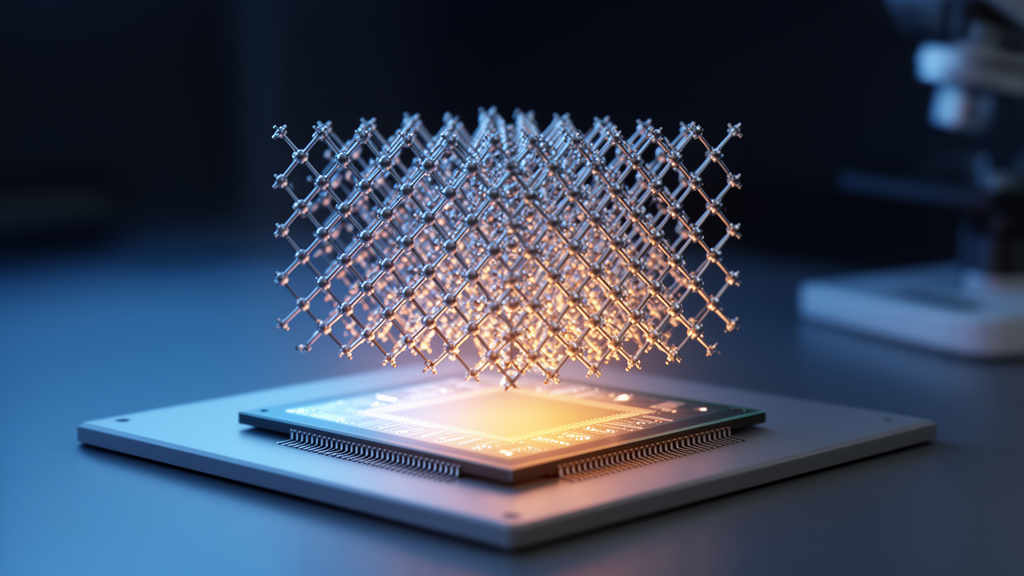
Artificial intelligence is rapidly reshaping how scientists engineer the strange and powerful world of terahertz technology. A comprehensive review published in PhotoniX Synergy charts how machine learning, evolutionary algorithms, deep learning, generative diffusion models, and even large language models are being harnessed to design terahertz metamaterial devices, often called meta-devices. These artificially structured materials manipulate terahertz waves in ways that natural substances cannot, enabling applications that span next-generation 6G wireless communication, high-resolution imaging, biosensing, molecular spectroscopy, optical computing, and security screening. The review, led by Yu-Sheng Lin of Aerospace Information Technology University together with Yunche Zhu and Zefeng Xu of The Hong Kong University of Science and Technology in Guangzhou, argues that intelligent, data-driven design is no longer a novelty but a necessity for the field’s future.
To understand why AI matters so much here, it helps to grasp what makes terahertz waves special. Sitting between microwaves and infrared light on the electromagnetic spectrum, terahertz radiation is typically defined as occupying the range from 0.1 to 10 terahertz. Waves in this band combine several attractive properties: they penetrate many common materials such as plastics, fabrics, and biological tissue with high transmission; they carry extremely low photon energy, making them non-ionizing and safe for human exposure; and they are strongly sensitive to the vibrational and rotational signatures of molecules, which makes them exquisitely useful for chemical identification and biomedical diagnostics. These characteristics have long made terahertz technology a tantalizing frontier, but translating that promise into working devices has proven stubbornly difficult.
The difficulty lies in the design problem itself. A high-performance terahertz meta-device must simultaneously satisfy multiple competing targets: minimal loss, broad operational bandwidth, precise polarization selectivity, angular stability, and compatibility with real fabrication processes such as lithographic patterning and thin-film deposition. Each of these requirements maps onto a vast, high-dimensional space of possible structural geometries. Worse, the mapping between geometry and electromagnetic response is not one-to-one. Many distinct structures can produce nearly identical spectral signatures, a phenomenon the authors describe as a one-to-many mapping problem, while tiny geometric deviations, on the scale of tens of nanometers, can sharply degrade performance. Conventional approaches, which rely on exhaustive parameter sweeps and local gradient-based optimization, consume enormous computational resources running repeated full-wave electromagnetic simulations, and they can easily become trapped in local optima, missing entirely feasible and superior solutions elsewhere in the design space.
The review organizes the field’s recent progress along three axes: device families, AI methodologies, and application domains. On the device side, it surveys meta-absorbers that soak up terahertz energy for stealth and detection, meta-modulators that dynamically control amplitude and phase, meta-filters that select narrow spectral bands, meta-sensors that detect trace analytes, meta-detectors, and multifunctional devices that combine several of these roles in a single platform. On the methodological side, the authors catalog an impressive arsenal of AI techniques: random forests, artificial neural networks, convolutional neural networks, evolutionary and swarm optimization, reinforcement learning, physics-informed neural networks, generative diffusion models, transformer architectures, and large language models. Crucially, AI can accelerate the workflow in both directions, performing forward prediction from structural parameters to electromagnetic response, and inverse design, in which the algorithm starts from a desired response and works backward to a structure that achieves it.
Among these approaches, generative models stand out as particularly transformative for inverse topology design. Because a single target spectrum can be matched by many different geometries, traditional inverse methods often return only one answer or fail altogether. Diffusion models and latent-space generative frameworks sidestep this limitation by sampling the design space stochastically, producing multiple candidate structures that all satisfy the spectral target. Even more importantly, these frameworks can be conditioned to respect fabrication constraints, filtering out physically invalid or unmanufacturable topologies before they ever reach the cleanroom. The result is a design pipeline that is simultaneously more creative and more practical than anything conventional optimization could deliver.
Perhaps the most eye-catching development highlighted in the review is the emergence of so-called chat-to-chip workflows powered by large language models and multi-agent frameworks. In this paradigm, a researcher describes a desired device in plain natural language, for example, a broadband absorber operating between 0.5 and 2 terahertz with polarization insensitivity, and the language model translates that prompt into formal design constraints. Symbolic-driven latent optimization then searches for physically valid, free-form metasurface topologies that satisfy those constraints. The review’s accompanying figure illustrates exactly this pipeline: a natural-language prompt processed by a foundation model to generate manufacturable terahertz metasurface designs. What once required weeks of expert simulation now becomes a conversational exchange between scientist and machine.
Yet the authors are careful not to oversell the technology. The review identifies several persistent challenges that temper the enthusiasm. Computational pressure remains significant: as datasets grow and network architectures deepen, the training cost of AI models for meta-device design climbs steeply. Interpretability is another concern, since many deep-learning models function as black boxes whose internal reasoning cannot be easily inspected, a serious limitation in safety-critical or high-stakes applications. Generalization is equally problematic, as models trained on one family of structures often perform poorly when asked to handle novel geometries or multifunctional devices. Finally, high-quality experimental terahertz datasets remain scarce, because terahertz measurements are expensive and device fabrication is complex and slow. Without rich, reliable data, even the most sophisticated learning algorithms struggle.
To confront these obstacles, the review proposes a suite of mitigation strategies. Physics-preserving data augmentation can synthetically expand training sets while respecting electromagnetic laws. Active learning allows the algorithm to intelligently select which new simulations or experiments would be most informative, reducing the total data burden. Transfer learning lets models trained on one device family or frequency range be adapted cheaply to another. Physics-informed neural networks embed Maxwell’s equations directly into the loss function, forcing the model to respect fundamental physical constraints rather than merely fitting statistical patterns. Together, these techniques promise to reduce data requirements dramatically while improving the physical validity of generated designs.
Looking ahead, the authors sketch an ambitious roadmap that extends well beyond faster design cycles. Physics-informed and fabrication-aware models, multi-scale analysis spanning from nanoscale features to full device assemblies, and adaptive optimization algorithms form the methodological core of this future. More strikingly, they envision AI-assisted optical computing hardware itself becoming part of the terahertz ecosystem. Platforms such as diffractive neural networks, optical neural networks, and MAFT-ONN processors could accelerate full-wave electromagnetic simulation, design optimization, and real-time signal processing, with direct benefits for 6G cognitive radio systems and edge inference at the network’s periphery. The review even points toward emerging intersections between metasurfaces and quantum technologies, including metasurface-based optical tweezer arrays for trapping neutral atoms in quantum computers.
The human dimension of this transformation is captured in the corresponding author’s own words. “AI is changing how we explore the high-dimensional design space of THz meta-devices,” said Yu-Sheng Lin, professor at Aerospace Information Technology University. “The next challenge is to embed physical laws, fabrication constraints, and interpretability into these models so that intelligent design can translate into practical THz systems.” That statement distills the review’s central message: the marriage of artificial intelligence and terahertz photonics is no longer speculative. The algorithms exist, the workflows are being demonstrated, and the applications, from 6G networks to biosensors to airport security scanners, are waiting. What remains is the disciplined engineering work of making these intelligent systems physically grounded, interpretable, and manufacturable at scale. If that work succeeds, the terahertz gap that has frustrated engineers for decades may finally close, not through brute-force computation, but through machines that learn the physics of light and design with it.
Subject of Research: AI-assisted design of terahertz metamaterial devices
Article Title: AI-assisted design accelerates terahertz meta-devices for 6G, imaging, and sensing
Article References: AI-assisted design accelerates terahertz meta-devices for 6G, imaging, and sensing. Original publication (Bibliographic details unavailable.)
Image Credits: AI Generated
DOI: Not provided
Keywords: terahertz, metamaterials, artificial intelligence, machine learning, deep learning, generative models, large language models, inverse design, 6G communication, biosensing, photonics, meta-devices
News Source: Neil Sanderson. (October 19, 2026). AI Becomes the Design Engine Behind Terahertz Metamaterial Devices. Scienmag.