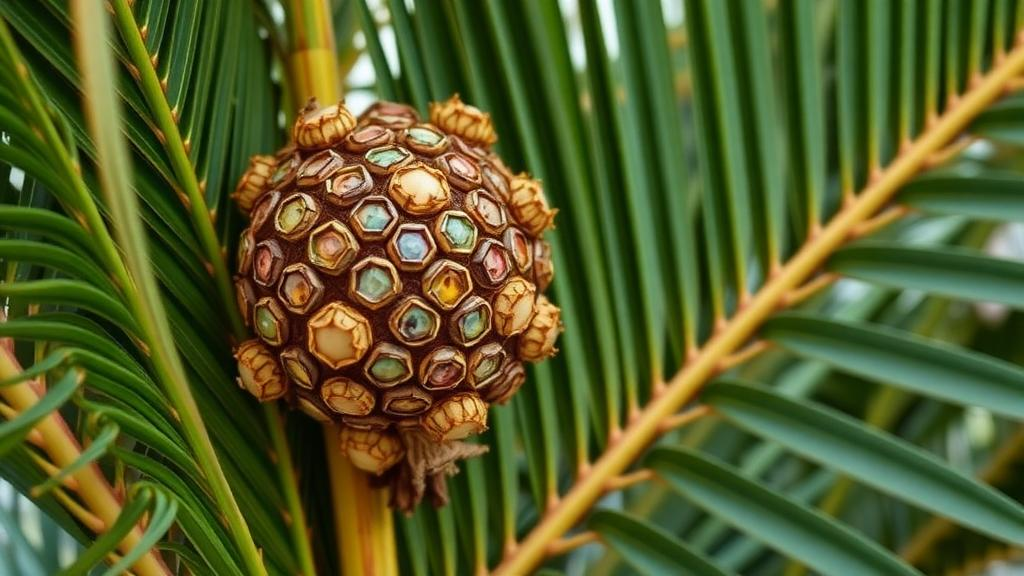
Palm oil is everywhere. It fries food on five continents, thickens cosmetics, lurks in margarine, and quietly underpins the economies of Indonesia and Malaysia, which together supply the vast majority of the world’s edible oil from this single crop. Yet behind that ubiquity lies a stubbornly old-fashioned industrial step: fractional crystallization, the process that splits crude refined palm oil into its liquid and solid components. Now a team of Malaysian and Indian researchers has shown that a hybrid of artificial neural networks and genetic algorithms can tame this finicky process, predicting and optimizing yields with accuracy rates approaching 98 percent. The work, published in npj Science of Food, points toward a future in which one of the world’s most important food processing operations becomes adaptive, data-driven, and significantly less wasteful.
To understand why the study matters, it helps to grasp what fractional crystallization actually does. Refined, bleached, and deodorized palm oil, known in the industry as RBDPO, is a natural mixture of triglycerides with different melting behaviors. When the oil is cooled in carefully controlled stages, the more saturated molecules begin to solidify first, forming crystals that can be separated from the still-liquid fraction. The liquid portion, palm olein, is prized as a cooking oil that stays clear at room temperature. The solid portion, palm stearin, finds uses in shortenings, margarines, and specialty fats. The economics of the entire operation hinge on how much olein can be squeezed out of each batch without degrading its quality.
The trouble is that the process is exquisitely sensitive to the raw material. Palm oil is a natural product, and its composition shifts with the season, the plantation, and the fruit’s ripeness at harvest. One of the most important indicators of this variability is the iodine value, or IV, a measure of the degree of unsaturation of the oil’s fatty acids. A batch labeled IV51 behaves differently in the crystallizer than a batch labeled IV53, because the degree of unsaturation influences how crystals nucleate, how they grow, and how efficiently they can ultimately be separated from the mother liquor. A cooling profile that delivers a bumper olein yield on Monday may underperform on Tuesday when the feedstock shifts.
Traditionally, fractionation plants have coped with this variability through operator experience and relatively rigid process recipes. Some researchers have applied response surface methodology, a statistical technique that models how a handful of process variables affect an outcome, to map the crystallization behavior. Response surface models have a real virtue: they are interpretable, allowing engineers to see exactly how cooling rate or temperature influences yield. But they struggle when the underlying relationships are strongly nonlinear, and they become unwieldy when a process unfolds across multiple stages, each with its own dynamics and its own interactions between variables.
That is where the new study, led by Noor Hidayu Othman of SD Guthrie Technology Centre and Universiti Sains Malaysia, with colleagues including Musfirah Zulkurnain as corresponding author, breaks new ground. The team designed a structured three-stage experimental program mirroring the physical reality of crystallization: a supercooling stage, a nucleation stage, and a crystal growth stage. By systematically varying process conditions across these stages for RBDPO with iodine values of 51, 52, and 53, they generated 145 datasets, a substantial foundation for data-driven modeling. Each dataset captured not just the headline number, olein yield, but a suite of quality measures including the iodine value of the olein, the cloud point at which it turns hazy when chilled, the slip melting point of the stearin, and the stearin’s own iodine value.
On top of this experimental foundation, the researchers built two complementary modeling frameworks. The first was a set of stage-specific response surface methodology models, which quantified the effects of individual process variables and served as an interpretable benchmark against which the machine learning approach could be judged. The second was a multilayer feedforward artificial neural network with a 7-13-5 architecture, meaning it took seven inputs, processed them through a hidden layer of thirteen neurons, and produced five outputs corresponding to the five yield and quality measures. Neural networks of this kind excel at capturing nonlinear interactions that would defeat simpler statistical models, learning the hidden structure of the process directly from data.
The reported performance of the neural network was strong, with coefficients of determination, or R-squared values, ranging from 0.79 to 0.96 across the five outputs. In practical terms, that means the network explained up to 96 percent of the variance in the measured outcomes, though the spread indicates that some quality attributes were harder to predict than others. But a good predictive model is only half the battle. The researchers wanted a tool that could actively find the best operating conditions, not merely describe what had already happened.
To achieve that, they turned to a genetic algorithm, an optimization technique inspired by biological evolution. Genetic algorithms work by maintaining a population of candidate solutions, in this case proposed cooling profiles, and iteratively selecting, combining, and mutating them so that better solutions survive and reproduce. Because the neural network can evaluate a candidate profile almost instantly, the algorithm can search thousands of possibilities without running a single physical experiment. When the hybrid ANN-GA framework was unleashed on the data, it identified feed-specific optimum cooling conditions for each iodine value, predicting olein yields of 83.80 percent for IV51, 83.10 percent for IV52, and 87.98 percent for IV53. The notably higher yield for the IV53 feed reflects the underlying chemistry: more unsaturated oil leaves more liquid fraction to harvest.
The crucial test came when the team took those computer-generated optima back to the laboratory. Experimental validation of the predicted conditions produced overall prediction accuracies of 91.94 percent, 96.97 percent, and 97.75 percent for the three feedstocks, with corresponding mean absolute percentage errors of 8.06 percent, 3.03 percent, and 2.25 percent. Those error figures are remarkably low for a process as variable as palm oil fractionation, and they demonstrate that the hybrid framework is not just a statistical curiosity but a genuinely reliable guide to real-world operation. The authors note that response surface methodology provided robust interpretability, whereas the ANN-GA combination offered greater flexibility for the nonlinear, multistage interactions that define the process.
The implications stretch well beyond a single refinery. Palm oil fractionation is a multibillion-dollar industry, and even a few percentage points of additional olein yield translate into enormous gains in efficiency, profitability, and sustainability, since more usable product from the same feedstock means less waste and less pressure on plantations. More broadly, the study offers a template for feed-responsive optimization in any food or chemical process where raw material variability confounds fixed recipes. The researchers frame their work as establishing a basis for adaptive crystallization control and, ultimately, the digitalization of palm oil fractionation, in which sensors feed live data to models that continuously retune cooling profiles as each new batch arrives. The humble crystallizer, it seems, is finally getting a brain.
Subject of Research: Hybrid artificial neural network and genetic algorithm modeling and optimization of multistage palm oil fractional crystallization
Article Title: Hybrid Artificial Neural Network-Genetic Algorithm modelling and optimization of multistage palm oil fractional crystallization
Article References: Othman, N. H., Mohd Kasihmuddin, M. S., Bhagya Raj, G. V. S., Dash, K. K., Saparin, N., & Zulkurnain, M. (2026). Hybrid Artificial Neural Network-Genetic Algorithm modelling and optimization of multistage palm oil fractional crystallization. npj Science of Food. https://doi.org/10.1038/s41538-026-01133-7
Image Credits: AI Generated
DOI: 10.1038/s41538-026-01133-7
Keywords: palm oil, fractional crystallization, artificial neural network, genetic algorithm, response surface methodology, olein yield, iodine value, food processing, process optimization, machine learning, palm stearin, digitalization
News Source: Juliet Wilcox. (October 10, 2026). AI and Genetic Algorithms Squeeze More Oil From Every Palm Kernel. Scienmag.