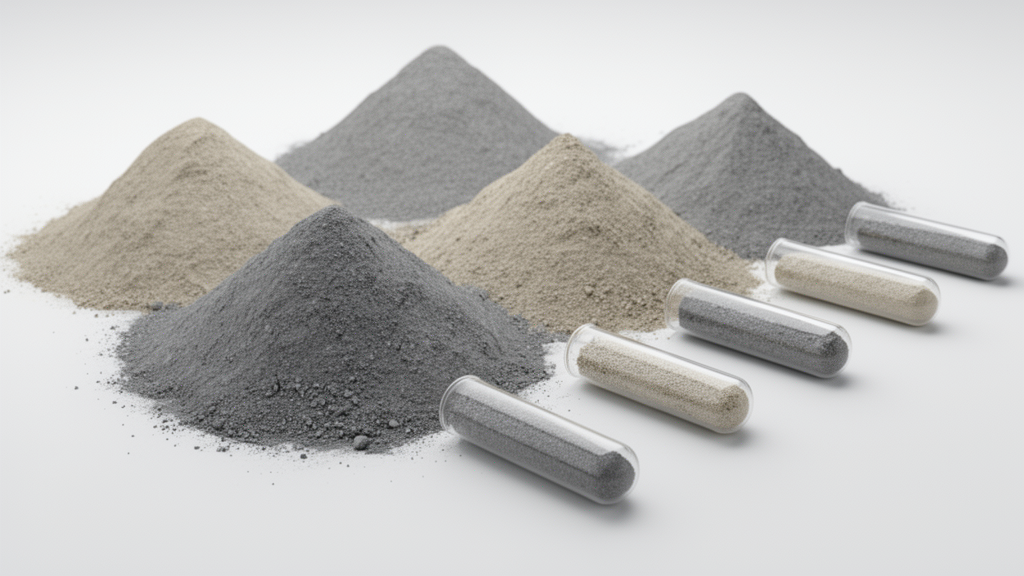
A comprehensive systematic review published in Discover Concrete and Cement synthesizes data from 47 peer-reviewed experimental studies to evaluate the potential of agricultural ashes as low-carbon alternatives to ordinary Portland cement. The study, conducted by researchers Adamu Wahab, Humphrey Danso, and Emmanuel Appiah-Kubi, analyzes six specific types of agricultural ash: rice husk ash, sugarcane bagasse ash, palm oil fuel ash, corn cob ash, bamboo leaf ash, and wood ash. The review covers research published between 2005 and 2025, aiming to address the scattered and inconsistent comparative evidence that has previously hindered the standardization of these supplementary cementitious materials. By applying rigorous statistical methods, the team provides the first quantitative synthesis across the full spectrum of common agricultural ashes, offering a clearer picture of their performance and sustainability profiles.
The cement industry is a significant contributor to global carbon emissions, accounting for approximately 8% of total anthropogenic greenhouse gas emissions. This environmental burden has driven urgent research into scalable substitutes for ordinary Portland cement, which remains the most commonly used construction material worldwide. Supplementary cementitious materials are considered the most technologically mature route for reducing clinker content in concrete. While industrial by-products like fly ash and slag have dominated current practice, their supply is geographically limited and often tied to industries that are themselves undergoing decarbonization. Agricultural ashes offer a decentralized, low-embodied-carbon alternative, particularly in tropical and subtropical regions where biomass availability is high and cement import costs are prohibitive.
The methodology of the review adhered to the PRISMA 2020 statement to minimize selection bias. The researchers conducted systematic searches across six major databases, including Scopus, Web of Science, and PubMed, yielding an initial 16,935 records. After rigorous screening based on inclusion criteria such as original experimental results and chemical characterization of the ash, 47 studies were included in the final analysis. These studies provided 190 distinct data points regarding mechanical performance, durability, and chemical composition. The statistical analysis included Pearson and Spearman correlation coefficients, one-way ANOVA with post-hoc Tukey HSD testing, and random-effects meta-regression modeling to identify key predictors of performance.
Chemical composition emerged as the primary determinant of pozzolanic reactivity. The review highlighted a vast inter-ash range in silica content, with rice husk ash averaging 88.6% SiO₂ and wood ash averaging 32.5%. This difference is critical because the amorphous silica in these ashes reacts with calcium hydroxide to form strength-contributing calcium silicate hydrate gel. According to ASTM C618 standards, a pozzolanic index of at least 70% is required for supplementary cementitious materials. Rice husk ash, bamboo leaf ash, sugarcane bagasse ash, and palm oil fuel ash generally met this threshold, whereas corn cob ash and wood ash fell below it, indicating that not all agricultural ashes are equally suitable for cement replacement without further processing.
Mechanical performance data revealed a statistically significant hierarchy among the ash types. Rice husk ash was identified as the superior material, achieving a mean 28-day compressive strength of 46.8 MPa, which represents a 16% premium over the ordinary Portland cement control. Palm oil fuel ash occupied the second position, benefiting from latent hydraulic behavior due to its elevated calcium oxide content. In contrast, corn cob ash and wood ash performed below the control levels, with strength ratios of 0.87 and 0.88, respectively. One-way ANOVA confirmed that these differences were not due to random variation, with ash type accounting for approximately 18.6% of the total variance in 28-day compressive strength. This finding challenges the notion that all agricultural ashes are equivalent candidates for structural concrete applications.
Durability assessments further differentiated the ash types. Rice husk ash blends demonstrated the most significant improvement in chloride permeability, reducing rapid chloride penetration test values to a mean of 820 coulombs. This places them firmly in the ‘low’ permeability category according to ASTM C1202, suggesting strong potential for marine and coastal infrastructure. Conversely, corn cob ash and wood ash blends exhibited higher water absorption than the control, a result attributed to high loss on ignition values and binder dilution effects. Sugarcane bagasse ash showed mixed results, with near-optimal compressive strength but moderately elevated permeability, highlighting the importance of particle fineness in achieving durability-equivalent performance.
The meta-regression model accounted for 71% of the between-study variance in 28-day compressive strength, identifying silica content, loss on ignition, fineness, and curing age as major predictors. A strong positive correlation was found between silica content and strength, while a significant negative correlation was observed between loss on ignition and strength. The latter finding empirically validates the detrimental effect of unburnt carbon fractions on mechanical performance. Based on these statistical outputs, the researchers proposed a three-tier reactivity classification framework. Tier 1 includes high-reactivity ashes like rice husk ash, Tier 2 includes moderate-reactivity ashes like sugarcane bagasse ash, and Tier 3 includes low-reactivity ashes like wood ash. This framework provides a practical tool for standardization bodies and practitioners to select appropriate materials for specific exposure conditions.
Sustainability analysis indicated that while rice husk ash offers the highest per-unit carbon reduction, ranging from 18% to 22%, sugarcane bagasse ash has a larger global residue production base. The review emphasized that high carbon reduction potential does not automatically translate to widespread viability due to logistical and supply-chain constraints. The estimates provided are indicative rather than definitive, as they are derived from cradle-to-gate boundaries that may not fully account for transport emissions and local market conditions. The authors noted that harmonized life-cycle assessment data are needed to provide more robust sustainability figures for policy and procurement purposes.
Several limitations were acknowledged in the review. The statistical synthesis assumes independence of data points, which may not hold true given the clustering of studies in specific geographic regions like Malaysia and Brazil. Additionally, the quality assessment was performed by a single reviewer, and the selection of the best-performing replacement level from each study may introduce an optimistic bias into the pooled estimates. The proposed loss on ignition threshold of 6% is preliminary and requires formal breakpoint analysis for confirmation. These limitations highlight the need for further research to validate the findings and refine the classification framework.
The review concludes that rice husk ash is the most promising agricultural ash for cement replacement, offering significant strength and durability benefits alongside substantial carbon reduction potential. However, the performance of other ash types varies considerably, necessitating ash-specific replacement limits and activation protocols. The proposed reactivity classification framework offers a structured approach to navigating these differences. As the field continues to grow, with publication output increasing at a rate of 2.24 papers per year, addressing gaps in cold-climate performance, combined-stressor durability, and full lifecycle cost analysis will be essential for achieving broad regulatory acceptance of agricultural ash supplementary cementitious materials.
The review identified specific processing conditions that significantly influence the pozzolanic reactivity of these agricultural residues. The amorphous silica content, specific surface area, and the efficiency of the calcination process are the primary factors governing how effectively these ashes react with cement. For rice husk ash, controlled calcination at temperatures between 500 and 700 degrees Celsius, followed by grinding, creates a microstructural foundation for superior reactivity. This process increases the specific surface area, which ranges from 15 to 50 square meters per gram, thereby accelerating the formation of secondary calcium silicate hydrate gel. In contrast, sugarcane bagasse ash typically exhibits a lower surface area of 5 to 25 square meters per gram and a coarser particle size distribution, which explains its slower strength development and greater sensitivity to grinding fineness. These physical properties dictate the practical upper limits for cement replacement, as exceeding optimal levels dilutes the binder and reduces the available calcium hydroxide necessary for the pozzolanic reaction.
Geographic concentration of research activity introduces a representativeness problem that limits the generalizability of the findings. Approximately 74% of the included studies originated from Asia, sub-Saharan Africa, and Brazil, regions that produce large volumes of agricultural residues and face acute infrastructure deficits. This geographic skew means that performance data for cold and temperate climates are scarce, a gap explicitly flagged as critical for understanding freeze-thaw cycling and low-temperature curing behavior. The concentration of specific ash types in certain regions, such as palm oil fuel ash in Malaysia and sugarcane bagasse ash in Brazil, also introduces intra-cluster correlation that complicates statistical independence. While this regional focus reflects the practical availability of biomass, it suggests that the observed performance hierarchies may not hold universally across all climatic and geographic contexts without further localized testing.
The proposed three-tier reactivity classification framework offers a structured approach for standardization, but it carries specific caveats regarding its provisional nature. The boundary between Tier 1 and Tier 2 is anchored by a loss on ignition threshold of 6%, which is currently a preliminary value based on visual inspection of the data rather than a formal breakpoint analysis. Standard-setting bodies are advised to treat this threshold as indicative until a segmented regression model confirms its statistical location. Furthermore, the classification of bamboo leaf ash as a Tier 1 material is based on only four included studies, making its assignment provisional. Similarly, the classifications for corn cob ash and wood ash rest on small sample sizes, which result in wide confidence intervals. These constraints mean that the recommended replacement ranges for these specific ashes should be regarded as tentative design values that require validation as the underlying evidence base expands through additional experimental research.
Future research directions emphasize the need for standardized multi-stressor durability protocols and full-chain lifecycle analyses. Current testing methods often isolate individual stressors, which can overestimate durability compared to combined-stressor service environments. Additionally, the risk of alkali-silica reaction in high-silica ashes requires nuanced investigation, as high-reactivity pozzolans typically consume calcium hydroxide and may suppress rather than stimulate expansion. The absence of comprehensive lifecycle cost and carbon data, which would account for field residue collection, calcination, grinding, and transport, remains a significant barrier to policy adoption. Addressing these gaps through harmonized testing standards and detailed environmental assessments will be essential for transitioning agricultural ashes from promising laboratory materials to widely accepted construction components.
Subject of Research: Systematic review of agricultural ash supplementary cementitious materials
Article Title: A systematic review of agricultural ash supplementary cementitious materials as low-carbon alternatives to ordinary Portland cement from 2005 to 2025
Article References: Wahab, A., Danso, H., & Appiah-Kubi, E. (2026). A systematic review of agricultural ash supplementary cementitious materials as low-carbon alternatives to ordinary Portland cement from 2005 to 2025. Discover Concrete and Cement, 2(1), Article 61. https://doi.org/10.1007/s44416-026-00101-4
Image Credits: AI Generated
DOI: 10.1007/s44416-026-00101-4
Keywords: agricultural ash, supplementary cementitious materials, rice husk ash, carbon reduction, concrete durability, systematic review, pozzolanic activity, cement industry, systematic, review, agricultural, supplementary
News Source: Denise Maddox. (November 9, 2026). Agricultural Ashes Show Varying Cement Replacement Potential. Scienmag.