


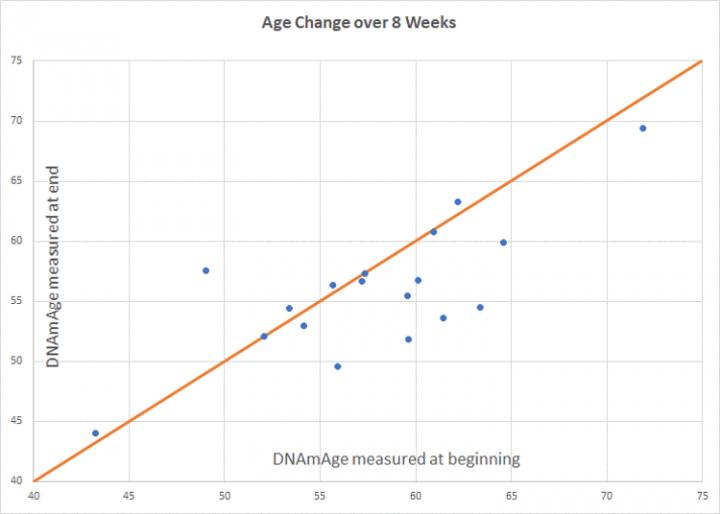
Aging published ‘Potential reversal of epigenetic age using a diet and lifestyle intervention: a pilot randomized clinical trial’ which reported on a randomized controlled clinical trial conducted among 43 healthy adult males between the ages of 50-72…
Aging published “Potential reversal of epigenetic age using a diet and lifestyle intervention: a pilot randomized clinical trial” which reported on a randomized controlled clinical trial conducted among 43 healthy adult males between the ages of 50-72. The 8-week treatment program included diet, sleep, exercise and relaxation guidance, and supplemental probiotics and phytonutrients.
Genome-wide DNA methylation analysis was conducted on saliva samples using the Illumina Methylation Epic Array and DNAmAge was calculated using the online Horvath DNAmAge clock (also published in Aging).
The diet and lifestyle treatment was associated with a 3.23 years decrease in DNAmAge compared with controls.
DNAmAge of those in the treatment group decreased by an average 1.96 years by the end of the program compared to the same individuals at the beginning with a strong trend towards significance.
This randomized controlled study, published in Aging, suggests that specific diet and lifestyle interventions may reverse Horvath DNAmAge epigenetic aging in healthy adult males.
This randomized controlled study, published in Aging, suggests that specific diet and lifestyle interventions may reverse Horvath DNAmAge epigenetic aging in healthy adult males.
The study’s lead author, Kara Fitzgerald ND IFMCP, from The Institute for Functional Medicine said, “Advanced age is the largest risk factor for impaired mental and physical function and many non-communicable diseases including cancer, neurodegeneration, type 2 diabetes, and cardiovascular disease.“
Methylation clocks are based on systematic methylation changes with age.
DNAmAge clock specifically demonstrates about 60% of CpG sites losing methylation with age and 40% gaining methylation.
Almost a quarter of the DNAmAge CpG sites are located in glucocorticoid response elements, pointing to a likely relationship between stress and accelerated aging. Cumulative lifetime stress has been shown to be associated with accelerated aging of the methylome.
Other findings include that PTSD contributes to accelerated methylation age; and that greater infant distress is associated with an underdeveloped, younger epigenetic age.
This is to say the authors have tentatively accepted the hypothesis that the methylation pattern from which the DNAmAge clock is computed is a driver of aging, thus they expect that attempting to directly influence the DNA methylome using diet and lifestyle to set back DNAmAge will lead to a healthier, more “youthful” metabolism.
The Fitzgerald Research Team concluded in their Aging Research Output, “it may be that emerging ‘omics’ approaches continue to evolve our understanding of biological age prediction and reversal beyond DNA methylation alone. Integration of our future understanding of multi-omics data should therefore be considered in the future trials of candidate age-delaying interventions.“
###
Sign up for free Altmetric alerts about this article
DOI – https:/
Full Text – https:/
Correspondence to: Kara N. Fitzgerald email: [email protected]
Keywords: DNA methylation, epigenetic, aging, lifestyle, biological clock
About Aging-US
Launched in 2009, Aging-US publishes papers of general interest and biological significance in all fields of aging research as well as topics beyond traditional gerontology, including, but not limited to, cellular and molecular biology, human age-related diseases, pathology in model organisms, cancer, signal transduction pathways (e.g., p53, sirtuins, and PI-3K/AKT/mTOR among others), and approaches to modulating these signaling pathways.
To learn more about Aging-US, please visit http://www.
Aging-US is published by Impact Journals, LLC please visit http://www.
Media Contact
18009220957×105
[email protected]
Media Contact
RYAN JAMES JESSUP
[email protected]
Original Source
https:/
Related Journal Article
http://dx.



