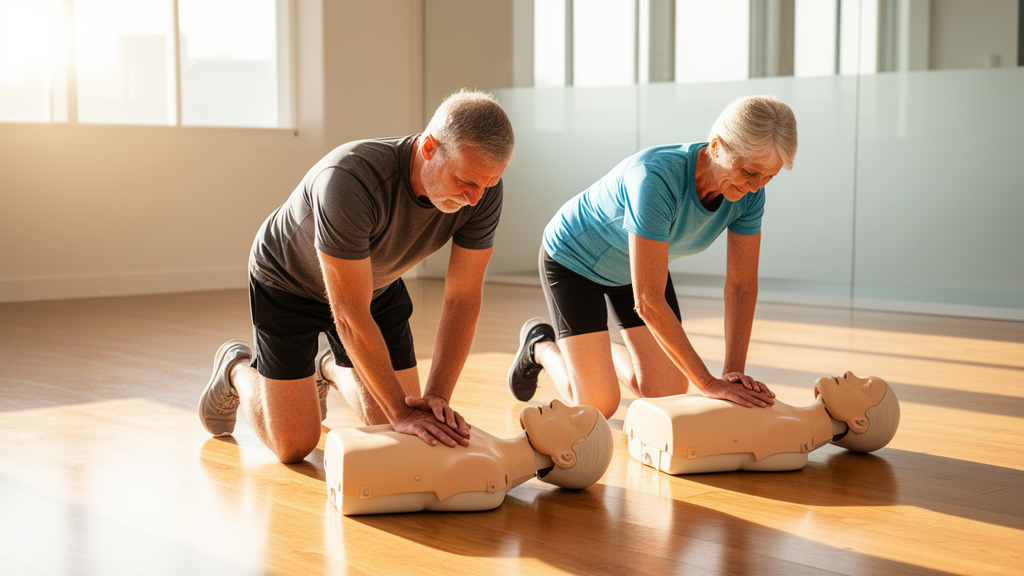
Learner age and individual physical characteristics, rather than whether instruction is delivered through a blended or traditional format, serve as the primary determinants of initial cardiopulmonary resuscitation skill acquisition, according to an evaluation of Taiwan’s IGOGO Basic Life Support program. The findings indicate that while instructional modality does not independently dictate baseline competence, demographic factors significantly influence initial performance.
The study was conducted as a retrospective analysis of a prospectively maintained education registry tracking 1,202 community participants trained between 2022 and 2024. Researchers evaluated outcomes across three distinct age cohorts, comprising adolescents younger than 18 years, adults aged 18 to 65 years, and older adults over 65 years of age.
Participants in the registry received either blended learning or traditional instructor-led Basic Life Support training. Investigators evaluated educational outcomes through written examination scores, self-reported willingness to perform cardiopulmonary resuscitation, and objective mechanical quality metrics measuring compression depth, compression rate, and chest recoil.
Initial skill evaluations revealed marked performance disparities across the different age groups, with adult learners achieving the highest initial skill scores at an average of 93.7 ± 9.1 points, whereas older adults scored the lowest at an average of 77.6 ± 19.7 points (p < 0.001). Across the entire study cohort, the overall first-pass success rate reached 13.8 percent, with older adult participants recording the lowest first-pass success rate at 8.2 percent.
Using multivariable logistic regression and generalized estimating equations to assess predictors of first-pass success and post-retraining improvement, the researchers identified older age, the absence of prior cardiopulmonary resuscitation training, and a lack of regular exercise habits as independent factors associated with lower success. In contrast, course modality—comparing blended learning with traditional classroom instruction—was not an independent predictor of learner achievement.
Despite baseline differences, objective performance converged across all age cohorts following a brief 15-to-30-minute structured retraining session, with approximately 90 percent of participants achieving adequate chest compression metrics. The authors concluded that community Basic Life Support initiatives should prioritize targeted, feedback-guided retraining and account for baseline learner characteristics rather than focusing primarily on the instructional delivery format.
Subject of Research: Age-stratified evaluation of blended versus traditional Basic Life Support training
Article Title: Age-stratified effectiveness of blended versus traditional Basic Life Support training: a prospective study
Article References: Wang, M.-F., Huang, C.-H., Chen, C.-B., Yeh, H.-T., Hsu, P.-T., Tseng, H.-J., Huang, Y.-B., Ng, C.-J., Feng, K.-C., & Chien, C.-Y. (2026). Age-stratified effectiveness of blended versus traditional Basic Life Support training: a prospective study. BMC Emergency Medicine. https://doi.org/10.1186/s12873-026-01797-0
Image Credits: AI Generated
DOI: 10.1186/s12873-026-01797-0
Keywords: Basic Life Support, Cardiopulmonary Resuscitation, Blended Learning, Traditional Instruction, Out-of-Hospital Cardiac Arrest, Bystander CPR, Compression Depth, Compression Rate, Chest Recoil, First-Pass Success, Skill Acquisition, Targeted Retraining, IGOGO Program, Multivariable Logistic Regression, Generalized Estimating Equations, Older Adults, Community CPR Training, Exercise Habits
News Source: Ophelia Keating. (November 11, 2026). Age and Exercise Habits Determine CPR Training Success Over Instructional Format. Scienmag.