East Hanover, NJ. September 16, 2022. Thalamic atrophy needs to be considered in clinical studies of the functional abilities of individuals with multiple sclerosis, according to findings reported by a team of experts. The article, “Thalamic atrophy moderates associations among aerobic fitness, cognitive processing speed, and walking endurance,” was published in the Journal of Neurology on June 19, 2022 (doi: 10.1007/s00415-022-11205-9). Article link: https://link.springer.com/article/10.1007/s00415-022-11205-9
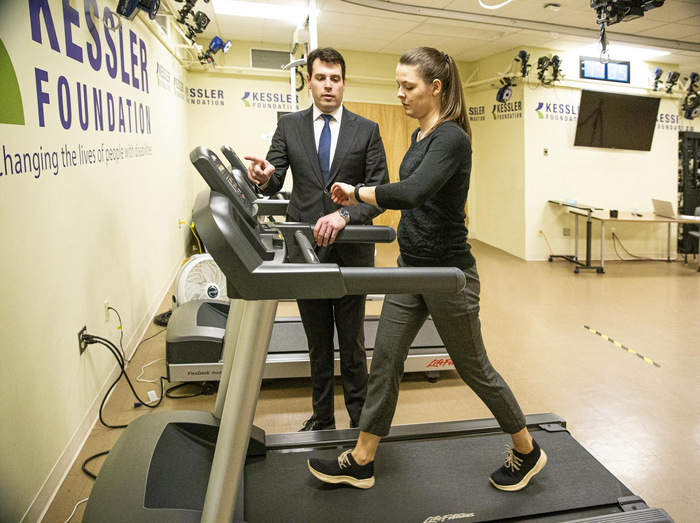
Credit: Kessler Foundation/ Jody Banks
East Hanover, NJ. September 16, 2022. Thalamic atrophy needs to be considered in clinical studies of the functional abilities of individuals with multiple sclerosis, according to findings reported by a team of experts. The article, “Thalamic atrophy moderates associations among aerobic fitness, cognitive processing speed, and walking endurance,” was published in the Journal of Neurology on June 19, 2022 (doi: 10.1007/s00415-022-11205-9). Article link: https://link.springer.com/article/10.1007/s00415-022-11205-9
The authors are Brian Sandroff, PhD, Cristina A.F. Román, PhD, Glenn R. Wylie, DPhil, and John DeLuca, PhD, of Kessler Foundation, Robert W. Motl, PhD, of the University of Illinois Chicago, Gary R. Cutter, MS, PhD, of the University of Alabama at Birmingham, and Ralph H.B. Benedict, PhD, Michael G. Dwyer III, PhD, and Robert Zivadinov, MD, PhD, of the University of Buffalo.
MS-related thalamic atrophy is a major biomarker for neurodegeneration and associated physical and cognitive decline, highlighting the importance of exploring ways to restore and maintain function in individuals who present with this consequence of the disease. Aerobic exercise training is one promising approach, but little is known about its potential effects in individuals who present with thalamic atrophy.
The team conducted a cross-sectional study to examine the associations among aerobic fitness, cognitive processing speed, and walking endurance in individuals with and without thalamic atrophy. Subjects comprised 44 fully ambulatory individuals with MS from three randomized controlled trials. Outcomes included aerobic fitness (peak oxygen consumption during graded treadmill exercise), processing speed (Symbol Digit Modalities Test), walking endurance (6-min walk test), and thalamic neuroimaging.
Results provided initial evidence for strong and selective associations among aerobic fitness, cognitive processing speed, and walking endurance in individuals with thalamic atrophy, according to lead author Dr. Sandroff. “This study suggests that aerobic exercise training has the potential to restore function in individuals with thalamic atrophy, who are clearly at risk for progressive physical and cognitive decline,” he stated. “To explore the impact on outcomes, we need to develop randomized controlled trials of aerobic exercise training in the subgroup presenting with thalamic atrophy.”
Citation: Sandroff, B.M., Motl, R.W., Román, C.A.F. et al. Thalamic atrophy moderates associations among aerobic fitness, cognitive processing speed, and walking endurance in persons with multiple sclerosis. J Neurol 269, 5531–5540 (2022). https://doi.org/10.1007/s00415-022-11205-9 https://link.springer.com/article/10.1007/s00415-022-11205-9
Supported by EMD Serono, Inc., Eunice Kennedy Shriver National Institute of Child Health and Human Development of the National Institutes of Health under Award Number R01HD091155.
About Kessler Foundation
Kessler Foundation, a major nonprofit organization in the field of disability, is a global leader in rehabilitation research that seeks to improve cognition, mobility, and long-term outcomes, including employment, for people with neurological disabilities caused by diseases and injuries of the brain and spinal cord. Kessler Foundation leads the nation in funding innovative programs that expand opportunities for employment for people with disabilities. For more information, visit KesslerFoundation.org.
For more information, or to interview an expert, contact: Carolann Murphy, [email protected]
Graphic: Brian M. Sandroff, PhD
Caption: Dr. Sandroff is a senior research scientist in the Center for Neuropsychology and Neuroscience Research and director of the Exercise Neurorehabilitation Research Laboratory at Kessler Foundation. His research focuses on the intersection of exercise, cognition, mobility, and brain structure/function/connectivity in multiple sclerosis, traumatic brain injury, and other neurological disorders.
Journal
Journal of Neurology
DOI
10.1007/s00415-022-11205-9
Subject of Research
People
Article Title
Thalamic atrophy moderates associations among aerobic fitness, cognitive processing speed, and walking endurance
Article Publication Date
19-Jun-2022
COI Statement
none