• HOME
  • NEWS
  • EXPLORE
    • CAREER
      • Companies
      • Jobs
    • EVENTS
    • iGEM
      • News
      • Team
    • PHOTOS
    • VIDEO
    • WIKI
  • BLOG
  • COMMUNITY
    • FACEBOOK
    • INSTAGRAM
    • TWITTER
Wednesday, September 2, 2026
BIOENGINEER.ORG
No Result
View All Result
  • Login
  • HOME
  • NEWS
  • EXPLORE
    • CAREER
      • Companies
      • Jobs
        • Lecturer
        • PhD Studentship
        • Postdoc
        • Research Assistant
    • EVENTS
    • iGEM
      • News
      • Team
    • PHOTOS
    • VIDEO
    • WIKI
  • BLOG
  • COMMUNITY
    • FACEBOOK
    • INSTAGRAM
    • TWITTER
  • HOME
  • NEWS
  • EXPLORE
    • CAREER
      • Companies
      • Jobs
        • Lecturer
        • PhD Studentship
        • Postdoc
        • Research Assistant
    • EVENTS
    • iGEM
      • News
      • Team
    • PHOTOS
    • VIDEO
    • WIKI
  • BLOG
  • COMMUNITY
    • FACEBOOK
    • INSTAGRAM
    • TWITTER
No Result
View All Result
Bioengineer.org
No Result
View All Result
Home NEWS Science News

Advancing causal inference in clinical neuroscience research: a call for clarity

Bioengineer by Bioengineer
July 13, 2023
in Science News
Reading Time: 2 mins read
0
Figure 2 Visual illustrations of the basic concepts in causal inference
Share on FacebookShare on TwitterShare on LinkedinShare on RedditShare on Telegram

A Perspective published in Volume 3 of the journal Psychoradiology, researchers from Shanghai Jiao Tong University confronted these challenges and advocates for more clarity and transparency in causal analyses. The review distinguishes between traditional statistical analysis and causal inference, highlighting the need for specific causal assumptions, like the Stable Unit Treatment Value Assumption (SUTVA).
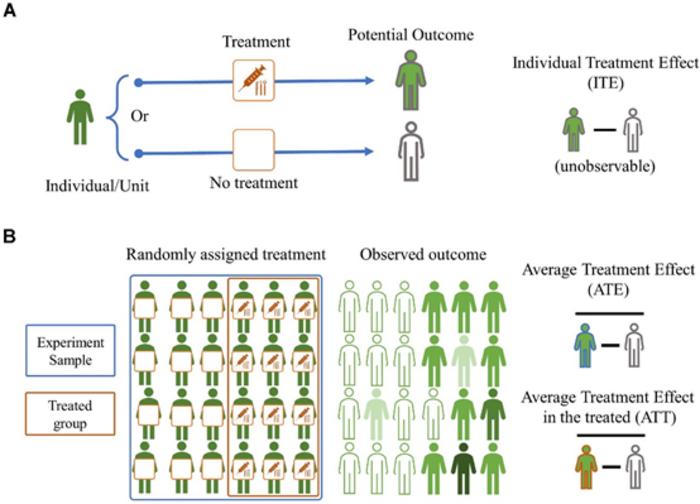
Figure 2 Visual illustrations of the basic concepts in causal inference

Credit: Psychoradiology

A Perspective published in Volume 3 of the journal Psychoradiology, researchers from Shanghai Jiao Tong University confronted these challenges and advocates for more clarity and transparency in causal analyses. The review distinguishes between traditional statistical analysis and causal inference, highlighting the need for specific causal assumptions, like the Stable Unit Treatment Value Assumption (SUTVA).

Randomized controlled trials (RCTs) are considered the gold standard for estimating causal effects. The authors stress the importance of imitating RCTs in observational studies through quasi-experimental techniques, given the constraints on RCT data availability due to ethical concerns. In observational studies, researchers grapple with controlling intervention assignments and justifying causal assumptions. Breaches of these assumptions could cause imbalanced covariates between treatment and control groups, needing statistical methods to create balance and replicate RCT results.

The definition of intervention in clinical neuroscience extends beyond medication administration to include brain stimulation or targeted surgery, demanding a multivariate mechanistic approach for causal inference. The authors advise researchers to provide detailed information about their causal formulation of research questions, including study type, causal effects, and observed outcomes. They emphasize the necessity of justifying causal assumptions and performing sensitivity analysis to evaluate results’ robustness.

This review highlights the challenges and opportunities in advancing causal inference in clinical neuroscience research. By adopting clear and transparent practices in conducting and reporting causal analyses, researchers can improve the rigor and interpretability of their findings. This interdisciplinary effort will contribute to a better understanding of causal relationships in clinical neuroscience and facilitate evidence-based decision-making in the field.

###

References

DOI

10.1093/psyrad/kkad007

About Psychoradiology

Psychoradiology is an open-access journal co-published by Oxford University Press and West China Hospital of Sichuan University. It has been indexed by DOAJ and the APC is waived during its early stage. 
We welcome interdisciplinary submissions in the fields of radiology, psychology, psychiatry, neurology and neuroscience, as well as medical imaging, interventional medicine, artificial intelligence, and computer science, etc. A fast-track production mode will be adopted to ensure the manuscript is published as soon as possible.


Journal

Psychoradiology

DOI

10.1093/psyrad/kkad007

Subject of Research

Not applicable

Article Title

Claim causality with clarity

Article Publication Date

9-Jun-2023

COI Statement

The authors declare that they have no competing interests

Share12Tweet8Share2ShareShareShare2

Related Posts

β-Sitosterol from Ipomoea carnea Jacq. As a promising anti-inflammatory agent: Evidence from in silico modeling and in vitro validation

β-Sitosterol from Ipomoea carnea Jacq. As a promising anti-inflammatory agent: Evidence from in silico modeling and in vitro validation

August 31, 2026
Design, fabrication and characterization of a wearable Fiber Bragg grating sensor for cardiorespiratory monitoring using finger plethysmography

Design, fabrication and characterization of a wearable Fiber Bragg grating sensor for cardiorespiratory monitoring using finger plethysmography

August 31, 2026

KAIST opens the era of industrial-scale microbial foods, proposing growth strategies for the next-generation protein market

August 31, 2026

Virologist awarded $2 million NIH grant to investigate how virus-infected cells live and die

August 31, 2026

POPULAR NEWS

  • β-Sitosterol from Ipomoea carnea Jacq. As a promising anti-inflammatory agent: Evidence from in silico modeling and in vitro validation

    29 shares
    Share 12 Tweet 7
  • Design, fabrication and characterization of a wearable Fiber Bragg grating sensor for cardiorespiratory monitoring using finger plethysmography

    29 shares
    Share 12 Tweet 7
  • KAIST opens the era of industrial-scale microbial foods, proposing growth strategies for the next-generation protein market

    29 shares
    Share 12 Tweet 7
  • Virologist awarded $2 million NIH grant to investigate how virus-infected cells live and die

    29 shares
    Share 12 Tweet 7

About

We bring you the latest biotechnology news from best research centers and universities around the world. Check our website.

Follow us

Recent News

β-Sitosterol from Ipomoea carnea Jacq. As a promising anti-inflammatory agent: Evidence from in silico modeling and in vitro validation

Design, fabrication and characterization of a wearable Fiber Bragg grating sensor for cardiorespiratory monitoring using finger plethysmography

KAIST opens the era of industrial-scale microbial foods, proposing growth strategies for the next-generation protein market

Subscribe to Blog via Email

Success! An email was just sent to confirm your subscription. Please find the email now and click 'Confirm' to start subscribing.

Join 85 other subscribers
  • Contact Us

Bioengineer.org © Copyright 2023 All Rights Reserved.

Welcome Back!

Login to your account below

Forgotten Password?

Retrieve your password

Please enter your username or email address to reset your password.

Log In
No Result
View All Result
  • Homepages
    • Home Page 1
    • Home Page 2
  • News
  • National
  • Business
  • Health
  • Lifestyle
  • Science

Bioengineer.org © Copyright 2023 All Rights Reserved.