


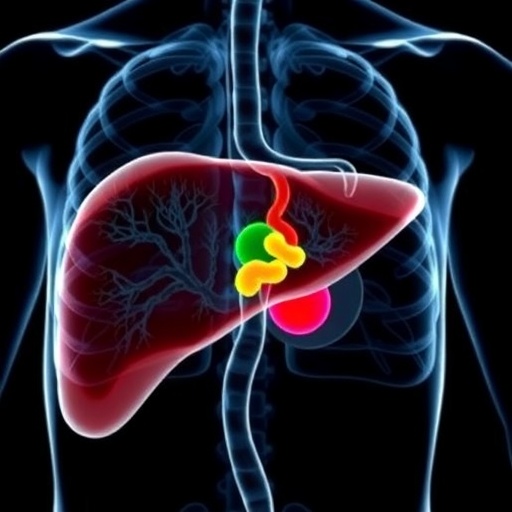
Living donor liver transplantation (LDLT) has emerged as a promising alternative in the realm of transplant oncology, particularly for patients suffering from unresectable neuroendocrine tumors (NETs). In recent years, ongoing research has increasingly highlighted the role and utility of LDLT as an effective intervention that addresses the complex interplay between cancer management and organ donation. A recent study by Shukla, Sethi, and Humar comprehensively examines this evolving field, providing critical insights that could reshape current practices within transplant oncology.
Neuroendocrine tumors pose a unique clinical challenge due to their diverse biological behavior and the often late presentation of the disease. The unresectability of these tumors often leads to a critical dilemma in treatment options. Traditional therapies, such as chemotherapy and radiation, may offer limited benefits, creating an urgent need for innovative solutions. LDLT emerges as a potential solution that not only addresses the necessity for tumor reduction but also aids in restoring liver function.
The process of LDLT involves harvesting a portion of the liver from a healthy living donor, typically a family member or close friend, and transplanting it into a recipient suffering from liver failure or liver cancer. This approach offers several advantages over deceased donor transplantation, including shorter wait times, better liver function post-transplantation, and the potential for more tailored medical management. These factors are particularly salient in the context of neuroendocrine tumors, which often require rapid intervention.
LDLT has been shown to significantly increase survival rates in selected patient populations. The study highlighted that patients with unresectable NETs receiving LDLT demonstrated improved overall survival compared to those undergoing conventional treatments. This demonstrates the need for oncologists and transplant surgeons to work collaboratively in the multidisciplinary management of these patients, ensuring that the best possible outcomes are achieved.
One of the critical aspects of the discussion revolves around patient selection criteria for LDLT in neuroendocrine tumor cases. Not every patient with NET is an ideal candidate; rigorous evaluation of tumor characteristics, extent of disease, and overall health status is paramount prior to considering living donation. The authors emphasize that a multidisciplinary approach involving oncologists, transplant surgeons, radiologists, and pathologists can help refine these selection criteria and optimize patient outcomes.
Moreover, the study addresses concerns surrounding donor safety and the psychosocial implications of living donations. Ethical considerations are paramount in the context of living organ transplants, and careful assessment of the donor’s physical and mental health is vital. Comprehensive counseling and support systems must be in place to ascertain that living donors feel empowered in their decision, while also ensuring they understand the risks involved.
Additionally, the authors provide a critical insight into the emerging technologies and techniques that could enhance the efficacy and safety of LDLT. Advances in minimally invasive surgical techniques are reducing recovery times and postoperative complications, thus making liver donation more accessible for potential donors. Furthermore, ongoing research into immunosuppressive therapies suggests that personalized treatment plans can significantly improve transplant success rates and minimize rejection events.
The potential of combining LDLT with novel therapeutic modalities, such as targeted therapies and immunotherapies, offers hope for improving patient outcomes. As the understanding of neuroendocrine tumors expands, researchers are now exploring how these innovative treatment strategies can be integrated with liver transplantation to enhance therapeutic efficacy.
In the future, with the prospect of gene editing and regenerative medicine, the potential applications of LDLT could become even broader. The exploration of genetically modified organs to reduce the risk of tumor recurrence and improve graft survival is a frontier that warrants rigorous investigation. Current studies suggest that genetically engineered cells may enhance anti-tumor immunity, marking a significant leap in the field of transplant oncology.
However, the implementation of LDLT for unresectable neuroendocrine tumors does not come without its unique challenges. The authors outline a need for larger, multicenter studies to validate findings and establish standardized protocols that can be adopted globally. Creating a robust registry for LDLT patients can help elucidate long-term outcomes and further refine the selection criteria and management strategies.
The research presented by Shukla, Sethi, and Humar is an essential addition to the growing body of literature advocating for innovative approaches in oncology. By underscoring the role of LDLT in the management of unresectable NETs, the authors invite us to reconsider our current treatment paradigms and recognize the potential of living donation in saving lives.
The trajectory of LDLT as a viable option in transplant oncology is promising, especially for patients facing the dire consequences of unresectable neuroendocrine tumors. With continued research and advocacy for patient-centric approaches, we may witness a paradigm shift in how we treat these complex and challenging cancers.
Furthermore, this landmark research has the potential to inspire policy changes that support living donor programs and foster greater awareness of the importance of organ donation. As the medical community continues to unravel the complexities of neuroendocrine tumors and liver transplantation, the collective ambition remains: to provide hope and improved outcomes for patients grappling with these formidable diseases.
The ongoing dialogue between researchers, healthcare providers, and patients is essential for harnessing the full potential of LDLT for unresectable neuroendocrine tumors. This field is at a critical juncture, and as more insights emerge, it is clear that the collaborations borne from this research could lead to groundbreaking advancements in patient care. In the fight against cancer, innovations such as LDLT prove that the boundaries of possibility are ever-expanding.
By focusing on the roles that living donor liver transplantation can play in transforming the treatment landscape of neuroendocrine tumors, we open the door to a future filled with promise and possibility. As we move forward, the contributions of researchers like Shukla, Sethi, and Humar will undoubtedly leave an indelible mark on transplant oncology and the patients it serves.
Subject of Research: Living Donor Liver Transplantation in Unresectable Neuroendocrine Tumors
Article Title: Role and Utility of Living Donor Liver Transplantation for Unresectable Neuroendocrine Tumors in Transplant Oncology: Evaluating Evidence, Emerging Insights, and Future Directions.
Article References:
Shukla, S., Sethi, V. & Humar, A. Role and Utility of Living Donor Liver Transplantation for Unresectable Neuroendocrine Tumors in Transplant Oncology: Evaluating Evidence, Emerging Insights, and Future Directions. Curr Transpl Rep 13, 3 (2026). https://doi.org/10.1007/s40472-025-00498-0
Image Credits: AI Generated
DOI: https://doi.org/10.1007/s40472-025-00498-0
Keywords: neuroendocrine tumors, living donor liver transplantation, transplant oncology, organ donation, cancer treatment, patient outcomes.
Tags: benefits of living donor transplantschallenges in neuroendocrine tumor managementchemotherapy limitations in NETscritical insights in transplant practicesinnovative cancer therapiesliver function restorationLiving donor liver transplantationliving donor organ transplantsneuroendocrine tumors treatmentorgan donation in cancer caretransplant oncology advancementsunresectable neuroendocrine tumors



