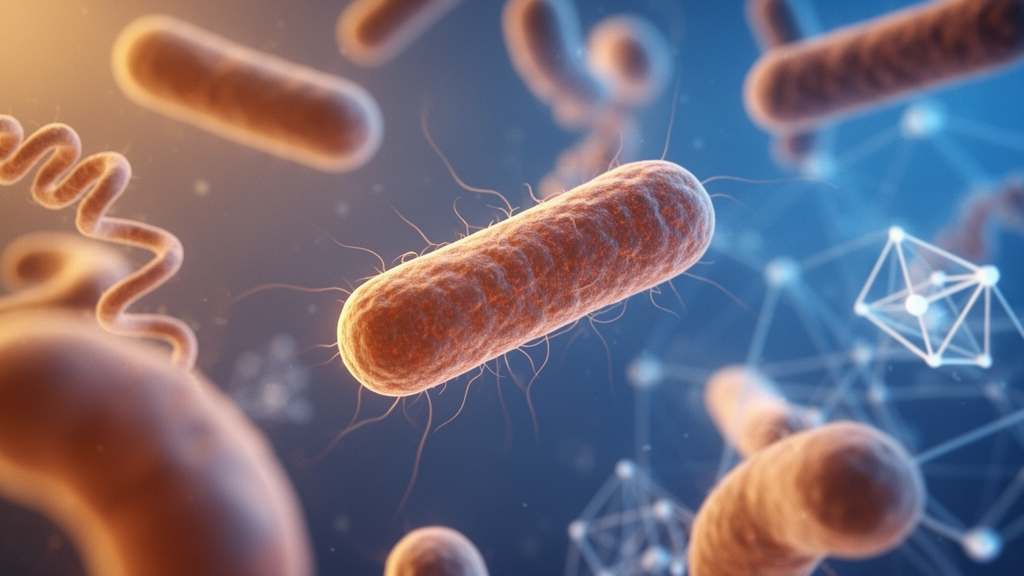
A statistical framework integrating adaptive Bayesian transfer learning with compositional generalized linear mixed models significantly improves phenotype prediction and disease diagnosis in microbiome studies constrained by limited sample sizes, according to research published by Xiaojing Luo and Qinqin Hu in BMC Medical Research Methodology. The methodology addresses fundamental analytical barriers in high-throughput microbiome research by enabling robust knowledge transfer from related auxiliary datasets while strictly respecting the compositional constraints of sequencing data.
Microbiome profiling generated via high-throughput sequencing technologies has become central to pathological investigations and disease forecasting. However, statistical evaluation of these datasets is persistently challenged by high dimensionality, small sample sizes, and compositional constraints. These mathematical characteristics frequently compromise conventional statistical models, especially in clinical investigations targeting specific diseases where sample recruitment remains inherently restricted.
To overcome these structural limitations, the investigators formulated an adaptive Bayesian transfer learning architecture built upon the Bayesian Compositional Generalized Linear Mixed Model, designated as BCGLMM. The framework incorporates a power-prior formulation that allows analytical models to borrow informative signals from related source datasets while simultaneously accounting for compositional structure, phylogenetic relatedness among microbial taxa, and statistical dependence among biological samples.
A critical component of the proposed method is its adaptive transfer parameter, which dynamically calibrates the volume of information borrowed from the auxiliary source data based on the observed compatibility between source and target datasets. By adjusting the contribution of source information according to the compatibility between source and target datasets, the framework improves robustness and reduces the risk of negative transfer.
In systematic simulation evaluations, the proposed Bayesian transfer learning approach achieved superior predictive performance compared with target-only modeling, pooled data analysis, and existing transfer-learning alternatives, demonstrating particular efficacy when target sample sizes were strictly bounded. Compared against fixed-transfer baselines, the adaptive method sustained stable performance across varying sample sizes, differing dimensionalities, increasing levels of source-target discrepancy, and heterogeneous covariance structures.
The practical utility of the framework was validated across real-world gut microbiome applications involving body mass index prediction, type 2 diabetes diagnosis, and colorectal cancer detection. Across each setting, the model leveraged auxiliary source datasets to enhance predictive accuracy, while the specific microbial taxa identified by the system aligned closely with established biological evidence, confirming the framework’s interpretability in clinical and phenotype analysis.
Subject of Research: Adaptive Bayesian transfer learning for compositional microbiome data analysis
Article Title: Adaptive Bayesian transfer learning under compositional generalized linear mixed model for microbiome data analysis
Article References: Luo, X., & Hu, Q. (2026). Adaptive Bayesian transfer learning under compositional generalized linear mixed model for microbiome data analysis. BMC Medical Research Methodology. https://doi.org/10.1186/s12874-026-03009-6
Image Credits: AI Generated
DOI: 10.1186/s12874-026-03009-6
Keywords: microbiome data analysis, Bayesian transfer learning, compositional data, generalized linear mixed models, BCGLMM, power prior, disease prediction, high-throughput sequencing, phylogenetic relatedness, negative transfer, type 2 diabetes, colorectal cancer, body mass index, small sample sizes, phenotype prediction, gut microbiome
News Source: Morgan Morrow. (November 11, 2026). Adaptive Bayesian Framework Improves Disease Prediction in Small-Sample Microbiome Studies. Scienmag.