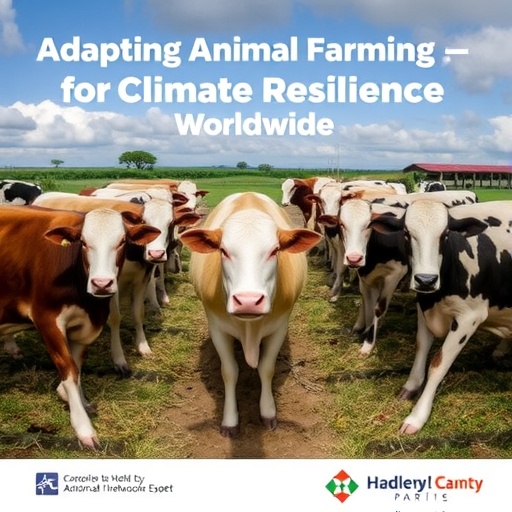
In the face of escalating climate change challenges, the agriculture sector, particularly animal production, finds itself at a crucial juncture. The research conducted by Adetola et al. sheds light on the pressing need for climate-smart strategies that not only enhance productivity but also ensure sustainability across continents such as Africa, Asia, and South America. This research delves deeply into the multifaceted impact of climate change on animal production systems and proposes innovative approaches for adaptation and mitigation tailored to regional contexts.
The implications of climate change on animal agriculture cannot be overstated. Rising temperatures, altered precipitation patterns, and increased incidences of extreme weather events threaten the stability of livestock systems worldwide. Adetola and colleagues emphasize that these changes significantly impact animal health, productivity, and the availability of feed resources. The researchers provide a comprehensive analysis of how these environmental stressors may reduce livestock productivity, creating a cascading effect on food security, rural livelihoods, and economic resilience.
Presently, a variety of adaptation strategies are being explored to combat these adversities. The research highlights several practical measures, including the selection of climate-resilient animal breeds that can thrive in changing conditions. By focusing on breeding programs that prioritize disease resistance and adaptability to heat stress, producers in affected regions can enhance their herds’ resilience to climate variability. This animal breeding is not a mere theoretical exercise; it is vital for sustaining production levels and ensuring the welfare of livestock.
Furthermore, the potential for improved animal husbandry practices is another focus of the study. Enhanced management techniques, such as optimized feeding strategies, shelter modifications, and improved veterinary care, can significantly reduce the vulnerability of animals to climate stresses. The authors advocate for integrating traditional knowledge with modern scientific approaches to formulate effective livestock management strategies that are sustainable and context-specific.
The adoption of innovative technologies is particularly crucial in the quest for climate-smart animal production. The research underscores how digital tools such as precision livestock farming can monitor health and welfare, thus enabling early intervention strategies that can limit the negative impacts of climate change. Technologies like remote sensing and farm management software can help farmers make informed decisions about resource allocation and management, ultimately leading to increased efficiency in animal production.
In juxtaposition with adaptation strategies, the study also emphasizes the significance of mitigation efforts. Livestock production is a notable contributor to greenhouse gas emissions, particularly methane. Consequently, the reduction of these emissions through enhanced feed efficiency and the adoption of sustainable waste management practices is paramount. The researchers propose exploring innovative feed supplements that can lower methane output during digestion, making livestock operations more climate-friendly.
The role of policies and education in promoting climate-smart strategies is enthusiastically acknowledged in the research. It is crucial that governments and institutions provide frameworks that support the implementation of these technologies and practices. Furthermore, investing in educational programs that equip farmers with the knowledge and skills necessary for effective climate adaptation and mitigation strategies is imperative to foster resilience throughout the agricultural sector.
Regional case studies included in the research reveal a tapestry of successes and challenges faced by farmers across diverse ecosystems. These stories underscore the importance of localized strategies that reflect the unique climate, cultural, and economic contexts of each region. For instance, farmers in sub-Saharan Africa have innovated traditional practices such as agroforestry, which integrates tree planting with animal grazing, thereby enhancing biodiversity and carbon sequestration while improving animal welfare and productivity.
Moreover, collaboration among various stakeholders – including governments, non-governmental organizations, and the private sector – is essential to foster sustainable development within the agricultural landscape. The authors argue that multi-stakeholder partnerships can leverage resources, share knowledge, and provide platforms for innovation as these entities work in unison to address the challenges posed by climate change.
Despite the encouraging findings and recommendations presented, the road ahead is fraught with obstacles. The research highlights gaps in knowledge, resources, and infrastructure that must be addressed to effectively implement climate-smart animal production systems. Additionally, the researchers stress the importance of ongoing research to continue refining strategies that take into account the dynamic nature of climate change and its impacts on animal agriculture.
Global food security hinges upon our collective ability to adapt to and mitigate the effects of climate change. As such, the urgency for a collective, well-coordinated response is palpable, particularly as nations strive to meet increasing food demands. The collaborative efforts to advance climate-smart strategies in animal production present a beacon of hope that not only protects livelihoods but also contributes to broader climate change goals.
In conclusion, the research by Adetola et al. provides invaluable insight into how adaptation and mitigation strategies can pave the way toward a resilient agricultural future in the face of climate change. The multifactorial approach delineated throughout their study underscores the necessity for cross-disciplinary methods that intertwine science, tradition, and innovation. For farmers and communities across Africa, Asia, and South America, the adoption of climate-smart strategies could very well determine the trajectory of food production and sustainability in the coming decades.
The pivotal challenges outlined by the researchers call for immediate action and commitment from all stakeholders involved in agricultural production. By embracing the strategies proposed, there lies a tangible opportunity to not only enhance animal welfare and productivity but also ensure the longevity of farming practices amidst an uncertain climate future.
Subject of Research: Climate-smart animal production strategies.
Article Title: Strategies for adaptation and mitigation in climate-smart animal production in Africa, Asia and South America.
Article References:
Adetola, C., Egbinola, F., Alabi, O. et al. Strategies for adaptation and mitigation in climate-smart animal production in Africa, Asia and South America. Discov Agric 3, 194 (2025). https://doi.org/10.1007/s44279-025-00362-w
Image Credits: AI Generated
DOI:
Keywords: Climate change, animal production, adaptation, mitigation, food security, sustainable agriculture, livestock management.
Tags: adaptation strategies for livestockclimate change mitigation in agricultureclimate resilience in agricultureclimate-smart animal farmingeconomic resilience in farming communitiesextreme weather effects on livestockfood security and animal healthimpacts of climate change on animal productioninnovative breeding for climate adaptationregional approaches to animal agriculturesustainable farming in developing regionssustainable livestock practices