


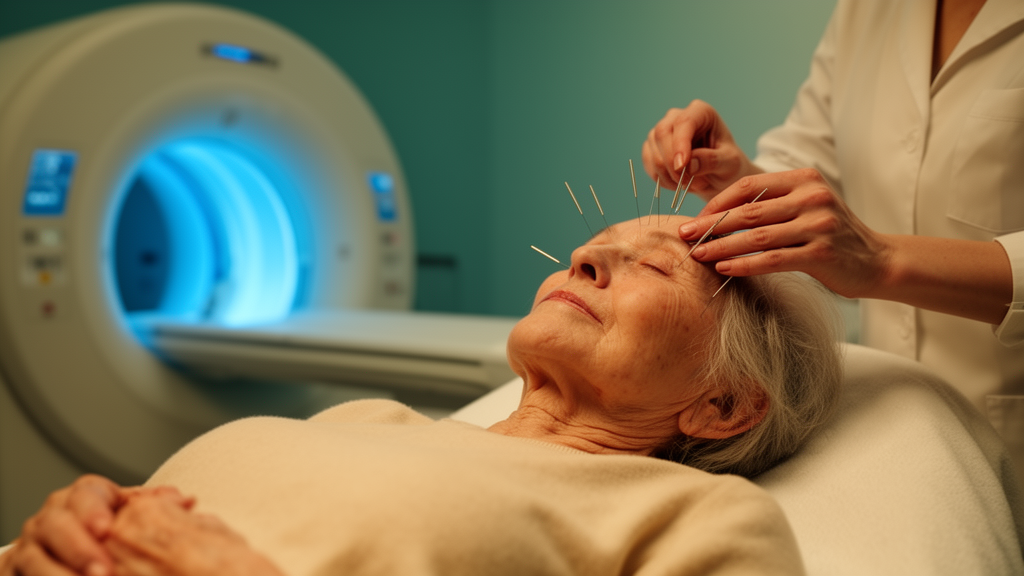
A randomized, exploratory fMRI study reports that Xingnao Kaiqiao (XNKQ) acupuncture, an intervention recommended as an adjunctive treatment for motor dysfunction after acute ischemic stroke (AIS), was associated with better early motor recovery and a distinctive pattern of brain network reorganization. The findings, published in Medical & Biological Engineering & Computing, suggest that changes in the centrality of the ipsilesional primary motor cortex and its connectivity with the supplementary motor area may serve as candidate network markers of acupuncture-associated neuroplasticity.
In the study, 28 AIS patients were randomly assigned to receive either XNKQ acupuncture plus medication (n = 14) or medication only (n = 14). Clinical assessments and resting-state fMRI scanning were performed before and after the intervention, and brain reorganization was analyzed using voxel-wise degree centrality (DC) and seed-based functional connectivity (FC).
The XNKQ group showed better recovery, reflected by greater improvements in NIHSS scores as well as total and upper-extremity Fugl-Meyer Assessment scores. This clinical improvement was correlated with reduced degree centrality in the ipsilesional primary motor cortex (iM1), concurrent with attenuated functional connectivity between iM1 and the contralesional supplementary motor area (cSMA). At the same time, the acupuncture group showed increased degree centrality in the bilateral supplementary motor area and preserved functional connectivity between SMA and cerebellar regions.
Further exploratory mediation analysis suggested that the change in iM1–cSMA functional connectivity potentially mediated the relationship between iM1 degree centrality normalization and motor recovery. According to the authors, these preliminary findings indicate that XNKQ acupuncture may facilitate early motor recovery after AIS through normalization of ipsilesional M1 hub centrality and modulation of M1–SMA cross-hemispheric connectivity.
The researchers emphasize that the study is exploratory and preliminary in nature. With only 28 participants and a 14-day intervention window, the results require confirmation in larger trials before any conclusions can be drawn about the clinical efficacy of XNKQ acupuncture or the reliability of the identified network markers. The mediation analysis, in particular, is described as exploratory and does not establish causal mechanisms.
Subject of Research: Resting-state fMRI changes in motor networks after Xingnao Kaiqiao acupuncture for acute ischemic stroke
Article Title: Altered centrality and connectivity in motor networks following Xingnao Kaiqiao acupuncture for acute ischemic stroke: a randomized controlled, exploratory fMRI study
Article References: Xie, Y., Guo, X., Qi, J., Zhang, K., Ying, W., He, Y., & Jin, Z. (2026). Altered centrality and connectivity in motor networks following Xingnao Kaiqiao acupuncture for acute ischemic stroke: a randomized controlled, exploratory fMRI study. Medical & Biological Engineering & Computing. https://doi.org/10.1007/s11517-026-03706-w
Image Credits: AI Generated
DOI: 10.1007/s11517-026-03706-w
Keywords: acupuncture, Xingnao Kaiqiao, acute ischemic stroke, fMRI, degree centrality, functional connectivity, primary motor cortex, supplementary motor area, motor recovery, neuroplasticity, randomized controlled trial, Altered
News Source: Colin Clarke. (October 29, 2026). Acupuncture for stroke: fMRI study links Xingnao Kaiqiao therapy to motor network reorganization. Scienmag.



