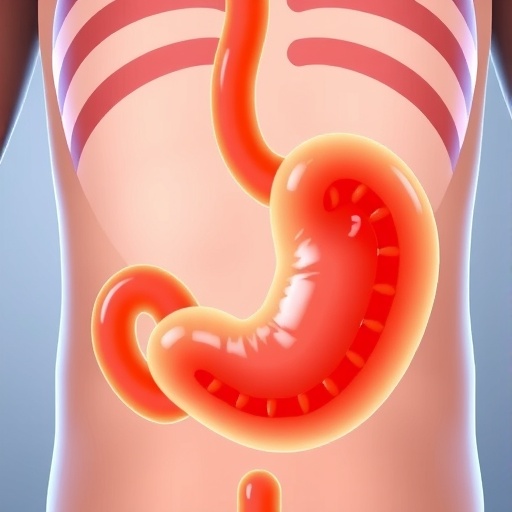
A groundbreaking development in biomaterials science promises to revolutionize the treatment of gastrointestinal wounds and diseases that thrive in harsh acidic environments. Traditional hydrogels—gelatinous polymers capable of absorbing significant amounts of water—have long been utilized for applications such as wound healing and drug delivery due to their biocompatibility and soft, tissue-like consistency. Despite these advantages, their susceptibility to degradation in extremely acidic environments, notably the stomach, has limited their clinical utility. Addressing this challenge, a multidisciplinary team led by Dr. Zuankai Wang at Hong Kong Polytechnic University has engineered an ultrastable mucus-inspired hydrogel (UMIH) that exhibits remarkable acid resistance, strong tissue adhesion, and potential antimicrobial properties, marking a major advance in gastrointestinal therapeutics.
The genesis of this innovation lies in the remarkable natural features of gastric mucus, which protects the stomach lining by forming a viscous, adherent barrier impervious to the corrosive gastric acids. By mimicking the molecular architecture and functional properties of natural mucus, Wang’s team tailored a synthetic hydrogel capable of adhering robustly to gastrointestinal tissues while resisting acid-mediated degradation far beyond what current clinical protectants achieve. Published in the esteemed journal Cell Reports Physical Science, their findings demonstrate that UMIH not only withstands the acidic milieu of the stomach but actively promotes tissue regeneration in animal models, surpassing existing mucosal protectants such as aluminum phosphate gel (APG).
UMIH’s exceptional performance is attributable to its unique molecular composition, which integrates three critical components engineered to optimize stability and adhesion within the gastrointestinal tract. Central to its design is the protein ELR-IK24, a polypeptide construct specifically engineered to bind protons under low pH conditions. This protonation capability effectively buffers the local environment, mitigating acidity at the hydrogel-tissue interface and preserving polymer integrity. The inclusion of tannic acid, a polyphenol known for its adhesive qualities, enhances hydrogel adherence by facilitating hydrogen bonding and covalent interactions with tissue surfaces. Moreover, hexamethylene diisocyanate (HDI), a crosslinking agent, stabilizes the hydrogel’s polymer network, maintaining mechanical strength over prolonged acidic exposure.
Laboratory tests underscore the superiority of UMIH in replicating and even surpassing mucus’s protective roles. When exposed to simulated gastric acid conditions with a pH of approximately 2, UMIH’s adhesive strength was quantified to be fifteen times greater than APG, the current clinical standard. Notably, while APG samples completely degraded within three days under identical conditions, UMIH retained half of its structural integrity even after a week, signifying a quantum leap in durability. Equally important was the demonstration of UMIH’s biocompatibility: it elicited no cytotoxic effects on cultured gastrointestinal epithelial cells, reinforcing its safety profile for potential clinical use.
Beyond its mechanical and adhesive robustness, UMIH exhibits promising antimicrobial activity, inhibiting the proliferation of pathogenic bacteria such as Escherichia coli and Staphylococcus aureus. This dual function—protection and antimicrobial defense—could be pivotal in preventing wound infections and accelerating healing processes in compromised gastrointestinal tissues. The pathogen inhibition likely derives from the synergistic action of tannic acid and the hydrogel’s physical barrier properties, which together deter bacterial colonization and biofilm formation.
The translational relevance of these properties was rigorously tested in vivo using rat and pig models of esophageal injury, reflecting clinically relevant scenarios such as ulcers or post-surgical wounds. UMIH was applied endoscopically to injured mucosal surfaces, where it demonstrated excellent adherence even amidst the dynamic and moist gastrointestinal environment. Treated animals exhibited significantly accelerated wound closure rates, reduced inflammation markers, and enhanced neovascularization—the growth of new blood vessels critical for tissue regeneration. Such multifaceted therapeutic benefits indicate that UMIH not only acts as a passive physical barrier but also actively modulates the tissue microenvironment to favor healing.
Dr. Bei Li of Sichuan University, a coauthor on the study, emphasizes UMIH’s clinical promise: “Its versatility allows for application in diverse gastrointestinal pathologies, including gastroesophageal reflux disease and gastric ulcers, while also lending itself to minimally invasive delivery techniques.” The hydrogel’s robust adhesion profiles ensure it remains localized at the target injury site, enhancing therapeutic efficiency and reducing the need for repeated applications. This feature is particularly advantageous in complex clinical cases where maintaining material placement can be challenging.
From a manufacturing standpoint, scalability and safety are crucial for any biomaterial poised for clinical adoption. UMIH ticks both boxes, as highlighted by coauthor Feng Lou, who underscores the cost-effectiveness and established safety profiles of its constituent components. The straightforward synthesis and potential for mass production set the stage for expedited trials and eventual commercialization. Importantly, UMIH’s modular chemistry allows for future enhancements, such as integrating drug delivery systems or embedding flexible, implantable electronics to create ‘smart’ gastrointestinal devices capable of real-time monitoring and therapeutic modulation.
The researchers are now focusing on optimizing UMIH’s formulations and initiating preclinical safety assessments to prepare for eventual human clinical trials. These trials will be critical for validating long-term safety, efficacy, and functional benefits in diverse patient populations. Given the high incidence of gastrointestinal disorders worldwide and the limitations of current therapeutic materials, UMIH offers a highly attractive candidate to fill significant medical gaps.
In summary, ultrastable mucus-inspired hydrogel (UMIH) represents a transformative advance in biomaterials engineering, with potential clinical applications ranging from ulcer treatment to post-surgical wound care within acidic environments. Its unique multi-component design mimics natural protective mucus while enhancing acid resistance, adhesion, and antimicrobial defense. Animal models confirm its efficacy in promoting rapid, durable healing, and its proven biocompatibility and manufacturability bode well for clinical translation. As research progresses, UMIH may well become a new standard for treating and protecting the gastrointestinal tract, improving patient outcomes for millions worldwide.
Subject of Research: Not applicable
Article Title: Mucus-inspired hydrogels with protonation-driven adhesion for extreme acidic conditions
News Publication Date: 4-Sep-2025
Web References:
https://www.cell.com/cell-reports-physical-science/home
References:
Yang et al., “Mucus-inspired hydrogels with protonation-driven adhesion for extreme acidic conditions,” Cell Reports Physical Science, DOI: 10.1016/j.xcrp.2025.102772
Image Credits: Not specified
Keywords
Hydrogels, Mucus, Gastrointestinal tract, Wound healing
Tags: Acid-resistant hydrogelantimicrobial properties in hydrogelsbiocompatible hydrogel applicationsbiomaterials science advancementsgastric wound healing researchgastrointestinal therapeuticsinnovative drug delivery systemsmultidisciplinary research in medicinenatural mucus mimicryresilience in harsh environmentssynthetic mucus for wound healingtissue adhesion technology