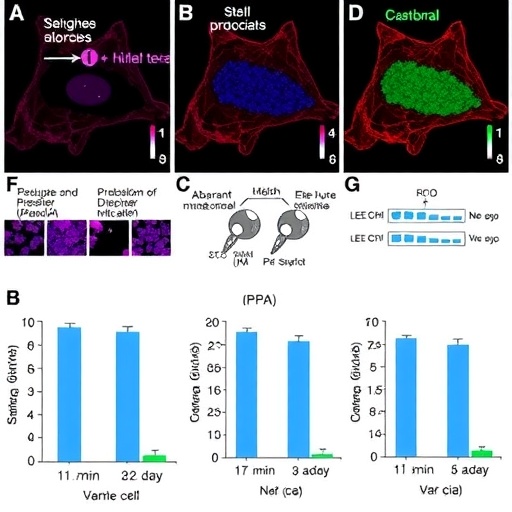
In a groundbreaking correction to a pivotal study, recent findings have shed new light on the role of alternative splicing in the pathology of endometriosis, a chronic and often debilitating condition affecting millions of women worldwide. The research, published in Cell Death Discovery, delves deeply into the molecular underpinnings of endometriotic cell growth, revealing that aberrant mRNA variants arising from misregulated alternative splicing significantly contribute to disease progression. This revelation not only unsettles previous conceptions but also charts a new course for potential therapeutic strategies targeting the splicing machinery.
Alternative splicing, a fundamental post-transcriptional mechanism where precursor mRNA transcripts are differentially spliced to produce multiple mature mRNA variants from a single gene, is essential for proteomic diversity and cellular adaptation. In healthy cells, this process is tightly regulated; however, disruptions can generate aberrant splicing variants that drive pathological changes. Endometriosis, characterized by the ectopic growth of endometrial-like tissue outside the uterus, has long been enigmatic in its etiology. The current work elucidates that the misregulation of alternative splicing leads to the accumulation of aberrant mRNA isoforms, which directly promote the proliferative and invasive traits of endometriotic lesions.
The correction to the original article emphasizes the quantitative shifts in specific splice variants implicated in cellular pathways controlling apoptosis, proliferation, and immune evasion. Using high-throughput RNA sequencing combined with advanced bioinformatic analyses, the researchers uncovered a spectrum of splicing anomalies that were previously underappreciated. These aberrant transcripts exhibit altered coding potential, often encoding truncated or gain-of-function proteins that can disrupt normal cellular homeostasis. This molecular portrait of splicing dysregulation offers a compelling explanation for the cellular heterogeneity and treatment resistance observed clinically in endometriosis.
Among the key molecular players, spliceosomal components and splicing regulatory proteins emerged as critical nodes of dysregulation. The correction details nuanced changes in the expression and phosphorylation status of serine/arginine-rich (SR) proteins and heterogeneous nuclear ribonucleoproteins (hnRNPs), which orchestrate splice site selection. Dysfunctions in these regulatory factors skew the balance toward splice variants favoring cellular survival and metastasis-like behaviors in ectopic endometrial tissue. These insights offer potential biomarkers for early detection and prognosis, opening new avenues for precision medicine in endometriosis management.
In parallel, the study explores the downstream signaling cascades activated by aberrant splice isoforms. Notably, the involvement of pathways such as PI3K/AKT/mTOR and Wnt/β-catenin, both hallmarks of cellular proliferation and survival, was substantiated with greater mechanistic clarity. The mis-spliced transcripts modulate these pathways either by enhancing receptor tyrosine kinase signaling or by producing splice variant proteins that act as dominant negatives, disrupting normal cellular feedback loops. This dual modulatory role underscores the complexity of alternative splicing’s impact on cellular physiology in endometriotic cells.
Furthermore, the corrected data highlight the role of non-coding RNA species generated through alternative splicing dysregulation. These non-coding variants appear to act as competing endogenous RNAs (ceRNAs), sequestering microRNAs critical for maintaining cellular quiescence and immune surveillance. By sequestering tumor-suppressive miRNAs, these aberrant RNAs create a permissive environment for unchecked cell growth and inflammation, key drivers of endometriosis symptomatology. This interplay between coding and non-coding splice variants adds a new layer of regulatory complexity and therapeutic targetability.
The significance of these findings extends beyond basic science as the aberrant mRNA variants associated with misregulated splicing were shown to confer resistance to apoptotic stimuli in vitro. Endometriotic cells harboring these splice variants survived despite exposure to pro-apoptotic agents, highlighting a potential mechanism for disease persistence despite hormonal therapies. These results challenge current treatment paradigms and underscore the urgent need for the development of splicing-targeted therapeutics, such as splice-switching oligonucleotides or small molecule splicing modulators, to effectively manage or even reverse endometriotic lesion growth.
Intriguingly, the corrected article posits a potential feedback loop wherein the chronic inflammatory environment typical of endometriosis exacerbates splicing dysregulation. Pro-inflammatory cytokines such as IL-6 and TNF-α modulate the expression of splicing factors, perpetuating a vicious cycle of aberrant mRNA variant production and enhanced cellular proliferation. This nexus between inflammation and alternative splicing suggests combined anti-inflammatory and splicing-modulatory intervention as a promising therapeutic strategy. It also invites further exploration into how immune cells within endometriotic lesions influence the splicing landscape.
The correction also deepens the exploration into cellular heterogeneity within endometriotic lesions by linking alternative splicing events to epithelial-mesenchymal transition (EMT). Aberrant splice variants of EMT-related transcripts promote a more invasive phenotype, enabling endometriotic cells to detach, migrate, and establish lesions at distant sites. This process mirrors cancer metastasis mechanisms, reinforcing the concept of endometriosis as a pathology with tumor-like behaviors despite its benign histological classification. Targeting splicing abnormalities could thus disrupt the capacity for lesion dissemination and reduce disease burden significantly.
Moreover, the integration of single-cell RNA-Seq data in the corrected analysis affords unprecedented resolution of splice variant expression patterns in distinct cellular subpopulations within endometriotic tissues. This granular approach uncovers cell-type-specific splicing signatures, revealing that stromal cells and immune cells each exhibit unique alternative splicing profiles that contribute differentially to the pathophysiology. Such heterogeneity has profound implications for diagnosis and therapy, suggesting the necessity for strategies that consider the complex microenvironmental context of endometriosis.
The study’s corrected methodology also emphasizes rigorous computational modeling to predict the functional consequences of specific splice variants on protein structure and interactions. Employing algorithms integrating RNA structure prediction, protein domain mapping, and interaction network analyses, the team constructed mechanistic models linking splicing changes to dysregulation of cellular signaling. This systems biology approach advances our understanding of how subtle shifts in mRNA processing translate to macroscopic disease phenotypes, offering a blueprint for similar investigations in other complex disorders.
Ethical considerations surrounding endometriosis research are indirectly highlighted by the potential for personalized diagnostic and treatment modalities arising from these findings. Identification of patient-specific splicing signatures might enable the development of precision medicine approaches that reduce unnecessary surgeries or hormonal treatments, minimizing adverse effects. This direction aligns with the growing movement toward individualized healthcare and underscores the societal impact of molecular research on chronic diseases that disproportionately affect women.
Finally, while the correction refines previous conclusions, it invigorates the scientific discourse around endometriosis and alternative splicing, inviting further studies to validate these findings in larger cohorts and diverse populations. The interplay between aberrant splicing, inflammation, hormone signaling, and cellular plasticity uncovered here forms a foundational model for future research. Such endeavors promise to illuminate new biomarkers and pharmaceutical targets, ultimately improving quality of life for patients suffering from endometriosis through more effective interventions.
This evolutionary story of misregulated alternative splicing in endometriosis highlights the dynamic complexity of gene expression regulation in disease. It reveals an intricately choreographed yet fragile system where even minor deviations at the mRNA processing level cascade into profound cellular dysfunctions. The corrected and expanded insights from Davuluri et al. emphasize that understanding these molecular details is pivotal to overcoming the longstanding clinical challenges presented by endometriosis. As research advances, this paradigm may serve as a beacon for deciphering other maladies driven by transcriptional and post-transcriptional dysregulation.
In conclusion, the updated investigation into aberrant mRNA variants mediated by alternative splicing in endometriosis provides a compelling narrative of molecular pathology. It underscores that beyond genetics and epigenetics, post-transcriptional control mechanisms wield substantial influence over disease outcomes. By decoding these molecular missteps, science takes a significant step toward transforming the management of endometriosis from symptomatic relief to targeted molecular therapy, holding promise for millions affected globally.
Subject of Research: Misregulated alternative splicing and its role in the molecular pathology of endometriosis
Article Title: Correction: Misregulated alternative splicing in endometriosis: a role for aberrant mRNA variants in endometriotic cell growth
Article References:
Davuluri, V.N.G., Dias, M., Llinas, R. et al. Correction: Misregulated alternative splicing in endometriosis: a role for aberrant mRNA variants in endometriotic cell growth. Cell Death Discov. 12, 258 (2026). https://doi.org/10.1038/s41420-026-03154-3
Image Credits: AI Generated
Tags: aberrant mRNA splicing in endometriosisalternative splicing mechanisms in diseasechronic endometriosis cellular mechanismsendometriosis molecular etiologyinvasive characteristics of endometriotic cellsmisregulated splicing variants in endometriosismolecular pathology of endometriotic cell growthmRNA variant accumulation in endometriosispost-transcriptional regulation in endometriotic lesionsproteomic diversity through alternative splicingsplice variant-induced cell proliferationtherapeutic targets in splicing machinery