• HOME
  • NEWS
  • EXPLORE
    • CAREER
      • Companies
      • Jobs
    • EVENTS
    • iGEM
      • News
      • Team
    • PHOTOS
    • VIDEO
    • WIKI
  • BLOG
  • COMMUNITY
    • FACEBOOK
    • INSTAGRAM
    • TWITTER
Thursday, August 13, 2026
BIOENGINEER.ORG
No Result
View All Result
  • Login
  • HOME
  • NEWS
  • EXPLORE
    • CAREER
      • Companies
      • Jobs
        • Lecturer
        • PhD Studentship
        • Postdoc
        • Research Assistant
    • EVENTS
    • iGEM
      • News
      • Team
    • PHOTOS
    • VIDEO
    • WIKI
  • BLOG
  • COMMUNITY
    • FACEBOOK
    • INSTAGRAM
    • TWITTER
  • HOME
  • NEWS
  • EXPLORE
    • CAREER
      • Companies
      • Jobs
        • Lecturer
        • PhD Studentship
        • Postdoc
        • Research Assistant
    • EVENTS
    • iGEM
      • News
      • Team
    • PHOTOS
    • VIDEO
    • WIKI
  • BLOG
  • COMMUNITY
    • FACEBOOK
    • INSTAGRAM
    • TWITTER
No Result
View All Result
Bioengineer.org
No Result
View All Result
Home NEWS Science News Biology

A small fish provides insight into the genetic basis of evolution

Bioengineer by Bioengineer
January 30, 2019
in Biology
Reading Time: 2 mins read
0
IMAGE
Share on FacebookShare on TwitterShare on LinkedinShare on RedditShare on Telegram

IMAGE

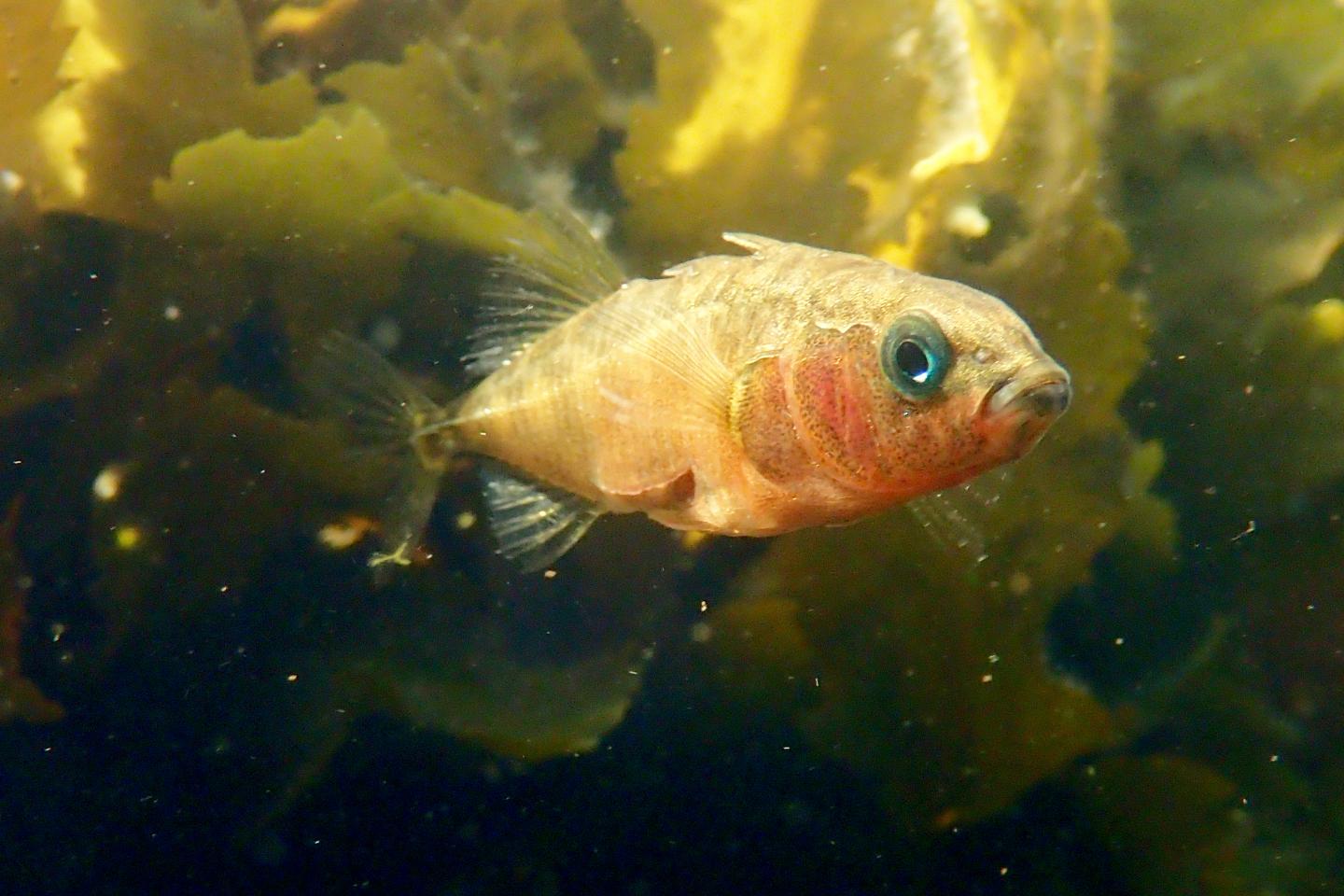
Credit: Photo: Andrew MacColl

Genetic analysis of sticklebacks shows that isolated populations in similar environments develop in comparable ways. The basis for this is already present in the genome of their genetic ancestors. Evolutionary biologists from the University of Basel and the University of Nottingham report these insights in the journal Evolution Letters.

Many examples can be found in nature of evolution producing the same characteristics repeatedly and independently. Similar adaptations to similar environmental conditions have been documented in numerous animal and plant species, even if primarily on the level of external characteristics. The extent to which similar populations have also made use of the same genetic variants during their evolution, however, is little known.

A new study has now provided new insights into the genetic basis of such parallel evolution. To this end, researchers from the University of Basel and the University of Nottingham examined the genome of threespine sticklebacks.

This is a popular fish among evolutionary biologists because it has adapted to a variety of habitats. In addition to this, the shared ancestor of freshwater populations – sticklebacks that originally lived in the ocean – still exists today, which enables an examination of the initial genetic base.

Isolated populations develop the same characteristics

On the Scottish island of North Uist, sticklebacks can be found in bodies of water with extremely varied pH values. While the lakes to the west contain alkaline water, the high moorland lakes in the east are acidic and low in nutrients.

Studies of five populations from both the western and eastern lakes showed that the fish adapted to their alkaline or acidic habitat independently of each other, but in comparable ways. All five populations in the acidic lakes, for example, displayed a greatly reduced skeleton and stunted growth – probably as an adaptation to the lack of nutrients.

Variants located in the genome of ancestors

In addition to the shared external characteristics, the researchers were also able to establish that changes in the genetic pool proceeded in very similar ways: the populations within the same type of habitat showed the same genetic variants in dozens of regions of the genome. This makes it possible to predict where in the genome changes will take place under the influence of a particular habitat – evolution becomes predictable to some extent.

Genetic analysis of the marine ancestor also showed that the genetic variants that are beneficial for adapting to acidic or alkaline water are all present in the ancestor. Similar life forms, therefore, didn’t occur randomly, but independently of each other through the predictable sorting of advantageous genetic variants that were already present in the genome.

###

Media Contact
Reto Caluori
[email protected]
41-612-072-495

Related Journal Article

http://dx.doi.org/10.1002/evl3.99

Tags: BiologyEvolution
Share12Tweet8Share2ShareShareShare2

Related Posts

Study reveals how pioneering osprey pairs drive population recovery

August 13, 2026
Antibodies, antiretrovirals and CCR5 blockade limit HIV reservoir seeding in infant macaques

Antibodies, antiretrovirals and CCR5 blockade limit HIV reservoir seeding in infant macaques

August 13, 2026

Determining a Fungus’s Age Is Surprisingly Difficult, Scientists Say

August 13, 2026

Elite athleticism needn’t compromise longevity or fertility

August 13, 2026
Please login to join discussion

POPULAR NEWS

  • Study reveals how pioneering osprey pairs drive population recovery

    29 shares
    Share 12 Tweet 7
  • Antibodies, antiretrovirals and CCR5 blockade limit HIV reservoir seeding in infant macaques

    29 shares
    Share 12 Tweet 7
  • Carbon Reduction Goals Decouple Emissions from Land-Use Efficiency: Driving Forces Revealed

    29 shares
    Share 12 Tweet 7
  • Neurodevelopment After Birth at 21 Weeks: A Case Series With Follow-Up

    29 shares
    Share 12 Tweet 7

About

We bring you the latest biotechnology news from best research centers and universities around the world. Check our website.

Follow us

Recent News

Study reveals how pioneering osprey pairs drive population recovery

Antibodies, antiretrovirals and CCR5 blockade limit HIV reservoir seeding in infant macaques

Carbon Reduction Goals Decouple Emissions from Land-Use Efficiency: Driving Forces Revealed

Subscribe to Blog via Email

Enter your email address to subscribe to this blog and receive notifications of new posts by email.

Join 85 other subscribers
  • Contact Us

Bioengineer.org © Copyright 2023 All Rights Reserved.

Welcome Back!

Login to your account below

Forgotten Password?

Retrieve your password

Please enter your username or email address to reset your password.

Log In
No Result
View All Result
  • Homepages
    • Home Page 1
    • Home Page 2
  • News
  • National
  • Business
  • Health
  • Lifestyle
  • Science

Bioengineer.org © Copyright 2023 All Rights Reserved.