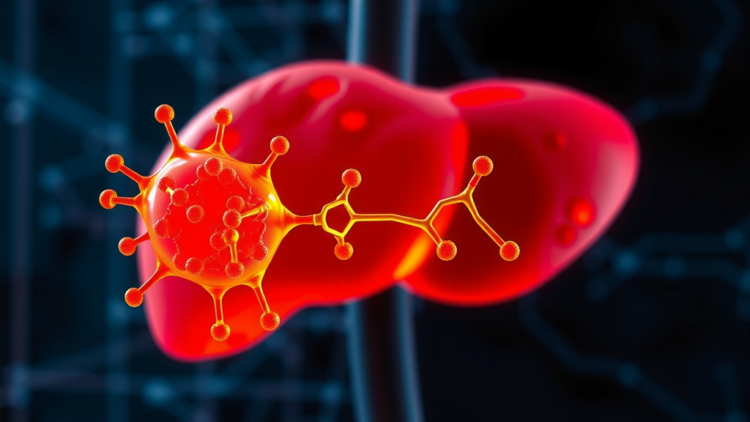
Fatty liver disease has quietly become one of the most common chronic conditions on the planet, and its most dangerous form, metabolic dysfunction-associated steatohepatitis, or MASH, has long resisted a satisfying molecular explanation. Now a large international team publishing in Nature Metabolism reports that a single ubiquitin-conjugating enzyme, UBE2N, sits at the heart of the disease process, acting as a molecular switch that determines whether stressed liver cells quietly repair themselves or spiral into inflammatory self-destruction.
Ubiquitin is a small protein tag that cells attach to other proteins to change their fate, and the way ubiquitin molecules are linked together matters enormously. Whereas K48-linked chains typically condemn proteins to destruction by the proteasome, K63-linked chains serve a very different purpose: they orchestrate protein interactions, intracellular trafficking, and signaling activity without triggering degradation. UBE2N, also known as Ubc13, is the specialized E2 enzyme that builds these K63-linked chains, and its role in MASH had remained almost entirely unexplored until now.
The researchers began by examining liver tissue from both human patients and mouse models of MASH, and they found a consistent pattern: UBE2N was markedly downregulated in hepatocytes under metabolic stress. Digging into the mechanism, they identified THAP11 as a transcriptional repressor that binds the UBE2N promoter during disease progression, effectively silencing the enzyme as fatty acids accumulate. Single-nucleus RNA sequencing and digital spatial transcriptomics confirmed that this drop in UBE2N expression is specifically concentrated in hepatocytes rather than other liver cell types.
To establish causality, the team generated mice lacking Ube2n selectively in hepatocytes. When these animals were placed on a western diet, they developed dramatically worse MASH and liver fibrosis than their normal counterparts. Serum liver enzymes rose, inflammatory and fibrogenic genes were upregulated, and the livers showed extensive fat accumulation and scarring. Crucially, when the researchers overexpressed UBE2N in the liver, the pathological phenotypes reversed and hepatic homeostasis was largely restored, demonstrating that the enzyme is not merely a bystander but an active protector.
The mechanism underlying this protection turned out to involve two intimately connected processes: mitophagy and PANoptosis. Mitophagy is the cellular quality-control system that identifies damaged mitochondria and delivers them to lysosomes for degradation, preventing the release of inflammatory mitochondrial contents. PANoptosis, by contrast, is a recently defined form of inflammatory programmed cell death that combines features of pyroptosis, apoptosis, and necroptosis simultaneously, unleashing a potent inflammatory storm. The new study shows that when UBE2N is lost, mitophagy collapses and PANoptosis erupts, creating the destructive combination that drives MASH forward.
At the molecular level, the researchers traced how UBE2N keeps mitophagy running smoothly. Working with the PARKIN pathway, they found that UBE2N catalyzes K63-linked ubiquitination of p62, also known as SQSTM1, at a specific site, lysine 420. This modification acts as a trafficking signal, promoting the translocation of K63-tagged p62 into damaged mitochondria where it serves as an autophagy receptor, tethering the cargo to the autophagic machinery for clearance. In cells lacking UBE2N, this modification fails to occur, p62 fails to reach the mitochondria, and damaged organelles accumulate unchecked.
But the story has an unexpected twist. When p62 cannot reach mitochondria, it accumulates in the cytoplasm, and this cytoplasmic buildup has consequences of its own. The researchers found that cytoplasmic p62 aggregation drives hyperactivation of NRF2, a transcription factor normally considered protective against oxidative stress. While NRF2 activation is beneficial in moderation, the study demonstrates that excessive, sustained NRF2 signaling in this context actively promotes PANoptosis and worsens liver damage. This finding challenges the simplistic view of NRF2 as an unambiguously protective factor in liver disease.
To prove that p62 accumulation is truly the culprit, the team generated mice lacking both Ube2n and Sqstm1 in hepatocytes. Remarkably, this additional deletion substantially mitigated the severe liver pathology caused by Ube2n loss alone, confirming that the damaging effects of UBE2N deficiency flow largely through cytoplasmic p62 buildup. The result establishes p62 as a proof-of-concept therapeutic target: if its cytoplasmic accumulation can be prevented or its mitochondrial routing restored, the downstream cascade of NRF2 hyperactivation and PANoptosis might be interrupted.
The implications extend beyond basic biology. MASH currently affects hundreds of millions of people worldwide, and only recently did the first targeted therapy, the thyroid hormone receptor-beta agonist resmetirom, gain approval. The identification of UBE2N and the p62 trafficking pathway offers an entirely new axis for intervention, one that operates at the level of mitochondrial quality control rather than lipid metabolism alone. Hepatic targeting of Ube2n in the mouse models prevented western diet-induced MASH progression, suggesting that gene-based or small-molecule approaches aimed at restoring this pathway could be feasible.
There remain significant challenges before this biology can be translated into treatments. UBE2N participates in immune receptor signaling and skin homeostasis, so systemic manipulation carries risks of off-target effects, and the precise dose, timing, and delivery method for hepatic intervention would need careful optimization. Nonetheless, the study provides an unusually complete mechanistic arc, from a transcriptional repressor silencing a ubiquitin enzyme, through defective mitochondrial tagging and cytoplasmic protein aggregation, to inflammatory cell death and fibrosis, and it does so with consistent evidence from human tissue, mouse genetics, and cell biology. For a field desperate for new molecular handles on a growing epidemic, UBE2N and its p62-dependent pathway represent one of the most compelling new entries in years.
Subject of Research: Role of UBE2N-regulated p62 mitophagy and PANoptosis in metabolic dysfunction-associated steatohepatitis
Article Title: UBE2N deficiency contributes to MASH development via p62-regulated mitophagy and PANoptosis
Article References: UBE2N deficiency contributes to MASH development via p62-regulated mitophagy and PANoptosis. (n.d.). https://doi.org/10.1038/s42255-026-01590-0
Image Credits: AI Generated
DOI: 10.1038/s42255-026-01590-0
Keywords: UBE2N, MASH, p62, SQSTM1, mitophagy, PANoptosis, K63-linked ubiquitination, PARKIN, NRF2, THAP11, liver fibrosis, Nature Metabolism
Cite Scienmag News
APA MLA Chicago
Ophelia Keating. (September 24, 2026). A single ubiquitin enzyme emerges as a master switch between liver repair and liver destruction in MASH. Scienmag. https://scienmag.com/a-single-ubiquitin-enzyme-emerges-as-a-master-switch-between-liver-repair-and-liver-destruction-in-mash/
Ophelia Keating. “A single ubiquitin enzyme emerges as a master switch between liver repair and liver destruction in MASH.” Scienmag, 24 September 2026, https://scienmag.com/a-single-ubiquitin-enzyme-emerges-as-a-master-switch-between-liver-repair-and-liver-destruction-in-mash/. Accessed 24 September 2026.
Ophelia Keating. “A single ubiquitin enzyme emerges as a master switch between liver repair and liver destruction in MASH.” Scienmag. September 24, 2026. https://scienmag.com/a-single-ubiquitin-enzyme-emerges-as-a-master-switch-between-liver-repair-and-liver-destruction-in-mash/
Copy citation Download RIS
Tags: hepatocyte stress responseinflammation regulationK63-linked ubiquitin chainsK63-linked ubiquitinationliver destructionLiver fibrosisliver repairMASHMASH pathogenesismetabolic dysfunctionmitophagymolecular switch in liver diseaseNature MetabolismNRF2p62PANoptosisParkinSQSTM1THAP11UBE2Nubiquitin enzymeubiquitin signalingubiquitin-conjugating enzymes